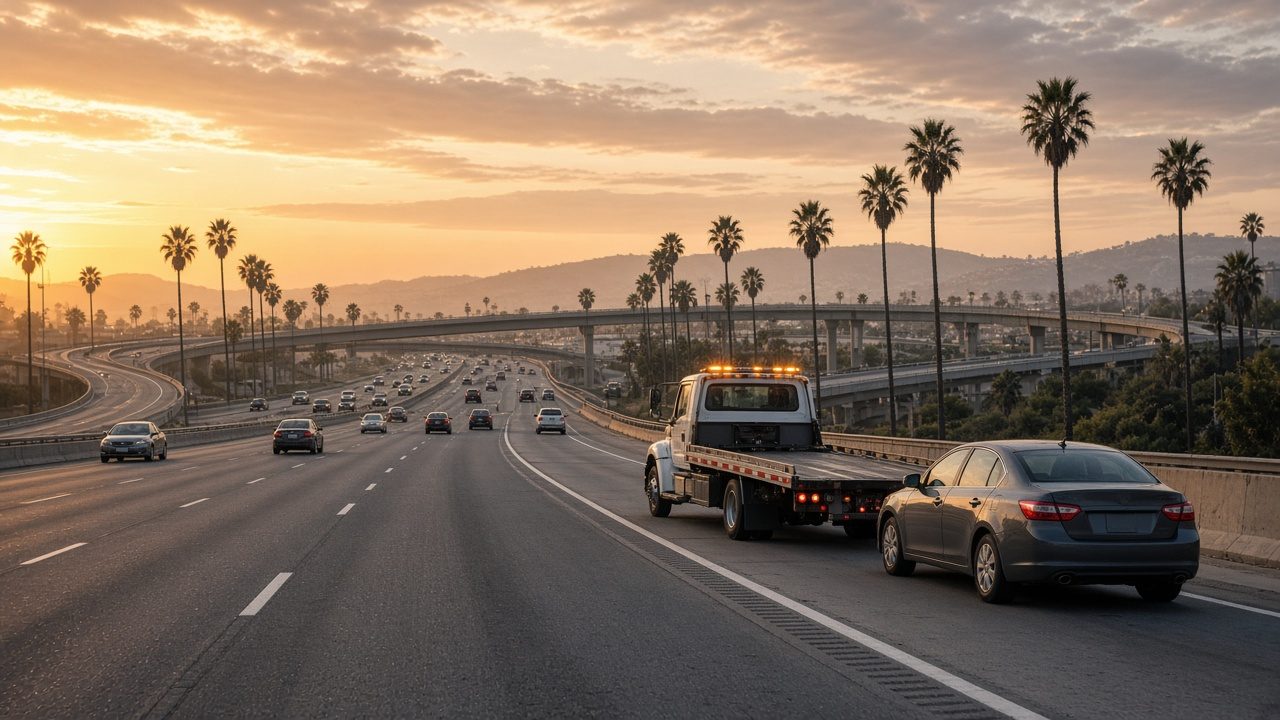
AI-generated illustration
The short answer: if your car was towed by police order in the City of Los Angeles, it was most likely taken to an Official Police Garage (OPG). You can search for it by license plate or VIN on the OPGLA website. If you broke down on an LA County freeway, the free Metro Freeway Service Patrol may be able to help during service hours. Dial 511 and say “Motorist Aid,” or call 911 in an emergency. Here’s what to do in each situation.
Disclaimer: TowCars.com is a nationwide towing information and referral service. We don’t tow, dispatch, or store vehicles, and we don’t guarantee any towing company. If you send us a request, we pass it to independent providers who set their own prices and terms. See our disclosure.
How to Find a Towed Car in Los Angeles
- Search OPGLA. The Official Police Garages of Los Angeles site lets you look up your vehicle by license plate and state, or by VIN. OPGs are the city’s official towing partners for police impounds, tows, and storage.
- Check the paperwork. If you received a notice, it should name the garage and the reason for the tow.
- Call the police if you can’t find it. If the car isn’t in the search, it may have been stolen, or towed from private property by a private company. Contact the LAPD to report it or to check.
Outside the City of Los Angeles, cities like Santa Monica, Pasadena, and Long Beach have their own police departments, and unincorporated areas are patrolled by the county sheriff, so the process can differ. Ask the agency that patrols where you parked.
Getting Your Car Out of an LAPD Impound
Regular impounds
Bring ID, proof of ownership or registration, and payment to the OPG that has the car. Requirements can vary by the reason for the tow, so call the garage first. Our impound lot guide covers the general steps and what to bring.
30-day holds
The LAPD says that if your vehicle is on a 30-day hold, the registered owner must wait until the hold ends. The owner then gets a release from the Area auto detectives. Releases go only to registered owners, and if the owner has no valid California driver’s license, they must bring a licensed driver. The LAPD notes some exceptions that allow early release.
Requesting a hearing
Under California Vehicle Code §22852, when a public agency has a vehicle stored, the owner may request a poststorage hearing within 10 days of the date on the notice. If the storage is found invalid, the agency pays the towing and storage charges. The section doesn’t apply to removals from private property under §22658. The LAPD says to call, write, or go in person to the police station that impounded the car within 10 days of the date on the written notice, and to give the DR number. You can request the hearing before or after paying the OPG. If the hearing officer finds no probable cause, the car is released without charge, or the charges you paid are refunded by mail. Rules change; verify with your local authority.
2026 Official Police Garage Rates
The Los Angeles Board of Police Commissioners sets OPG rates. The 2026 table, effective January 1, 2026, lists:
- Standard-vehicle tow, first hour: $220 by credit card, or $215 paid another way
- Each additional half-hour: $109 / $106
- Daily storage, standard vehicle: $68 / $66
- Mileage rate: $12 per mile
- Electric-vehicle surcharge: $77 / $75 (only when specific battery-safety conditions are met)
Heavy-duty tows cost more. Storage adds up every day, so move fast. Compare these with other cities in our tow truck cost guide.
Complaints about an OPG
The LAPD lists the Police Commission’s Commission Investigation Division at 323-680-4869 for complaints about Official Police Garages. If you think a tow damaged your car, take photos before you leave the lot. See how to avoid towing scams.
Broken Down on an LA Freeway? What to Do
- Get to safety. If you can, steer to the right shoulder or exit. Turn on your hazard lights.
- Call for help. In an emergency, dial 911. For non-emergency help, Metro says to dial 511 and say “Motorist Aid,” or use a freeway call box.
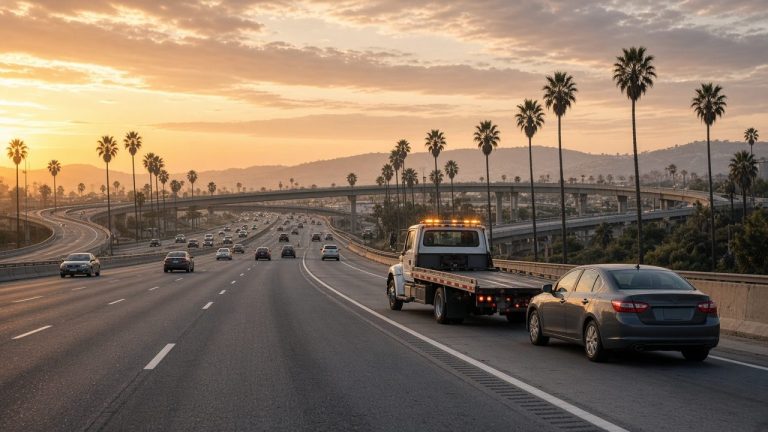
- Look for the Freeway Service Patrol. Metro’s FSP, run with CHP and Caltrans, patrols major LA County freeways during service hours and is free. Drivers can refill a radiator, tape a leaky hose, or tow a disabled vehicle to a safe location designated by CHP. They can’t tow to a home or repair shop, can’t recommend repair companies, and don’t accept tips.
- Arrange your own tow from the drop spot. From the CHP drop location, call your roadside plan or a towing company.
The CHP says FSP generally doesn’t assist vehicles involved in crashes unless CHP directs it. If you drive an EV or a hard-to-tow vehicle, read our EV and hybrid towing guide and the hardest vehicles to tow before the tow truck arrives.
Need a Tow or Long-Distance Move in LA?
For long moves, such as relocating out of state, compare towing vs. car transport. Also check which towing method fits your vehicle’s weight.
Frequently Asked Questions
How do I find out where my car was towed in Los Angeles?
For police-ordered tows in the City of LA, search the OPGLA database by plate and state, or by VIN. If it’s not there, contact the LAPD.
How long do I have to request an impound hearing in LA?
Generally within 10 days of the date on the notice, under Vehicle Code §22852 and LAPD guidance. Check your notice for the exact deadline.
Does the Freeway Service Patrol cost anything?
No. FSP is free, but it only moves your car to a CHP-designated safe location, not to your home or a shop.
What does an LAPD tow cost in 2026?
The 2026 OPG table lists $220 (card) or $215 for the first hour of a standard tow, plus $68 or $66 a day for storage. Other charges may apply.
Request a Tow Quote in Los Angeles
TowCars.com doesn’t tow vehicles or handle police impounds. If you need a private tow, send us a request and we’ll pass it to independent towing providers serving Los Angeles.
Sources
- Official Police Garages of Los Angeles – Vehicle Search
- LAPD – How Can I Get My Car Out of Impound?
- California Vehicle Code §22852
- Los Angeles Board of Police Commissioners – 2026 OPG Rates (PDF)
- LA Metro – Freeway Service Patrol
- California Highway Patrol – Freeway Service Patrol
About the Author