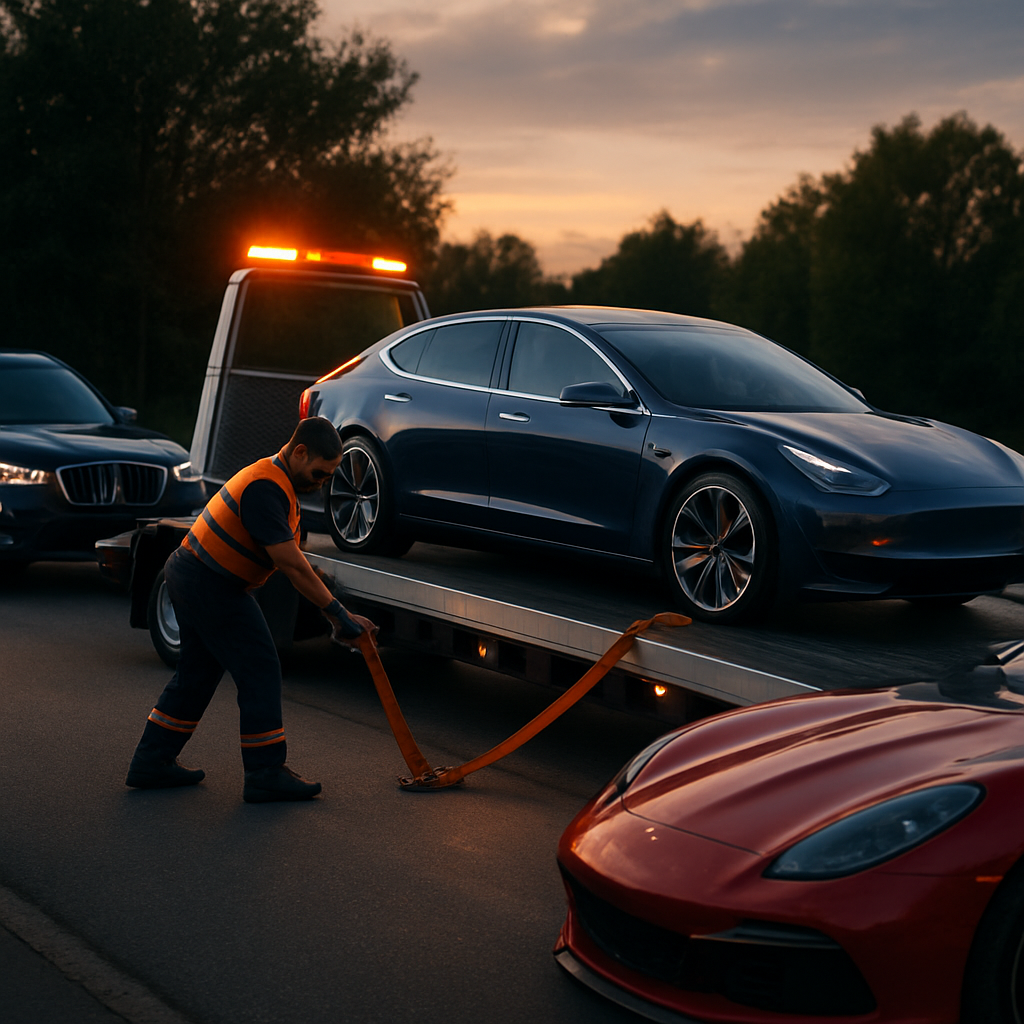
Not every tow is the same. Some vehicles roll up onto a tow truck and head off without drama, while others can be damaged by the wrong strap, the wrong angle, or even the wrong wheel position. The hardest vehicles to tow are usually the ones with sensitive drivetrains, low ground clearance, expensive bodywork, or technology that does not react well to being dragged with the wrong equipment. That is why professional towers do not just ask, ‘Can this car move?’ They ask, ‘How is this car built?’
Thank you for reading this post, don't forget to subscribe!Modern towing has become more technical as vehicles have become more advanced. Electric cars can weigh more than similar gas models and can suffer drivetrain damage if their wheels spin incorrectly. Luxury vehicles may have air suspension, fragile bumpers, and sensors everywhere. AWD vehicles can be especially tricky because all four wheels are mechanically linked in some way. Low-clearance sports cars and exotics can be damaged before they ever reach the tow bed if the approach angle is too steep. Understanding why these vehicles are hard to tow is the difference between a safe recovery and an expensive mistake.
Why Some Vehicles Are Harder to Tow Than Others
The hardest vehicles to tow are not always the largest. In fact, some of the most difficult recoveries involve smaller, more delicate cars. The main challenge is that towing is not just about lifting a vehicle and taking it somewhere else. It is about protecting the steering system, suspension, drivetrain, brakes, underbody, battery packs, and body panels while the car is stationary, damaged, or disabled.
A car that is easy to tow usually has a simple drivetrain and enough ground clearance for hooks, wheel lifts, or loading ramps. A car that is difficult to tow often has at least one of the following traits:
- All-wheel drive or full-time four-wheel drive
- Electric motors connected to the wheels
- Low ride height or long front overhang
- Active air suspension
- Very expensive bodywork or sensors
- Transmission systems that do not like being rolled without power
Fun fact: tow truck operators often think about wheel rotation, not just vehicle size. A compact AWD crossover can be more complicated to tow than a full-size rear-wheel-drive pickup because the transmission and center differential may not tolerate being rolled the wrong way.
Electric Cars: Silent, Heavy, and Sensitive
Electric vehicles are among the hardest modern cars to tow because they combine two big challenges: weight and drivetrain sensitivity. Many EVs are significantly heavier than gasoline cars of the same size because of their battery packs. That extra weight affects loading angles, ramp stability, winching force, and brake performance on the tow truck. Some EVs also sit on battery packs mounted under the floor, which means ground clearance is often limited where it matters most.
Another issue is how the drive system works. In many EVs, the electric motors are directly connected to the wheels through reduction gears. If the wheels spin while the vehicle is being towed in an unsupported way, the motors can generate unwanted current or spin internal components without proper lubrication or control. That can lead to overheating, electrical faults, or expensive mechanical wear. Some electric cars also have parking brakes or electronic release procedures that must be handled correctly before moving the vehicle.
Real-world example: a Tesla or other EV that is dragged with drive wheels on the ground can trigger warnings, lock up components, or suffer damage to the motor or inverter system. A tow operator who treats it like a normal sedan may create a repair bill that costs more than the original roadside problem.
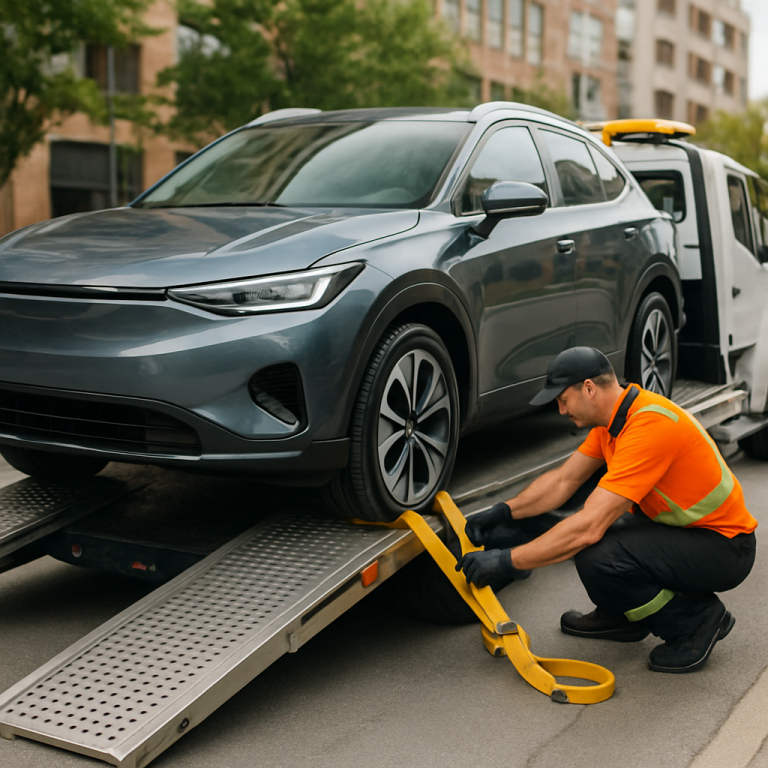
[Insert Image – Tesla towing]
Why Electric Cars Are Hard to Tow
EVs are hard to tow because the usual assumptions do not always apply. There is no engine to shut off in the traditional sense, and the vehicle may need to be placed in a special transport mode. If that mode is not activated, the parking system, regenerative braking logic, or transmission locks can resist movement. Because EV battery packs are often located beneath the floor, even minor loading mistakes can scrape a very expensive component.
What Can Go Wrong
If an electric car is towed incorrectly, several things can happen:
- Drive motor or gearbox damage from wheel rotation
- Battery pack contact or underbody scraping
- Electronic brake lock engagement
- Warning messages or fault codes after the tow
- Overheating in internal drive components
Best Towing Method for Electric Cars
The safest method for most EVs is a flatbed tow truck. The vehicle should be loaded with minimal ramp angle, wheels secured carefully, and any required transport mode activated according to the manufacturer’s instructions. When a flatbed is not possible, wheel dollies may be used in specific situations, but only with proper knowledge of the vehicle’s drivetrain and brake systems. For EVs, the rule is simple: if the wheels are not meant to turn freely, do not make them turn.
Luxury Vehicles: When Damage Costs More Than the Tow
Luxury cars are difficult to tow for a different reason: they are built to impress, and their components are often expensive, fragile, or highly sensitive. A premium sedan or SUV may have low-profile tires, chrome trim, custom wheels, air suspension, concealed sensors, and complex bumper assemblies. Even a simple mistake, such as using the wrong hook point, can scratch paint or bend a trim piece that costs a fortune to replace.
Luxury cars also tend to have advanced driver assistance systems. Cameras, radar modules, parking sensors, and active grille shutters can all be hidden in places a tow strap might touch. On top of that, many luxury vehicles use self-leveling or adaptive suspension. If the car is winched or lifted incorrectly, that suspension can extend or compress in ways the owner never intended.
Fun fact: many high-end brands design body panels with extremely tight tolerances, which makes them look beautiful but can also make them surprisingly easy to damage during recovery. A tow operator may need more time just to identify the safe lift points than it takes to actually load the car.
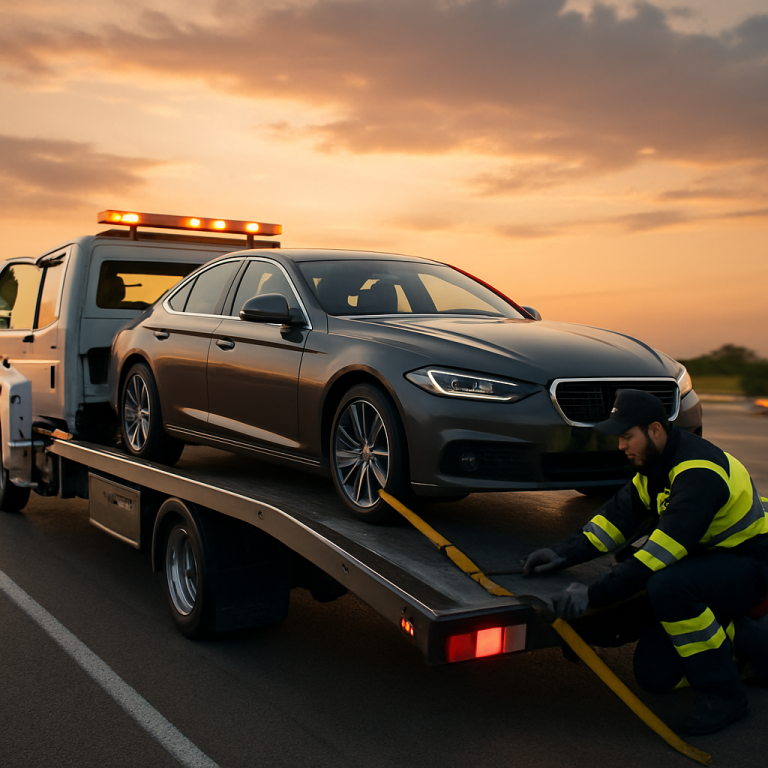
[Insert Image – luxury car towing]
Why Luxury Cars Are Hard to Tow
Luxury vehicles often have a very low tolerance for rough handling. Their suspension components, underbody covers, and electronic modules are usually more complex than those on a standard commuter car. Some models also have automatic ride-height systems that lower the car when it is parked, making loading even harder. If the tow operator uses a traditional hook or chain on an area that is not designed for it, the damage can be immediate and visible.
What Can Go Wrong
- Scraped front bumper or side skirts
- Broken parking sensors or camera housings
- Air suspension faults or compressor issues
- Wheel damage from poor strap placement
- Interior complaints if the car is not secured gently and evenly
Best Towing Method for Luxury Vehicles
A flatbed is usually the best option, especially for low-profile luxury sedans, coupes, and SUVs with sensitive suspension systems. Soft straps should be placed at manufacturer-approved tie-down points, and the tow driver should avoid metal contact with polished wheels or painted trim. If the vehicle has air suspension, the proper transport setting should be activated when available. For especially delicate cars, skates or low-angle loading systems can help protect the front splitter and underbody.
AWD Vehicles: All Four Wheels Matter
All-wheel-drive vehicles are another towing challenge because power is often sent through all four wheels. In many AWD systems, the front and rear axles are connected by a center differential, coupling, or electronic clutch pack. If one axle is forced to move while the other stays still, or if one pair of wheels spins while the other pair is locked, the drivetrain can be stressed in ways it was not built to handle.
This is why AWD vehicles often need special towing procedures. A casual approach that works for a front-wheel-drive sedan may seriously damage an AWD crossover or performance car. Even if the car appears to roll normally, hidden drivetrain components may be spinning without proper circulation or control. The result can be heat, gear wear, or torque transfer issues that show up only after the tow is finished.
Real-world example: an AWD SUV stranded on a freeway shoulder might seem easy to wheel-lift and tow, but if the wrong axle is lifted and the car is rolled too far, the transfer case can be damaged. Repairing that system can cost far more than calling for a flatbed in the first place.
Why AWD Vehicles Are Hard to Tow
AWD vehicles are hard to tow because their drivetrains expect the wheels to move in coordinated ways. When the tow configuration changes that balance, the system may bind or rotate internal parts in undesirable ways. Some AWD systems are more tolerant than others, but without exact manufacturer guidance, the safest assumption is that all-wheel drive requires more caution than front- or rear-wheel drive.
What Can Go Wrong
- Transfer case damage
- Center differential overheating
- Uneven tire wear or drivetrain binding
- Warning lights and fault codes after towing
- Transmission stress if the wrong wheels remain on the ground
Best Towing Method for AWD Vehicles
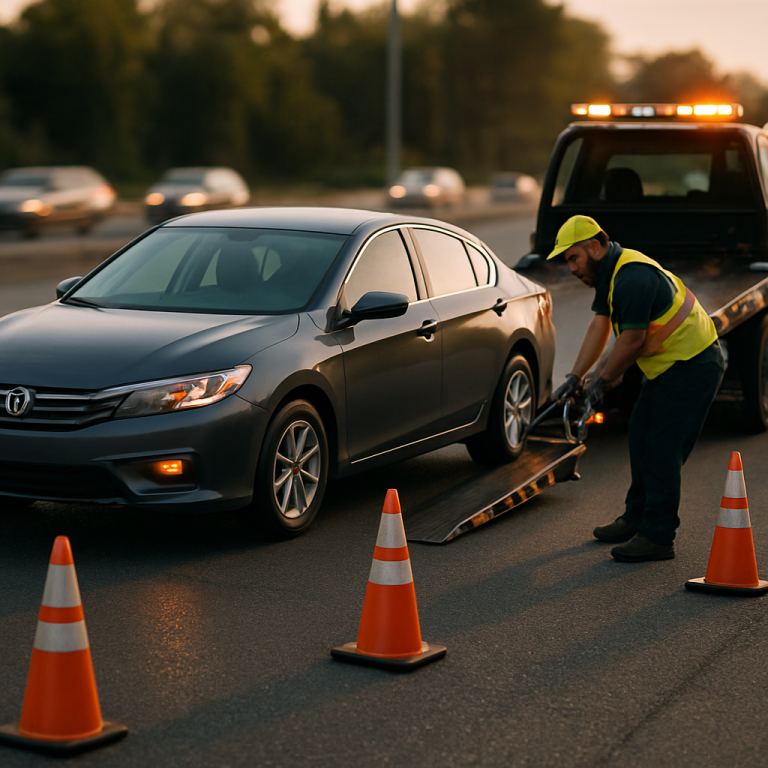
Flatbed towing is the safest and most universal answer for AWD vehicles. If a flatbed is not immediately available, wheel dollies can sometimes be used so that no driven wheels rotate on the pavement. However, the exact method depends on the vehicle’s drivetrain layout, and some systems have very specific speed or distance limits. The safest strategy is to verify the manufacturer’s towing instructions before moving the vehicle at all.
Low-Clearance Cars: Sports Cars, Exotics, and Slammed Builds
Low-clearance cars are difficult to tow because they are hard to reach, hard to load, and easy to damage. Sports cars, supercars, lowered tuner cars, and some electric sedans all have one thing in common: their front splitters, side skirts, and undertrays sit close to the ground. A regular tow truck ramp can be too steep, causing the bumper to scrape before the tires even touch the bed.
These cars may also have delicate carbon-fiber parts, custom exhausts, or underbody aero pieces that are not meant to bear load. Once a splitter catches the ramp, the damage can spread quickly. In some cases, even the exhaust angle or front lip geometry makes standard loading impossible without special equipment. That is why low-clearance recoveries often look slower and more deliberate than ordinary towing jobs.
Fun fact: some exotic-car owners use a custom front-axle lift system or removable skid plates specifically to make towing and driveway entry less stressful. That tiny mechanical detail can save thousands of dollars over the life of the car.
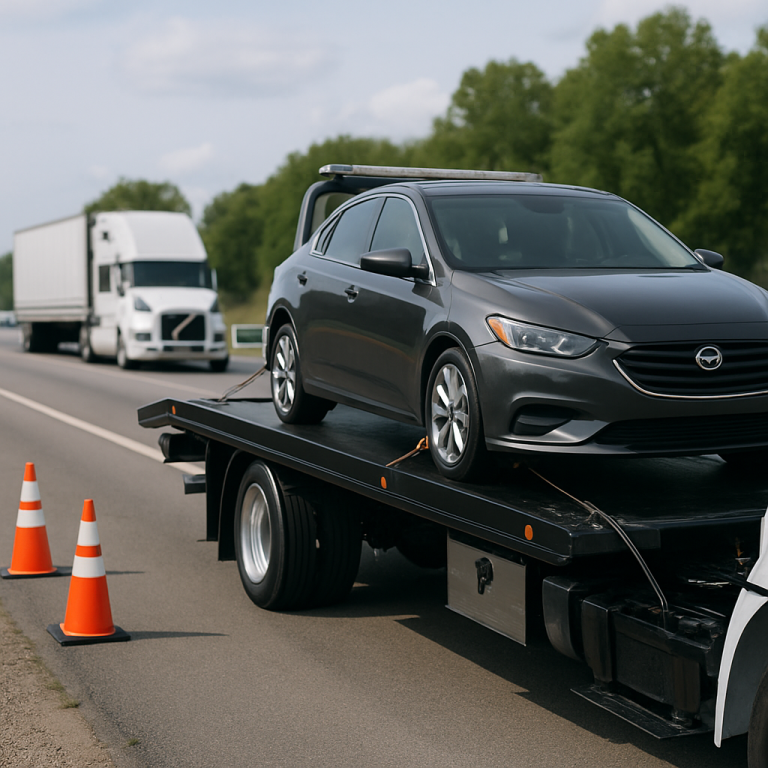
[Insert Image – flatbed]
Why Low-Clearance Cars Are Hard to Tow
The biggest issue is geometry. If the ramp angle is too steep, the vehicle bottoms out. If the tow truck approaches from the wrong angle, the body may contact the bed before the wheels start climbing. Lowered cars may also have unusually shaped bumpers that hide the actual tow hooks, making secure attachment more complicated. In some cases, the operator has to use wood blocks, extended ramps, or soft loading equipment just to get the car onto the truck without scraping.
What Can Go Wrong
- Front splitter breakage
- Exhaust or undertray damage
- Cracked carbon-fiber body parts
- Wheel lip scratches from bad tie-downs
- Vehicle becoming stuck on the ramp during loading
Best Towing Method for Low-Clearance Cars
A flatbed with long ramps, a low approach angle, or a hydraulic bed is usually ideal. Experienced operators may use soft straps, wheel nets, and extra ground clearance aids such as blocks or race ramps. For very low exotics, the operator may need a winch-assisted approach with careful positioning to keep the body level. The goal is not speed; the goal is controlled geometry from the first inch to the last.
What Can Go Wrong During an Improper Tow
When towing goes wrong, the damage is often more expensive than the original roadside problem. An improper tow can destroy drivetrains, bend suspension parts, trigger airbag or brake faults, and create cosmetic damage that is obvious to the owner and insurance adjuster alike. Some issues show up instantly, while others appear only after the vehicle is driven again.
Common tow mistakes include lifting the wrong axle, dragging locked wheels, using unsafe tie-down points, loading too fast, or ignoring manufacturer restrictions. On modern cars, one mistake can lead to multiple problems because sensors, suspension, and computer systems are all connected. A tow that seems successful at first may still cause hidden damage that becomes clear days later.
Here are the most common things that can go wrong:
- Transmission or differential failure
- Battery and motor damage in EVs
- Broken spoilers, bumpers, and underbody panels
- Suspension misalignment or air suspension errors
- Scratches, dents, and wheel rash
For towing professionals, the lesson is simple: every vehicle has a system that can be harmed by force in the wrong direction. For drivers, the lesson is equally important: choosing the right towing method is not a luxury, it is damage prevention.
Best Towing Method by Vehicle Type
If you want the safest method for each of the most difficult vehicles, the answer usually comes down to choosing the least invasive transport option. Here is a quick guide:
- Electric cars: Flatbed tow, transport mode if required, wheels secured without drive-wheel rotation
- Luxury vehicles: Flatbed with soft straps and careful lift-point selection
- AWD vehicles: Flatbed whenever possible; otherwise dollies according to manufacturer guidance
- Low-clearance cars: Flatbed with long ramps, low-angle loading, and protective equipment
There is one simple pattern across all four categories: the more advanced or delicate the vehicle, the less you want the wheels dragging on the road. The flatbed is not always the only option, but it is the one that removes the most risk.
FAQ
Can every car be flatbed towed?
Most cars can be transported on a flatbed, and for difficult vehicles it is usually the safest choice. The main limits are height, weight, and loading angle, but those can often be managed with the right equipment and an experienced operator.
Is flat towing the same as towing with all four wheels on the road?
No. Flat towing usually refers to pulling a vehicle with all four wheels on the ground behind another vehicle, which is very different from placing a car on a flatbed. Many modern vehicles should not be flat towed unless the manufacturer specifically says it is allowed.
Why do electric cars often need special towing instructions?
Because their motors and battery systems are tied directly to wheel movement. If the wrong wheels spin, the system can generate electricity, create heat, or suffer mechanical wear. That is why EV transport mode and manufacturer procedures matter so much.
What is the most important thing to check before towing an AWD vehicle?
The owner’s manual or manufacturer towing instructions. AWD systems vary a lot, and the correct method depends on the exact drivetrain design. When in doubt, a flatbed is the safest answer.
Why do low cars scrape so easily during towing?
Because the loading angle is often steeper than the car’s front end can handle. Even a few extra degrees can make the bumper, splitter, or underbody touch the ramp before the wheels are fully loaded.
The hardest vehicles to tow are hard for different reasons, but they all teach the same lesson: towing is a technical job, not a guess. Electric cars demand respect for their drivetrains and batteries. Luxury vehicles need protection for every expensive surface and sensor. AWD cars require attention to drivetrain rotation and axle behavior. Low-clearance cars need patience, angles, and the right equipment. When a tow operator understands the engineering behind the vehicle, the recovery stays safe, the damage stays low, and the owner gets back on the road with far less stress than if the tow had been rushed.
About the Author