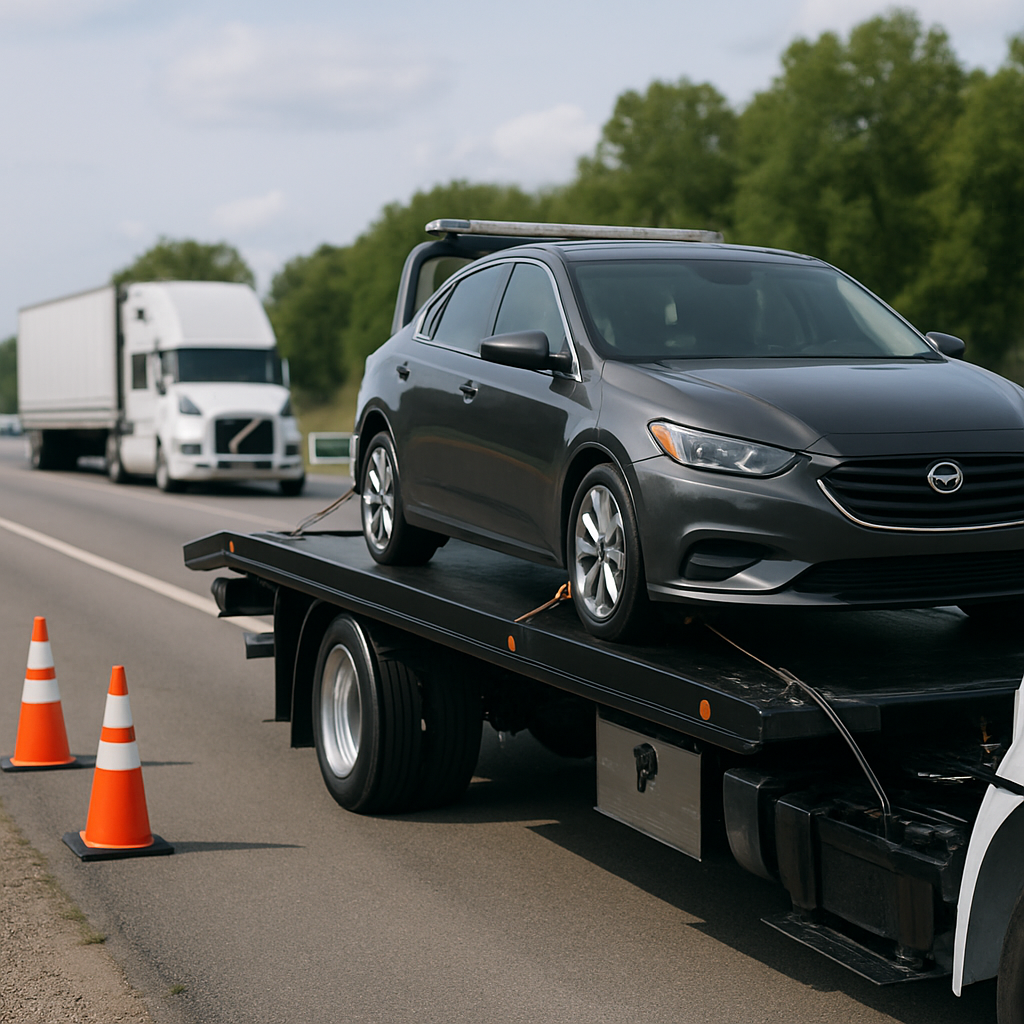
When a car breaks down on a busy highway, the first question is usually simple: who can get it off the road safely and quickly? But the answer is rarely simple at all. The right towing method depends on the vehicle’s weight, drivetrain, condition, clearance, and sometimes even the distance it needs to travel.
Thank you for reading this post, don't forget to subscribe!That is why understanding car towing is about much more than calling the first towing service near me you see online. It is about preventing transmission damage, avoiding wheel and suspension issues, protecting expensive electronics, and choosing the right kind of vehicle transport for the situation.
This guide brings together the practical knowledge drivers need most: how vehicle weights compare, which towing methods work best, where the risks are, and when professional transport is the smarter choice over traditional roadside assistance.
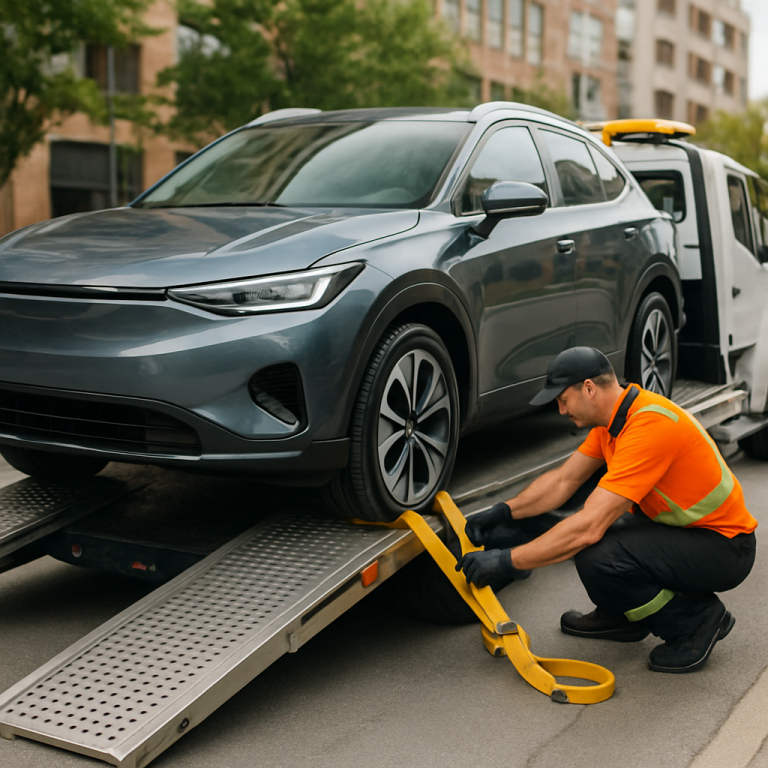
[Insert Image – Professional tow truck helping a car]
Understanding Vehicle Weights
Vehicle weight is one of the most important factors in towing, yet it is often overlooked until something goes wrong. A car’s weight affects how it can be lifted, whether it can be rolled safely, how much stress is placed on its tires and drivetrain, and what kind of tow truck or trailer is needed.
Most drivers know whether they own a compact car, SUV, or pickup, but towing professionals look deeper. They think in terms of curb weight, gross vehicle weight rating, axle load, and overall balance. Those numbers matter because a towing method that works for a lightweight compact sedan can damage an all-wheel-drive SUV or an electric vehicle in minutes.
Compact Cars
Compact cars are among the lightest vehicles on American roads. They are easy to move, easy to load, and usually the least demanding from a towing standpoint. But low weight does not automatically mean low risk. Many compact cars still have modern transmissions and electronics that can be damaged if they are towed with the wrong wheels on the ground.
A Honda Civic, for example, typically weighs around 2,900 to 3,100 pounds depending on trim and model year. That is light compared with larger vehicles, but it still requires the correct method if the car has an automatic transmission or traction system that is sensitive to towing.
Sedans
Sedans sit in the middle of the weight spectrum, which makes them common in both everyday roadside assistance calls and longer vehicle transport jobs. A Toyota Camry, for instance, usually weighs around 3,300 to 3,600 pounds. That extra mass means a tow operator must account for braking distance, loading angles, and secure tie-down points.
Sedans are often easy to tow on a flatbed, but some can also be moved with a tow dolly if the drivetrain and owner’s manual allow it. The key is not the body style alone, but how the drivetrain and parking system interact with the towing method.
SUVs
SUVs bring higher weight, higher ground clearance, and often more complex drivetrains. A Chevrolet Tahoe commonly weighs around 5,400 to 5,800 pounds, while a midsize SUV like a Ford Explorer may sit around 4,300 to 4,600 pounds. That difference matters because a heavier vehicle needs more equipment capacity, stronger straps, and more attention to balance during loading.
Large SUVs are also more likely to be all-wheel drive or four-wheel drive, which makes towing decisions more technical. In many cases, a flatbed towing setup is the safest and most damage-free option.
Trucks
Pickup trucks vary widely in weight, but even light-duty models are often heavier than standard passenger cars. A Ford F-150 may weigh roughly 4,300 to 5,600 pounds depending on cab style, engine, drivetrain, and trim. A Ram 1500 can fall in a similar range, sometimes moving higher with more equipment.
Because trucks often have stronger suspensions, towing hardware, and frame structures, people sometimes assume they are easy to tow in any way. That assumption can be costly. Four-wheel-drive trucks, lifted trucks, and trucks with aftermarket tires can be especially sensitive if they are not loaded correctly.
Electric Vehicles
Electric vehicles have changed the towing conversation completely. A Tesla Model 3 typically weighs around 3,800 to 4,100 pounds, but weight is only part of the issue. EVs use drivetrains and lubrication systems that are not always tolerant of traditional wheel-on-ground towing.
Many EVs also have low ground clearance, wide battery packs under the floor, and sensitive electronic parking systems. If an EV is moved incorrectly, the risk is not just a drivetrain repair. It can include battery pack damage, suspension damage, or expensive electrical faults.
Luxury Vehicles
Luxury vehicles often carry more weight because of larger engines, sound insulation, safety systems, and interior materials. A luxury sedan can weigh more than a mainstream sedan even when it looks similar from the outside. That extra weight, combined with low-profile tires and delicate bodywork, makes premium flatbed towing the safer choice almost every time.
Luxury owners are usually paying for more than transportation. They are paying for protection. That is why professional vehicle transport services often use soft straps, low-angle ramps, and carefully selected tie-down points to keep damage risk as close to zero as possible.
Why Weight Matters for Towing
Weight influences nearly every part of the towing process. A heavier vehicle takes longer to load, requires more securement, and may exceed the safe working limits of a smaller tow truck. A lighter vehicle may seem easier, but it can still be damaged if the wrong axle is lifted or if the parking system remains engaged.
Weight also affects braking, steering, and stability on the road. A tow operator has to think about how the vehicle will behave when it is suspended, partially lifted, or rolling behind another vehicle. The wrong choice can cause tire wear, transmission damage, axle stress, or body damage during even a short trip.
For that reason, professional towing is not about guesswork. It is about reading the vehicle correctly and matching it with the safest possible method.
TABLE 1 – Vehicle Types and Average Weights
| Vehicle type | Example model | Average weight in pounds |
|---|---|---|
| Compact car | Honda Civic | 2,900 to 3,100 |
| Midsize sedan | Toyota Camry | 3,300 to 3,600 |
| Midsize SUV | Ford Explorer | 4,300 to 4,600 |
| Full-size SUV | Chevrolet Tahoe | 5,400 to 5,800 |
| Light-duty pickup truck | Ford F-150 | 4,300 to 5,600 |
| Electric vehicle | Tesla Model 3 | 3,800 to 4,100 |
| Full-size truck | Ram 1500 | 4,800 to 5,800 |
| Luxury sedan | Mercedes-Benz S-Class | 4,600 to 5,300 |
Which Vehicles Can Be Towed Safely?
The safest towing method depends on the vehicle’s drivetrain, transmission, ride height, and whether the car is running. Two vehicles that look almost identical may need completely different towing setups. That is why experienced operators always check the manual or towing charts before choosing a method.
In general, the safest assumption is that four wheels off the ground is better than two wheels on the ground. But there are exceptions, and those exceptions matter a great deal when a vehicle is expensive, damaged, or all-wheel drive.
FWD Vehicles
Front-wheel-drive vehicles are common and often easier to tow than other drivetrains because the engine and transmission usually power the front wheels only. With the right setup, many FWD cars can be moved with a tow dolly or wheel-lift method, as long as the driven wheels are handled correctly.
The risk comes when the wrong axle is left on the road. If the transmission is not designed for that arrangement, internal components can spin without lubrication, causing wear or failure. That is why the owner’s manual matters more than assumptions.
RWD Vehicles
Rear-wheel-drive vehicles place the power at the back axle, which changes how towing should be done. Some RWD vehicles can be towed with the front wheels on the ground if the transmission and steering components allow it, but many tow professionals still prefer a flatbed for simplicity and safety.
RWD cars are common among sports cars, trucks, and performance models. Because they may have lower ground clearance, bigger tires, or more valuable bodywork, a flatbed often reduces the chance of damage during loading and unloading.
AWD Vehicles
All-wheel-drive vehicles are among the most sensitive when it comes to towing. Their drivetrains are designed to distribute power across all four wheels, which means spinning one axle independently of the others can cause severe damage.
Even a short tow can create problems if the system is not compatible with the method being used. This is why many AWD vehicles are best handled with flatbed towing or by following a manufacturer-approved procedure that completely isolates the driveline.
4WD Vehicles
Four-wheel-drive vehicles can also be tricky because transfer cases, locking hubs, and drivetrain settings all influence whether towing is safe. Some 4WD trucks and SUVs can be flat-towed in very specific configurations, while others must be fully lifted or placed on a trailer.
If a 4WD system is engaged in the wrong mode, towing can strain the transfer case and drivetrain components. Operators who work with trucks regularly know that a few seconds of configuration mistakes can lead to repairs that cost far more than the tow itself.
Electric Vehicle Limitations
EVs deserve special attention because their limitations are not always obvious. Many electric cars cannot be towed with driven wheels on the ground for long distances. Some require transport mode, a specific shift procedure, or a service access step before moving them safely.
The battery pack often sits low in the chassis, which means steep ramp angles can be risky. Add regenerative braking systems, parking locks, and electronic shifters, and the towing process becomes much more technical than a traditional gas-powered car.
As a rule, if an EV is disabled and you are unsure about the towing instructions, flatbed towing is usually the safest default.
When Towing Can Cause Damage
Towing can damage a vehicle when the wheels spin without proper lubrication, when the suspension is overloaded, when straps are attached to weak points, or when a vehicle is dragged with the parking brake engaged. Damage can happen silently at first and show up later as vibration, alignment issues, or transmission failure.
Common warning signs that towing has been done wrong include grinding noises, burning smells, fluid leaks, tire deformation, and warning lights that appear after the vehicle is dropped off. Those symptoms should never be ignored.
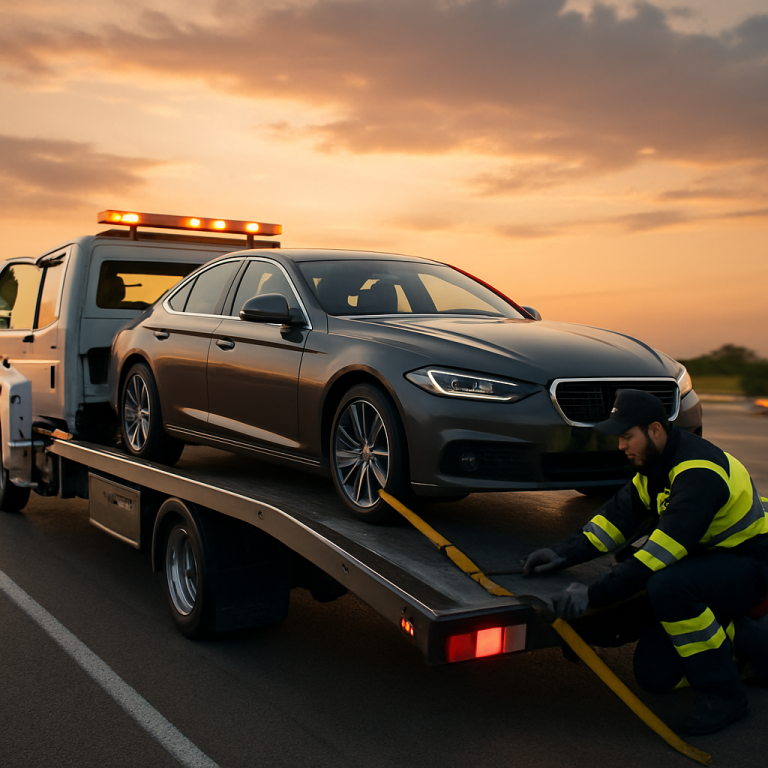
[Insert Image – Vehicle weight comparison / towing setup]
Seeing a car on paper is one thing. Seeing how its weight and drivetrain affect its towing setup makes the decision much clearer. A flatbed, tow dolly, or wheel-lift can all work in the right context, but the wrong match can quickly turn a simple roadside call into a mechanical problem.
Towing Methods Explained
There are four major towing methods used across the United States, and each one has a clear purpose. The best method depends on the condition of the car, the type of drivetrain, the distance to be covered, and whether the car can roll or steer safely.
Professional towing is not about one method being universally best. It is about choosing the method that protects the car, fits the situation, and respects the vehicle’s engineering.
Flatbed Towing
Flatbed towing uses a truck with a fully flat platform. The entire vehicle is lifted onto the bed and secured with straps or chains, leaving all four wheels off the ground. This is often considered the safest and most versatile method.
How it works: The tow truck lowers its bed, winches the vehicle up, and secures it in place. Once loaded, the car travels on the truck rather than rolling behind it.
When to use it: Flatbed towing is ideal for AWD vehicles, EVs, luxury vehicles, accident-damaged cars, low-clearance sports cars, and any vehicle with drivetrain uncertainty.
Pros:
- All wheels stay off the ground
- Reduces drivetrain wear
- Safer for damaged or non-running vehicles
- Better for long-distance transport
- Works for a wide range of vehicle types
Cons:
- Can cost more than simpler methods
- May require more space to load
- Not always the fastest option for minor roadside calls
Risks: The main risk is improper loading or tie-down placement. A badly secured vehicle can shift during transit, especially if the road is rough or the car has suspension damage.
Best vehicle match: AWD vehicles, EVs, luxury cars, low sports cars, collision-damaged vehicles, and vehicles headed to long-distance vehicle transport.
Tow Dolly
A tow dolly lifts only one axle off the ground while the other axle rolls behind the towing vehicle. It is common for certain FWD cars when the driven front wheels are raised and the rear wheels remain on the road.
How it works: The car is driven or winched onto the dolly, then strapped in so that the front or rear axle stays off the ground while the other axle rolls.
When to use it: Tow dollies are useful for some front-wheel-drive vehicles over short to moderate distances when the manufacturer allows it.
Pros:
- More affordable than many flatbed options
- Can be practical for simple FWD situations
- Lighter than a full trailer
Cons:
- Not suitable for many AWD or 4WD vehicles
- Can be difficult with damaged steering or brakes
- Requires careful securing and correct axle placement
Risks: If used on the wrong drivetrain, a tow dolly can create transmission damage or tire wear. It also requires more caution while reversing and turning because the towed vehicle has limited stability.
Best vehicle match: Select FWD sedans and compact cars with manual approval from the owner’s manual.
Trailer Towing
Trailer towing uses a separate trailer to carry the vehicle. In many ways, it resembles flatbed towing, but the trailer is towed behind a truck rather than built into a single tow vehicle. This is common in vehicle transport services and private moves.
How it works: The car is loaded onto a trailer, secured, and transported behind another vehicle equipped to handle the combined weight.
When to use it: Trailer towing is useful for distance, relocation, show cars, project cars, and non-running vehicles that need controlled transport.
Pros:
- Can safely carry many vehicle types
- Useful for long-distance relocation
- Good for pristine or specialty vehicles when properly equipped
Cons:
- Requires a capable tow vehicle
- Can be more challenging to maneuver
- May involve higher total equipment complexity
Risks: Incorrect loading can overload the tongue weight or reduce stability. Poor tie-down technique can cause the vehicle to shift during turns or braking.
Best vehicle match: Collector cars, project cars, long-distance moves, and vehicles being shipped through professional transport services.
Wheel-Lift Towing
Wheel-lift towing uses a metal yoke or cradle to lift either the front or rear wheels while the other wheels stay on the road. It is often used for quick roadside recoveries and short urban tows.
How it works: The tow operator slides the lift under the tires, raises one axle, and pulls the car away with the remaining wheels rolling behind.
When to use it: Wheel-lift towing is common for short distances, tight city environments, parking enforcement, and quickly removing a disabled car from traffic.
Pros:
- Fast to deploy
- Good for short roadside recoveries
- Compact and maneuverable in urban areas
Cons:
- Not ideal for many AWD or 4WD vehicles
- Can stress the driven axle if used incorrectly
- Less protective than a flatbed for long travel
Risks: Wheel-lift towing can cause drivetrain issues if the wrong axle is lifted. It also leaves more of the vehicle exposed to road debris, curb contact, and vibration.
Best vehicle match: Simple short-distance tows for suitable FWD or RWD cars, depending on manufacturer guidance.
TABLE 2 – Best Towing Method by Vehicle Type
| Vehicle type | Recommended method | Risk level | Notes |
|---|---|---|---|
| Compact FWD car | Tow dolly or flatbed | Low to moderate | Check the manual first; flatbed is safest if unsure |
| Midsize sedan | Flatbed towing | Low | Best for mixed drivetrain situations and long trips |
| RWD sports car | Flatbed towing | Low | Protects low bumper, spoiler, and transmission components |
| AWD SUV | Flatbed towing | Low | Usually the safest choice because all wheels stay off the ground |
| 4WD pickup | Flatbed towing or approved transport procedure | Moderate | Transfer case position matters; do not guess |
| Electric vehicle | Flatbed towing | Low | Transport mode and battery protection are critical |
| Luxury sedan | Flatbed towing | Low | Low-profile tires and expensive trim make protection essential |
| Non-running accident vehicle | Flatbed towing | Moderate to high | Damage may require winching, special loading, or recovery tools |
Towing Capacity Explained Simply
Towing capacity is the maximum weight a tow vehicle can safely pull according to the manufacturer. It is not a rough guess, and it is not something to exceed because the road looks flat or the trip is short. It is an engineering limit built around brakes, cooling, frame strength, transmission load, and stability.
Many drivers confuse the weight of the vehicle being towed with the towing capacity of the truck doing the towing. Those are two separate numbers. A car may weigh 3,500 pounds, but that does not mean every vehicle can tow it safely. The tow vehicle must also be able to handle the trailer weight, tongue weight, passengers, cargo, and road conditions.
That is where terms like curb weight, GVWR, and GCWR become useful. Curb weight is the car’s weight without passengers or cargo. GVWR is the maximum safe weight of the vehicle itself. GCWR is the maximum combined weight of the tow vehicle and whatever it is pulling.
Why does this matter? Because exceeding a towing limit can reduce braking power, increase sway, overheat the transmission, and create tire failure risk. It can also raise insurance questions if an accident occurs while equipment was used outside its intended rating.
Put simply, towing capacity is not just about whether the vehicle can move. It is about whether it can move safely, repeatedly, and without hidden mechanical damage.
One of the most expensive mistakes is assuming that a heavy pickup automatically means unlimited towing power. Even strong trucks have limits, and those limits change with trim, engine, hitch class, bed weight, payload, and aftermarket modifications.
Professional vehicle transport companies understand these limits well because they calculate them before every job. That is one reason experienced operators are so valuable: they prevent expensive assumptions from becoming expensive repairs.
Safety Checklist Before Towing
Before any car is moved, a quick checklist can prevent the most common towing problems. This is especially important when dealing with roadside assistance, accident recovery, or a vehicle that has been sitting for a long time.
- Transmission: Confirm whether the vehicle must be in park, neutral, transport mode, or another manufacturer-approved setting.
- Parking brake: Make sure it is fully released if the vehicle is being rolled, or engaged only when appropriate for loading and unloading.
- Tires: Check for flat spots, low pressure, punctures, and sidewall damage before loading.
- Battery: A weak or dead battery can affect steering locks, parking brakes, electronic shifters, and release mechanisms.
- EV considerations: Verify transport mode, charging port status, and any high-voltage system warnings before moving an electric vehicle.
- Accident damage: Look for broken suspension, leaking fluids, bent wheels, and damaged steering components before deciding how to load the vehicle.
- Owner’s manual: If available, check the towing section before making any drivetrain assumptions.
- Tie-down points: Use the proper factory-approved or professional securement points whenever possible.
- Clearance: Watch for spoilers, battery packs, side skirts, and low bumpers that may scrape during loading.
- Road conditions: Consider weather, slopes, traffic, and distance before choosing between a quick tow and full vehicle transport.
A few minutes spent on this checklist can save hours of repair time later. In towing, the cheapest mistake is the one that never happens.
Common Towing Mistakes
Most towing damage does not happen because a truck was too small. It happens because the vehicle was treated like a generic object instead of a machine with specific engineering rules. That is the real danger.
Using the Wrong Towing Method
One of the most common errors is choosing a wheel-lift or tow dolly for a vehicle that should have been placed on a flatbed. This mistake is especially risky with AWD cars, EVs, and luxury vehicles. What looks like a time saver can become a mechanical failure.
Ignoring AWD or 4WD Sensitivity
All-wheel-drive systems are easy to damage because they depend on coordinated wheel rotation. Dragging one axle when the system is not designed for it can stress the center differential or transfer case. In the worst cases, the damage is immediate and severe.
Overloading the Tow Setup
Another mistake is matching a heavy vehicle to an undersized tow vehicle or trailer. Overloading reduces braking ability, increases sway, and can create tire blowouts or jackknife risk. The issue is not just the car being towed; it is the total weight combination.
Skipping the Manual
Every vehicle manufacturer has towing instructions for a reason. Skipping them is one of the fastest ways to cause damage that insurance may not cover. Manual instructions may seem inconvenient, but they are usually cheaper than a transmission replacement.
Forgetting EV and Hybrid Procedures
Electric and hybrid vehicles often need special steps before they can be moved. Forgetting transport mode, leaving the vehicle in the wrong gear state, or activating the wrong systems can trigger expensive faults. Some EVs also require the tow operator to avoid contact with the battery area or specific underbody points.
Ignoring Accident Damage
A vehicle that has been in a collision may look towable, but hidden suspension or steering damage can make rolling it dangerous. If a wheel is bent or a control arm is broken, the right approach may involve winching, dollies, or a full flatbed rather than trying to roll the car normally.
Leaving Personal Assumptions in Charge
The phrase “it should be fine” causes more towing problems than most drivers realize. Towing is a technical task, not a guess. If the setup is unclear, the safest answer is usually to use the most protective method available.
Emergency Towing Situations
Not every tow begins with a calm plan. Many begin with a phone call from the side of the road, the engine light glowing, the battery dead, or the car sitting at an awkward angle after a crash. Those moments are exactly when clear thinking matters most.
Breakdowns
Breakdowns are the most common reason people search for roadside assistance or towing service near me. The vehicle may have overheating issues, a transmission failure, a broken belt, or an electrical problem that prevents it from moving under its own power.
In these situations, the main goals are speed, safety, and preventing secondary damage. If the car can roll, wheel-lift towing may work for a short hop. If anything about the drivetrain is uncertain, a flatbed is often the smarter choice.
Accidents
Accident towing is more delicate because the vehicle may be structurally compromised. Doors may not open, wheels may be folded inward, or fluid may be leaking. Recovery crews often need winches, dollies, or special loading equipment to keep the car from scraping or shifting further.
After an accident, the right tow is about protecting both the vehicle and everyone nearby. Damaged cars can behave unpredictably, and a professional operator knows how to stabilize the situation before moving the car.
Dead Batteries
A dead battery can seem like a minor inconvenience, but in modern vehicles it can cause steering locks, electronic shifter problems, or parking brake issues. Some cars will not even release into neutral without power.
That is why a dead battery call is not always just a jump-start situation. Sometimes the safest answer is roadside assistance followed by a short tow or vehicle transport to a repair shop.
Long-Distance Issues
Long-distance emergencies usually involve more planning. A car may break down hundreds of miles from home, or a driver may need to move a vehicle after a major repair far away from the original location. In those cases, transport services often provide a safer solution than ordinary towing.
For long-distance situations, the goals change. Stability, weather protection, route planning, and secure loading become much more important than speed alone.
Vehicle Transport vs Towing
People often use the words towing and transport as if they mean the same thing, but they serve different purposes. Towing usually means moving a vehicle from one point to another locally, often after a breakdown or accident. Vehicle transport or car shipping usually refers to longer, more controlled movement over a greater distance.
That difference matters because not every car should be treated like a roadside emergency. Sometimes the safest and most cost-effective option is a transport truck rather than a traditional tow truck. This is especially true when the vehicle is valuable, non-running, or being moved across state lines.
Local Towing vs Long-Distance Transport
Local towing is common when a vehicle has to go from the shoulder of the road to a repair shop, body shop, or impound lot. Speed matters, and the distance is usually short.
Long-distance transport is different. When a vehicle must travel from one city or state to another, the best method often involves a car shipping carrier or a flatbed-style vehicle transport service. The route, weather, exposure, and securement all become more important than simply getting the car off the road.
Car Shipping vs Towing
Car shipping is typically the preferred option for dealer transfers, relocations, online purchases, and luxury deliveries. It is usually handled by carriers built specifically to transport vehicles with minimal handling.
Towing is better suited to emergency response, short relocations, and disabled vehicles that need immediate recovery. If you are moving a car you bought from another state, car shipping may be more economical and far safer than a pieced-together towing plan.
When Transport Is Better
Vehicle transport is better when the car is expensive, non-running, long-distance, or especially sensitive to road wear. It is also a strong choice when you want the vehicle to arrive in the same condition it left, without extra miles, tire stress, or unnecessary handling.
Here are the most common situations where transport makes more sense:
- Buying a car from another state
- Shipping luxury vehicles with low clearance
- Moving a classic car or collector car
- Relocating a non-running project car
- Transporting an EV with special loading needs
- Avoiding unnecessary road wear on a valuable vehicle
In each of those cases, the goal is not just movement. It is preservation.
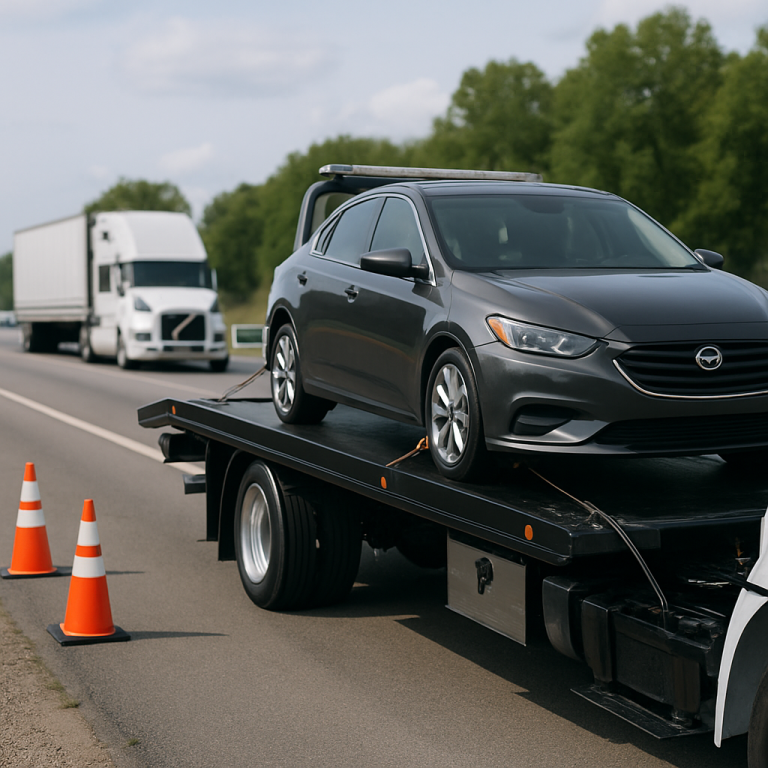
[Insert Image – Flatbed or vehicle transport truck]
Examples That Make the Difference Clear
If you need a car moved from one neighborhood to another after a flat tire, towing is probably enough. If you bought a Tesla Model 3 in another state and want it delivered without risking drivetrain or battery issues, professional vehicle transport is the smarter route.
If a Ram 1500 breaks down near your home, roadside assistance can handle the recovery. If a Chevrolet Tahoe is disabled after an accident and needs to travel several hundred miles for repair, a flatbed transport solution will usually be safer and less stressful for the vehicle.
The right service depends on the job, not on the label. The more expensive or delicate the vehicle, the more likely transport will outperform standard towing.
Interesting and Surprising Facts
- EVs are tricky to tow because power does not always mean readiness. A fully charged electric vehicle can still be unsafe to tow if its transport mode is not activated or its wheels are not fully lifted.
- AWD systems are often more sensitive than drivers expect. The danger is not just in moving the car; it is in moving one axle differently from the others and stressing the drivetrain.
- Some of the hardest vehicles to tow are not the heaviest ones. Low sports cars, custom body kits, and damaged vehicles can be harder to load than a larger but simpler SUV.
- Luxury vehicles often need flatbeds even for short distances. Their low-profile tires, fragile trim, and high repair costs make the extra protection worth it.
- Weight is only part of the towing equation. A lighter car can still be more difficult to tow safely than a heavier truck if the drivetrain is more complex.
- Accident recovery often requires more skill than ordinary towing. Once a wheel, suspension, or frame is damaged, the car may need special loading techniques to avoid worsening the problem.
These facts are why experienced operators are worth trusting. The best towing looks simple because the hard decisions were made before the truck ever arrived.
FAQ
Can you tow an electric car?
Yes, but electric cars should usually be towed with extra care, and flatbed towing is often the safest option. Many EVs should not have their driven wheels rolling on the ground unless the manufacturer specifically allows it. Always check the owner’s manual or use a professional vehicle transport service that knows EV procedures.
What happens if towing is done wrong?
Wrong towing can damage the transmission, drivetrain, suspension, tires, or battery system. In some cases, the damage is immediate. In others, the car may seem fine at first and later develop warning lights, vibration, or mechanical failure. That is why method selection matters so much.
Can AWD cars be towed?
Yes, but AWD cars are often among the most sensitive vehicles to tow incorrectly. In many cases, a flatbed is the safest choice because it keeps all four wheels off the ground. If another method is used, it should only be done according to the manufacturer’s instructions.
What is the safest towing method?
For most vehicles, flatbed towing is the safest and most universal method because it removes nearly all drivetrain and tire stress during transit. It is especially recommended for AWD vehicles, EVs, luxury cars, and damaged vehicles. The safest method is the one that matches the exact vehicle and condition, but flatbed towing is often the default answer.
When should I use transport instead of towing?
Use transport when the vehicle needs to travel a long distance, when it is valuable or delicate, or when you want to avoid mileage, road wear, and loading risk. Buying a car from another state, shipping a luxury vehicle, or moving a non-running car are all strong reasons to choose vehicle transport rather than ordinary towing.
Is flatbed towing always required for luxury vehicles?
Not absolutely every time, but it is usually the best option. Luxury cars often have low clearance, expensive trim, and sensitive suspension or drivetrain components. Flatbed towing greatly reduces the chance of scraping, tire stress, and mechanical damage.
Can a dead battery car still be towed safely?
Yes, but a dead battery can create hidden complications. Some cars need electrical power to release the shifter, disengage the parking brake, or unlock the steering. If the battery is dead, the tow operator may need special procedures before the vehicle can be moved.
How do I know which towing service to choose?
Start by matching the service to the vehicle. If the car is simple and local, standard roadside assistance may be enough. If the vehicle is AWD, an EV, a luxury model, or badly damaged, ask for flatbed towing or professional transport. A reliable company will ask the right questions before dispatching equipment.
Does vehicle weight affect towing price?
Yes. Heavier vehicles often require more capable equipment, more fuel, more labor, and sometimes special loading tools. The size and condition of the car can also affect the price. A compact sedan and a full-size SUV may not cost the same to move, even over the same distance.
How do I find a reliable towing service near me?
Look for a provider with clear service descriptions, strong reviews, and experience with your specific type of vehicle. If you need a towing service near me in an emergency, make sure the company can explain whether they offer flatbed towing, roadside assistance, or vehicle transport before they arrive. The best companies do not just show up quickly; they show up prepared.
Knowing how towing works turns a stressful roadside moment into a manageable decision. Once you understand vehicle weight, drivetrain sensitivity, towing capacity, and the differences between local towing and long-distance transport, you can choose the right help with confidence instead of panic. If you ever need reliable towing or professional vehicle transport, choosing the right service can save time, money, and prevent costly damage.
About the Author