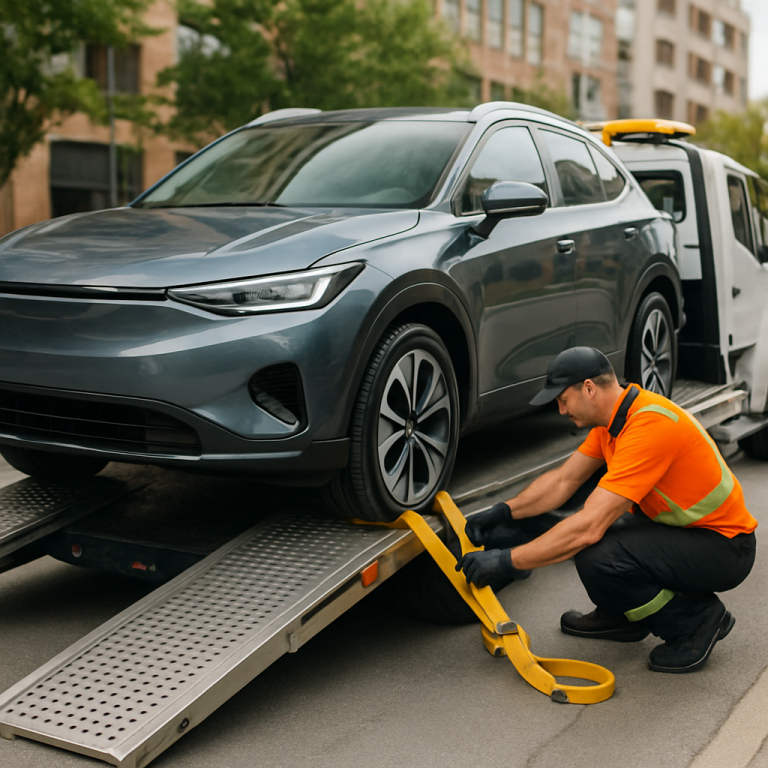
Few moments are more stressful than seeing a vehicle fail when you need it most. A dead battery on a busy street, a transmission issue on the highway, or an accident that leaves your car immobile can instantly turn an ordinary day into a costly problem.
Thank you for reading this post, don't forget to subscribe!In those moments, the wrong towing decision can do more damage than the original breakdown. The right one can protect your vehicle, save money, and get you moving again with far less risk.
This guide is built to give you the same level of clarity a professional fleet manager, automotive consultant, or experienced recovery operator would want before making a towing decision. You will learn how vehicle weight affects towing, why some vehicles are far more sensitive than others, how modern drivetrains change the rules, and when towing is no longer the smartest option compared with vehicle transport.
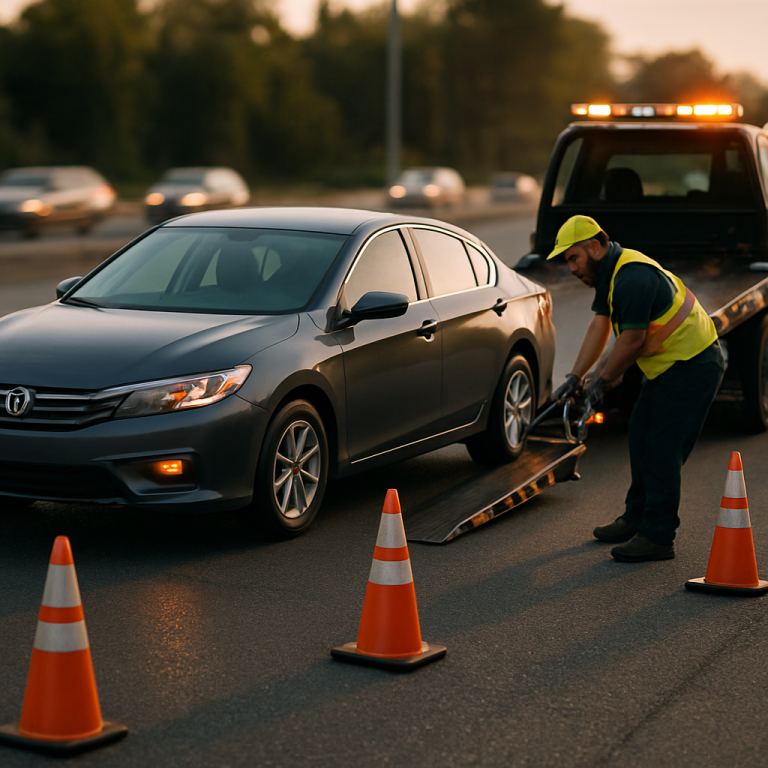
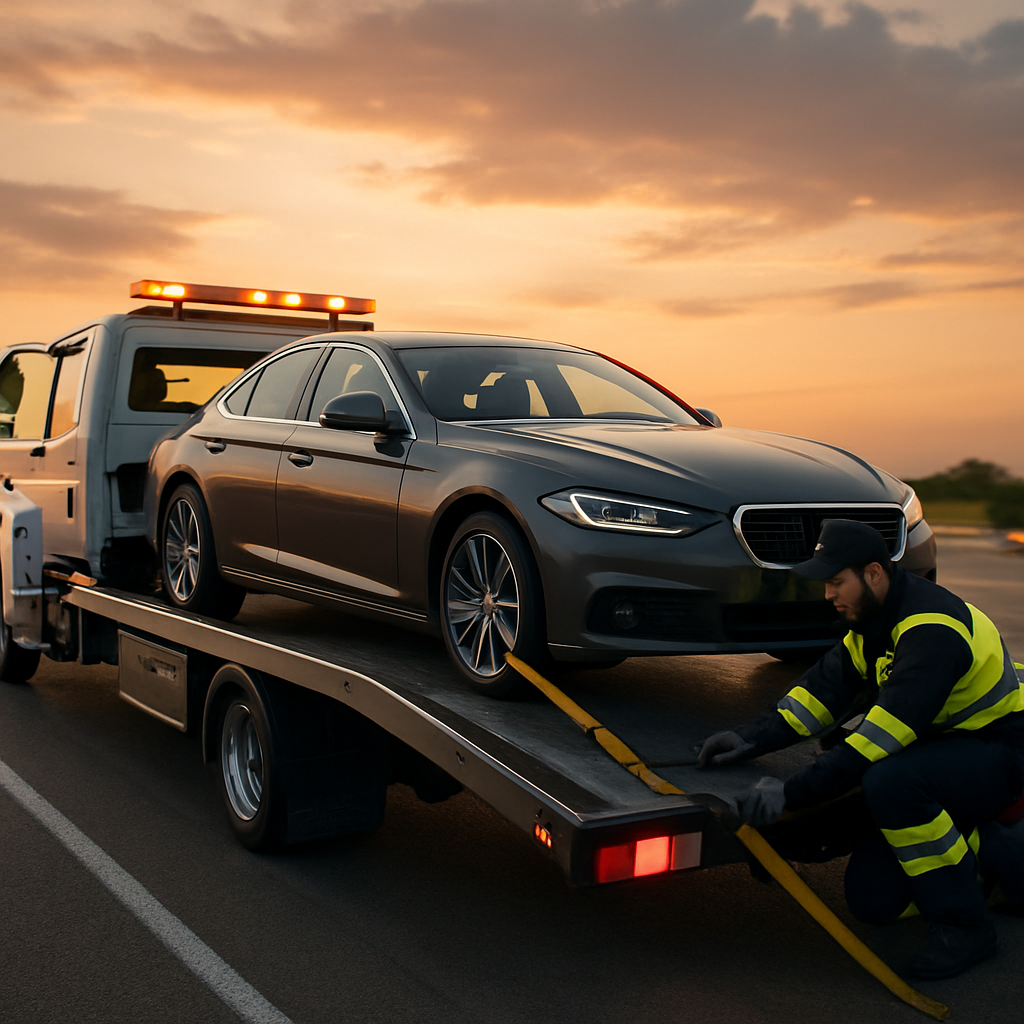
[Insert Image – High-end tow truck assisting a stranded car at sunset]
If you have ever searched for towing service near me, needed emergency towing, or tried to figure out whether flatbed towing is worth the extra cost, this article is designed to answer those questions clearly and professionally. It also explains when vehicle transport is safer than local towing, how to avoid hidden damage, and what really drives price differences in the United States.
The goal is simple: help you make a better decision under pressure. Because when it comes to vehicle towing, there is no universal answer. The best choice depends on vehicle type, distance, drivetrain, weight, road conditions, and the reason the car is not moving.
The Real Truth About Vehicle Weight
Most people think vehicle weight is just a number on a spec sheet. In practice, it is one of the most important factors in towing safety, equipment selection, and damage prevention.
Weight determines how a vehicle behaves on a tow truck, how much stress is placed on its drivetrain, and whether a temporary towing method will be safe at all. It also affects braking, steering, trailer loading, tongue weight, and the stability of the entire recovery operation.
Curb Weight vs Gross Weight
Curb weight is the weight of the vehicle as it sits ready to drive, with standard fluids and no passengers or cargo. It is the base number most people see in brochures and online listings.
Gross Vehicle Weight Rating, or GVWR, is the maximum safe operating weight of the vehicle when loaded with passengers, cargo, fuel, accessories, and anything else it is carrying. This is the true upper boundary the vehicle should not exceed.
For towing decisions, curb weight matters because it tells you how much the vehicle itself weighs when empty. GVWR matters because a heavily loaded vehicle can behave very differently from the same model with nothing inside it.
That distinction becomes critical during recovery. A compact sedan with a nearly empty trunk is very different from the same sedan packed for a road trip with roof cargo and passengers. The tow method that is safe for one may be risky for the other.
Why Weight Distribution Matters More Than Most Drivers Realize
Weight is not just about total pounds. It is also about where those pounds sit.
A vehicle with its mass concentrated low and centered is generally more stable. A vehicle with heavy rear overhang, large battery packs, lifted suspension, or uneven cargo load can behave unpredictably when pulled, lifted, or placed on a trailer.
Improper balance can create swaying, tire scrub, excessive tongue pressure, or sideways loading on suspension components. These are the kinds of issues that often do not look dramatic in the moment, but can lead to expensive damage later.
That is why professional towing operators do more than hook and pull. They assess center of gravity, axle load, wheel position, drivetrain layout, and the recovery path before moving the vehicle.
Real-World Weight Examples That Matter
Here is where everyday vehicles reveal how different towing can be in practice.
Tesla Model 3 is relatively low and dense because of its battery placement. That low center of gravity improves road stability, but it also creates special towing concerns. The wrong method can expose the drivetrain to unnecessary stress, especially if the wheels are allowed to rotate improperly.
Ford F-150 is a common full-size pickup with wide configuration differences. A basic rear-wheel-drive work truck is one thing. A 4×4 truck with heavy equipment, aftermarket accessories, and towing gear is another. Weight, axle layout, and transfer case design all affect the safest recovery method.
Toyota Camry is a midsize sedan with predictable towing behavior, but its front-wheel-drive layout means the front wheels and transaxle need careful consideration. A standard flatbed is usually the safest answer.
Honda Civic is lighter, but that does not mean it is carefree to tow. Lightweight vehicles can be more sensitive to improper tie-down points, suspension compression, and wheel damage from poor loading angles.
Chevrolet Tahoe is large, heavy, and often equipped with four-wheel drive. That combination changes everything. Weight alone raises the difficulty of recovery, and the drivetrain can make towing method selection more restrictive.
Ram 1500 presents another common challenge. Depending on whether it is 2WD, 4WD, loaded, lifted, or modified, the safest towing setup can vary significantly. This is one reason why professional operators ask detailed questions before dispatch.
Why Weight Sensitivity Is a Hidden Risk
Vehicles that appear similar on the outside may have very different towing sensitivities underneath. A base model sedan and a hybrid version of the same sedan can have different curb weights and different drivetrain structures. A gas pickup and a diesel pickup may differ in front axle load. A standard SUV and a performance package version may not be treated the same way by a seasoned tow operator.
The practical lesson is simple: never assume a vehicle can be towed based only on size. Weight, drivetrain, and ride height matter just as much as the badge on the grille.
TABLE – Vehicle Weight Breakdown
| Vehicle Type | Example Model | Average Weight | Towing Sensitivity Level |
| Compact Sedan | Honda Civic | 2,900 to 3,100 lbs | Medium |
| Midsize Sedan | Toyota Camry | 3,300 to 3,600 lbs | Medium |
| Electric Sedan | Tesla Model 3 | 3,800 to 4,100 lbs | High |
| Full-Size Pickup | Ford F-150 | 4,300 to 5,600 lbs | High |
| Full-Size SUV | Chevrolet Tahoe | 5,400 to 6,000 lbs | High |
| Half-Ton Pickup | Ram 1500 | 4,800 to 5,800 lbs | High |
The Science of Towing, Explained Simply
Towing is not just moving a disabled vehicle from one location to another. It is a controlled mechanical load transfer. The tow operator must manage force, angle, wheel position, braking behavior, and drivetrain motion while minimizing wear.
If those forces are not managed correctly, the vehicle can suffer damage even if it appears to arrive safely.
Mechanical Stress
When a vehicle is towed, parts of the suspension, steering system, axles, and tires can be placed under loads they were not designed to handle in that configuration. The motion of the tow, even at low speed, can amplify these stresses.
A poor loading angle can force the front bumper, chin spoiler, or exhaust components to scrape. A bad attachment point can pull on body panels instead of the frame. A rough tow route can add vibration that affects wheel bearings or alignment.
Professional towing is about reducing those stresses, not just overcoming them.
Transmission Risks
One of the most common hidden dangers in towing is transmission damage. Many modern transmissions are lubricated and cooled in ways that depend on the engine running. If the wrong wheels are left on the ground, internal components may rotate without proper lubrication.
That can lead to overheating, fluid breakdown, and premature wear. In severe cases, the transmission may fail long after the tow is complete, leaving the owner with a bill that feels unrelated to the original emergency.
This is why the answer to a towing question is rarely just yes or no. It is often which wheels stay on the ground, how far, at what speed, and for what drivetrain.
Drivetrain Differences: FWD, RWD, AWD, and 4WD
Front-wheel drive vehicles are common in sedans and compact cars. They usually require the front wheels to be handled carefully because the transmission and drive components are concentrated there.
Rear-wheel drive vehicles often allow more flexibility in some recovery situations, but that does not mean every method is safe. The driveline can still be vulnerable if the wrong axle is left rolling.
All-wheel drive vehicles are among the most sensitive because power can be routed to multiple wheels continuously or on demand. A mismatch in wheel rotation can strain the center differential or transfer system.
Four-wheel drive trucks and SUVs can be equally sensitive, especially if the transfer case is not properly placed in neutral or the manufacturer’s towing procedure is not followed exactly.
The bottom line: drivetrain design determines towing rules, not just vehicle size.
Why Improper Towing Destroys Vehicles
Improper towing can damage a car in ways the driver may not see until days later. Wheel rotation without proper lubrication, overloaded tie-down points, dragging a low vehicle over steep ramps, or towing an AWD vehicle with the wrong wheels on the ground can all create expensive problems.
Sometimes the damage is obvious immediately. Other times it shows up as vibration, a warning light, unusual tire wear, transmission noise, or steering pull after the tow is complete.
That delay is what makes towing mistakes so costly. The vehicle may appear fine when dropped off, but the owner discovers the real problem after the fact.
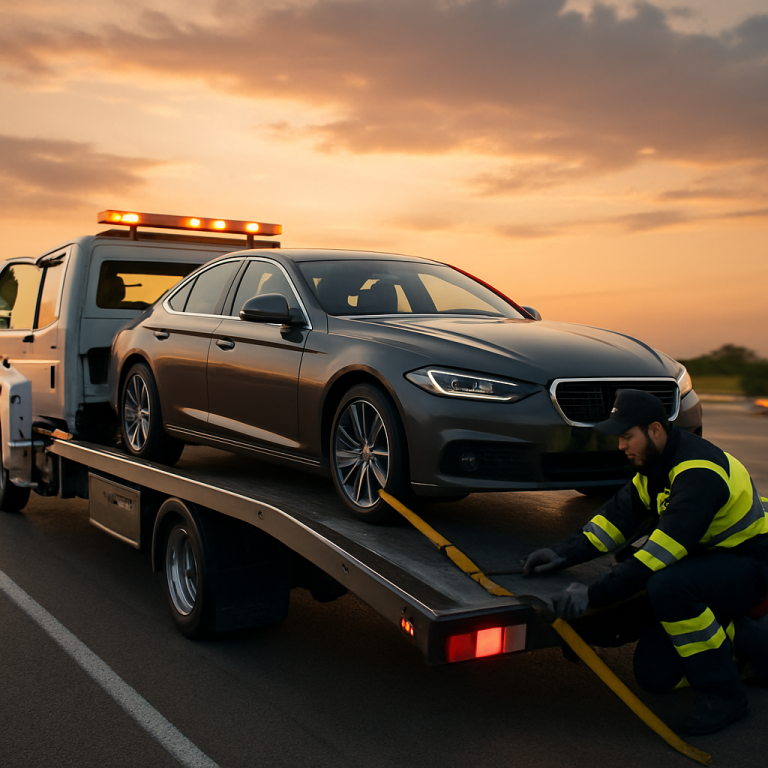
[Insert Image – Technical towing setup / vehicle loading process]
Scenario-Based Decision Framework for Real-World Towing
The smartest towing decision starts with the situation, not the truck.
A broken-down car in a neighborhood, a disabled SUV on an interstate shoulder, and a non-running classic in a garage all require different approaches. The best method depends on safety, distance, drivetrain, and how much movement the vehicle can tolerate.
1. Breakdown in the City
Immediate action: Move passengers to a safe place if possible. Turn on hazards, stay aware of traffic, and call roadside assistance or a towing service near me.
Best towing method: Flatbed towing is usually the safest and simplest choice, especially if the vehicle is modern, low clearance, AWD, or electric.
Risk level: Medium to high, depending on traffic and where the car stopped.
When transport is smarter: If the vehicle is not urgently needed and the destination is far away, a transport option may be more cost-effective and safer for the car.
2. Highway Emergency
Immediate action: Get out of the travel lane as safely as possible. Do not remain in the vehicle if it is exposed to active traffic danger. Call emergency towing immediately.
Best towing method: Flatbed is usually preferred because it reduces roadside exposure time and avoids extra drivetrain stress.
Risk level: High. The biggest danger is not just the car, but the roadside environment.
When transport is smarter: If the issue is mechanical but not urgent, and the car can be safely moved to a secure location first, transport can be arranged later under better conditions.
3. Accident: Minor vs Major
Immediate action: Check for injuries first. In a minor collision, the car may still roll and steer. In a major accident, frame damage, fluid leaks, or wheel displacement can make any wheel-ground towing unsafe.
Best towing method: Minor damage may allow flatbed or wheel-lift depending on the vehicle. Major damage usually calls for a flatbed or specialized recovery equipment.
Risk level: Low to very high depending on structural damage.
When transport is smarter: If the vehicle is damaged but not urgent, especially after insurance involvement, vehicle transport may be the better long-distance solution.
4. Non-Running Vehicle at Home
Immediate action: Check whether the vehicle rolls, whether the steering locks, and whether the tires hold air. Prepare keys, parking brakes, and clearance around the vehicle.
Best towing method: Flatbed or trailer, depending on access and condition.
Risk level: Medium. Driveway angle, curb height, and limited space can create loading challenges.
When transport is smarter: If the car is being sold, restored, or moved long distance, vehicle transport may save money and reduce handling.
5. Long-Distance Move
Immediate action: Compare total cost, mileage exposure, and risk. Long-distance towing is not always the best answer, especially for modern or valuable vehicles.
Best towing method: Often transport on an enclosed or open carrier rather than traditional towing.
Risk level: High if the vehicle is driven or towed hundreds of miles in a way that was never intended.
When transport is smarter: Almost always, if the move crosses cities or states and the car does not need same-day roadside recovery.
A Simple Decision Rule
If the car is broken, low, expensive, AWD, electric, or going far, flatbed or transport is usually the smartest first choice.
If the vehicle is old, simple, short-distance, and the recovery is controlled, a lower-cost towing method may be reasonable.
If you are unsure, that uncertainty itself is a sign to avoid improvising.
Towing Methods: What They Do, When They Work, and Where They Fail
Choosing the right towing method is where most people either save money or create a much bigger problem. Each option has a place. Each also has limitations.
Flatbed Towing
Flatbed towing is the gold standard for safety, versatility, and damage prevention.
The vehicle is fully lifted onto the truck bed, so all four wheels are off the ground. That means no wheel rotation, no tire drag, and far less drivetrain risk for most vehicles.
Best for: AWD vehicles, EVs, luxury vehicles, low-clearance cars, accident damage, and long-distance recovery.
Pros: Highest protection, fewer drivetrain issues, safest for modern cars, good for unstable vehicles.
Cons: Can cost more, may not fit in tight spaces, may require more loading time.
Hidden advantage: It often reduces the chance of a second problem after the original breakdown.
Tow Dolly
A tow dolly lifts one axle off the road while the other axle rolls behind the towing vehicle.
This can be useful for certain front-wheel-drive vehicles over short distances, but it is not universally safe.
Best for: Some FWD vehicles, short relocations, budget-sensitive local moves.
Pros: Lower cost than a flatbed in some markets, lighter equipment, useful for simple vehicles.
Cons: Not ideal for AWD, can be risky if used incorrectly, tie-down discipline matters, loading angle can be problematic.
Hidden drawback: People often assume a dolly is a cheap version of a flatbed. It is not. It is a specific tool for specific cars.
Trailer
A trailer can be excellent when used correctly. It is especially useful for planned vehicle transport, project cars, race cars, and classic vehicles.
Best for: Non-running cars, collectibles, hobby use, long-distance relocation with the right tow vehicle.
Pros: Very secure when loaded properly, useful for enclosed setups, flexible for long hauls.
Cons: Requires towing skill, hitch capacity, braking awareness, and licensing considerations in some situations.
Hidden drawback: The tow vehicle must be capable not only of pulling the trailer, but also controlling it safely under braking and crosswind conditions.
Wheel-Lift
Wheel-lift towing uses a metal yoke to lift either the front or rear wheels while the other axle remains on the road.
This method is widely used in urban towing, parking enforcement, and short recoveries.
Best for: Short-distance towing of suitable vehicles, simple recoveries, tight city environments.
Pros: Fast, efficient, good for access-limited locations.
Cons: Higher risk for some drivetrains, not the best for long distances, can create tire and transmission concerns.
Hidden drawback: It may look routine, but for the wrong car, it can become expensive very quickly.
Cost vs Safety vs Risk Analysis
People often focus only on price, but towing is one of those services where the cheapest choice can become the most expensive one if the method is wrong.
A flatbed may cost more upfront, but it can save you from a transmission repair, tire damage, or an AWD system issue later. A dolly may be reasonable for one vehicle and completely inappropriate for another. A wheel-lift may be perfect for a short city tow and a poor fit for a cross-town recovery.
The right question is not what costs least today. The right question is what protects the vehicle at the lowest total cost.
TABLE – Best Method by Situation
| Scenario | Vehicle Type | Recommended Method | Risk Level | Notes |
| City breakdown | Sedan, SUV, EV | Flatbed | Low to Medium | Safest all-around choice |
| Highway emergency | Any vehicle | Flatbed | High roadside risk | Minimizes time exposed on shoulder |
| Minor accident | Front-wheel drive sedan | Flatbed or wheel-lift | Medium | Depends on wheel and suspension condition |
| Major accident | Any vehicle | Flatbed or specialty recovery | High | Structural damage may rule out wheel-ground towing |
| Home non-running car | Classic or modern car | Flatbed or trailer | Low to Medium | Space and driveway angle matter |
| Short local move | Older FWD sedan | Tow dolly | Medium | Only if manufacturer guidance allows it |
| Long-distance move | Luxury, EV, collector car | Vehicle transport | Low | Often safer and better value than towing |
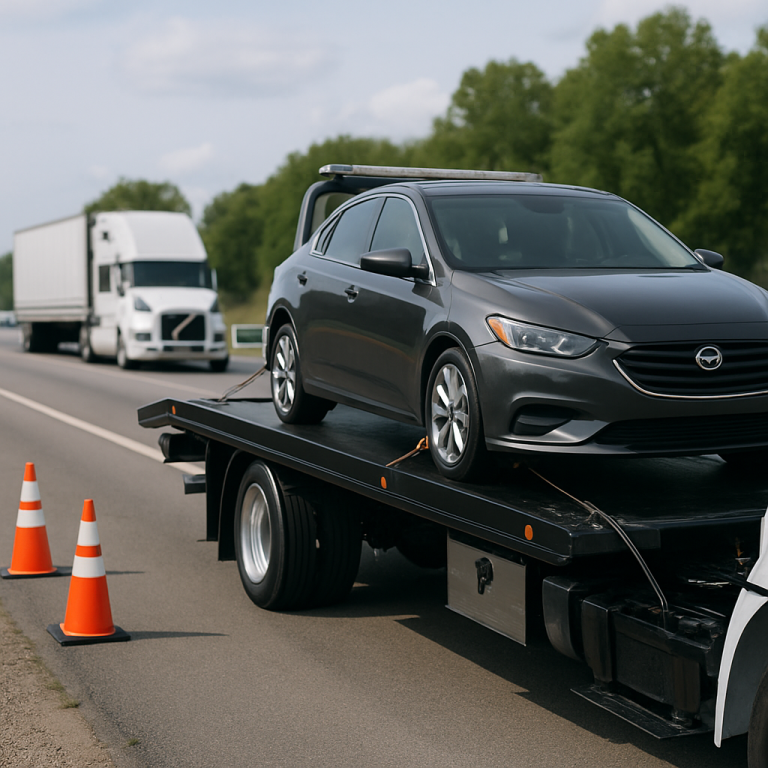
[Insert Image – Long-distance vehicle transport truck on highway]
Electric Vehicles and Modern Cars: A Different Towing World
Electric vehicles changed the towing conversation in a major way. Many older towing habits do not translate well to EVs, especially to vehicles like Tesla, where wheel rotation and system behavior must be treated carefully.
Why EVs Are Different
EVs are heavier than many comparable gasoline vehicles because of the battery pack. That extra mass affects loading, braking, and tie-down strategy.
They also use regenerative braking, high-voltage battery systems, and drive components that are not always tolerant of being moved the wrong way. A careless tow can trigger warnings, create mechanical strain, or complicate diagnostics later.
Why Tesla Cannot Be Towed Normally
With Tesla and many other EVs, the manufacturer’s procedure matters more than assumptions. Some towing methods that seem normal on a gas sedan can be risky on an EV because the electric drivetrain and control systems respond differently.
In practical terms, that means the safest answer is usually a flatbed, proper transport mode if applicable, and exact attention to the manufacturer’s instructions.
Never assume an EV can be dragged like an older car just because it has four wheels and a steering wheel.
Regenerative Braking Risks
Regenerative braking can create resistance or unexpected behavior if the vehicle is moved in a way the system does not expect. Even when the car is off, its systems may react differently from a conventional vehicle.
This is why well-meaning but uninformed towing can cause problems that are difficult to diagnose later. The car may appear to operate normally after the tow, then display faults or reduced performance later.
Battery System Risks
High-voltage systems are not something to approach casually. Although towing itself does not usually expose the battery directly, improper recovery after collision damage, flooding, or underbody impact can create added risk.
EVs deserve a methodical, controlled approach. Flatbed transport is often the preferred answer because it limits wheel rotation, reduces uncertainty, and minimizes unnecessary handling.
Hidden Damage Risks Most Drivers Never Consider
Many towing-related repairs do not look like towing damage at all. They show up later as a symptom that seems unrelated until a technician traces the problem back to the recovery event.
Transmission Burn
If a vehicle is towed with the wrong wheels on the ground, the transmission can overheat or lose lubrication. This may not fail instantly. Instead, it can create heat-related wear that shortens transmission life.
The worst part is that the issue may not be obvious during the tow itself. It may show up after a few days of normal driving.
AWD System Failure
All-wheel-drive systems are especially vulnerable to mismatched wheel speed. If one axle rotates independently while the other is constrained incorrectly, the center differential or transfer mechanism can be strained.
For AWD vehicles, the safest assumption is often that full wheel lift or flatbed transport is the correct choice unless the manufacturer specifically says otherwise.
Suspension Damage
Low-clearance cars, vehicles with aftermarket lowering kits, and cars with damaged suspension can suffer additional harm while being loaded. Ramps can scrape bumpers, undertrays, side skirts, and exhaust components.
Even a small vertical angle can be enough to create contact on vehicles with limited approach or departure clearance.
Frame Stress
Some recovery points are not designed for heavy pulling angles. If a tow operator attaches equipment to the wrong part of the vehicle, the force can twist body structure or damage mounting points.
That risk is especially relevant after collisions, when the frame or unibody may already be compromised.
Tire Damage
Dragging tires, poor dolly use, or incorrect strap placement can cause flats, sidewall cuts, and uneven wear. On high-value vehicles, even short-distance tire damage is unacceptable because it may also affect alignment and handling.
Insider Knowledge That Saves Money
Here is what experienced operators know: the tow is often not the repair, but it can be the event that creates the repair. That is why careful setup matters so much.
Towing vs Vehicle Transport: When a Tow Is the Wrong Tool
People often use the words towing and transport as if they mean the same thing. In reality, they solve different problems.
Towing is usually the right answer for an immediate breakdown, roadside recovery, or a vehicle that needs to go a short to moderate distance to a shop, yard, or home.
Vehicle transport is often the better answer for planned movement, long-distance relocation, dealership purchases, auctions, classic cars, luxury vehicles, or cars that should not accumulate unnecessary mileage and wear.
Local Towing vs Long-Distance Transport
Local towing is about speed and recovery. Long-distance transport is about efficiency, protection, and controlled logistics.
A truck that is perfect for a 15-mile tow may not be the right tool for moving a collector car 1,200 miles. Likewise, a transport carrier may be overkill for a simple roadside flat tire.
When Towing Becomes Risky
Towing becomes risky when the distance grows, the car is low, the drivetrain is sensitive, the route is rough, or the vehicle is too valuable to gamble with.
Once those factors stack up, transport often becomes the smarter financial decision even if the upfront quote is higher.
When Transport Is Smarter
Buying cars out of state: Transport protects the vehicle and saves wear on a recently purchased car.
Shipping luxury vehicles: Higher-end vehicles deserve more controlled handling and lower exposure risk.
Moving classic cars: Classic vehicles may have unique parts, old seals, fragile trim, and restoration value that make towing too crude.
Relocation: If you are moving across states, vehicle transport may be cheaper than dealing with multiple fuel, mileage, lodging, and wear costs.
The best vehicle transport decision is usually made before the car ever leaves the driveway.
Cost Intelligence: What Really Drives the Price
Pricing in the towing and transport world is influenced by more than distance. Understanding the real cost drivers helps you compare quotes accurately and avoid hidden surprises.
What Affects Towing Cost
Distance: Short local tows are priced differently from longer hauls.
Vehicle type: Larger, heavier, lower, or more complex vehicles often require more careful handling.
Time of day: Night, weekend, and holiday service usually costs more.
Road conditions: Tight city access, mud, snow, steep driveways, and accident scenes can increase complexity.
Recovery difficulty: A simple roll-and-load is not the same as a vehicle stuck in a ditch or involved in a collision.
What Affects Transport Cost
Distance: Transport is usually priced by mileage and route.
Carrier type: Open carrier is often less expensive than enclosed transport.
Vehicle size and weight: Bigger vehicles take more space and may cost more.
Speed of service: Rush moves and exact pickup windows can increase cost.
Season and lane demand: Popular routes and peak moving periods can influence pricing.
Why the Cheapest Option Is Often Dangerous
A low quote may mean the provider is planning to use the wrong method, cut corners on equipment, or rush the job. That is not value. That is risk disguised as savings.
In this industry, value comes from matching the right service to the vehicle, the route, and the situation. A slightly higher price can be the difference between a normal recovery and an expensive repair.
TABLE – Cost Comparison
| Service Type | Distance | Typical Price Range | Risk Level |
| Local towing | 0 to 10 miles | Moderate | Low to Medium |
| Emergency towing | Any short roadside recovery | Moderate to higher after-hours | Medium to High |
| Flatbed towing | Short to moderate distance | Moderate to higher | Low |
| Tow dolly service | Short distance | Lower to moderate | Medium |
| Vehicle transport | Long distance | Higher upfront, better value over distance | Low |
| Enclosed transport | Long distance for specialty cars | Highest | Very low |
Critical Mistakes People Make with Towing
Many towing failures are preventable. The issue is not that the driver is careless. It is that towing has more technical detail than most people expect.
DIY Towing Mistakes
Trying to tow a vehicle with equipment that was not designed for the load is one of the fastest paths to trouble. That includes improper straps, weak hitches, mismatched ball mounts, and improvised methods that are not load-rated.
Even if the vehicle moves, that does not mean the tow was safe.
Wrong Equipment
Using the wrong tool for the car can create avoidable damage. A wheel-lift may be fine for one vehicle and wrong for another. A dolly may be economical and still not appropriate. A trailer may be excellent but only if the tow vehicle can manage the combined load.
Always match the equipment to the vehicle, not the other way around.
Ignoring Vehicle Type
One of the biggest mistakes is treating all vehicles the same. A front-wheel-drive sedan, a body-on-frame truck, an AWD crossover, and an EV do not respond the same way to towing.
Ignoring those differences can cause hidden damage that costs far more than the tow itself.
EV Mistakes
Electric vehicles are often treated like standard cars by drivers who are unfamiliar with their requirements. That is a major mistake.
EVs may require special loading procedures, transport mode settings, and careful handling around battery-related systems. If you do not know the correct method, a professional flatbed service is usually the safest answer.
Overconfidence in Short Distances
Many people assume that a short tow cannot hurt anything. Unfortunately, that is not always true. A short improper tow can still damage the transmission, tires, or suspension.
Distance matters, but so does method.
Expert Insights and Little-Known Facts
After enough recoveries, certain patterns become obvious.
The Hardest Vehicles to Tow
The most difficult vehicles are often not the largest. They are the ones with a combination of low clearance, AWD, electric drivetrains, heavy weight, or collision damage.
A low sports car with a shallow approach angle can be harder to load than a bigger SUV. A damaged luxury sedan can be harder to recover than a working pickup truck.
Why AWD Is So Sensitive
AWD systems are sensitive because they are designed to manage power across multiple wheels under controlled conditions. Towing can upset those conditions quickly if wheel rotation is not handled correctly.
That is why flatbed towing is usually the preferred choice for AWD vehicles. It removes most of the uncertainty.
Why Flatbed Is Usually Safest
Flatbed towing eliminates wheel-ground rotation, reduces tire wear, simplifies damage control, and gives operators a more stable platform. For many modern vehicles, it is the closest thing to a universal best practice.
If the vehicle is expensive, uncommon, low, AWD, or electric, flatbed is often not an upgrade. It is the baseline standard.
Surprising Facts Most Drivers Do Not Know
Some cars are more sensitive to tow angle than they are to distance. A steep driveway can be more dangerous than a longer road trip.
Some towing damage is not caused by the tow itself, but by loading and unloading. Ramps, angle changes, and tie-down placement matter more than many people think.
Some transport quotes are cheaper than repeated local towing once wear, time, and risk are counted honestly.
And in many cases, the best professional service is the one that asks the right questions before sending a truck.
That is a good sign, not a delay. It means the company understands that vehicle transport decisions should be deliberate, not rushed.
Frequently Asked Questions
What is the safest towing method for most cars?
For most modern vehicles, flatbed towing is the safest choice because all four wheels stay off the ground and the drivetrain is protected from unnecessary rotation.
Is flatbed towing always necessary?
Not always, but it is often the safest option. Some older front-wheel-drive vehicles or simple short-distance recoveries may allow other methods, but vehicle type and manufacturer guidance should always come first.
Can an AWD vehicle be towed with wheels on the ground?
Sometimes only under very specific conditions, and often only for very short distances if allowed at all. In practice, flatbed towing is usually the safest and most reliable answer for AWD vehicles.
Why is my EV more complicated to tow than a gas car?
EVs are heavier, use regenerative braking, and have drivetrain and battery systems that respond differently from traditional vehicles. Improper towing can create system faults or unnecessary mechanical stress.
How do I know if I need emergency towing or vehicle transport?
If the car is disabled right now and needs immediate roadside recovery, you need emergency towing. If the vehicle is being moved farther away, relocated, purchased, or shipped on a planned schedule, vehicle transport is often the better choice.
What is the difference between towing capacity and towing method?
Towing capacity refers to how much weight a tow vehicle can safely pull. Towing method refers to how the disabled vehicle is physically moved. Both matter, but they are not the same thing.
Is a tow dolly safe for all front-wheel-drive cars?
No. A tow dolly may work for some front-wheel-drive vehicles, but not all. Clearance, drivetrain design, manufacturer instructions, and distance all matter. It is not a universal solution.
Why does towing cost more at night?
Night service often costs more because of staffing, emergency response demands, reduced visibility, and the urgency of the call. After-hours roadside work also tends to involve higher operational complexity.
Can towing damage my transmission?
Yes, if the wrong wheels are on the ground or the vehicle is towed in a way the drivetrain does not support. This is one of the most common hidden forms of towing damage.
Should I choose the cheapest towing quote?
Not automatically. The cheapest quote may not include the right equipment or level of care. It is better to compare method, experience, and vehicle fit before focusing on price alone.
What should I do while waiting for roadside assistance?
Move to a safe location if possible, keep hazard lights on, stay away from traffic, and have your vehicle details ready. If the situation is on a highway, safety comes first and standing near the vehicle is usually not wise.
Are classic cars better transported than towed?
Usually yes. Classic cars often have low ground clearance, fragile parts, aging components, and higher value. Vehicle transport is typically the safer and more professional choice.
Can a pickup truck be towed like a sedan?
No. Trucks often have different weight distribution, frame design, axle configurations, and drivetrain setups. A pickup can require a very different recovery approach than a sedan.
When is roadside assistance enough?
Roadside assistance is ideal for minor issues like a dead battery, flat tire, lockout, or simple fuel delivery. If the vehicle cannot be safely made roadworthy on site, towing is the next step.
Choosing the right towing or transport solution is not about guessing. It is about respecting the vehicle’s weight, drivetrain, distance, and condition before damage has a chance to spread. That is why the best outcomes usually come from a methodical approach, clear communication, and a professional team that understands the difference between moving a vehicle and protecting it.
About the Author