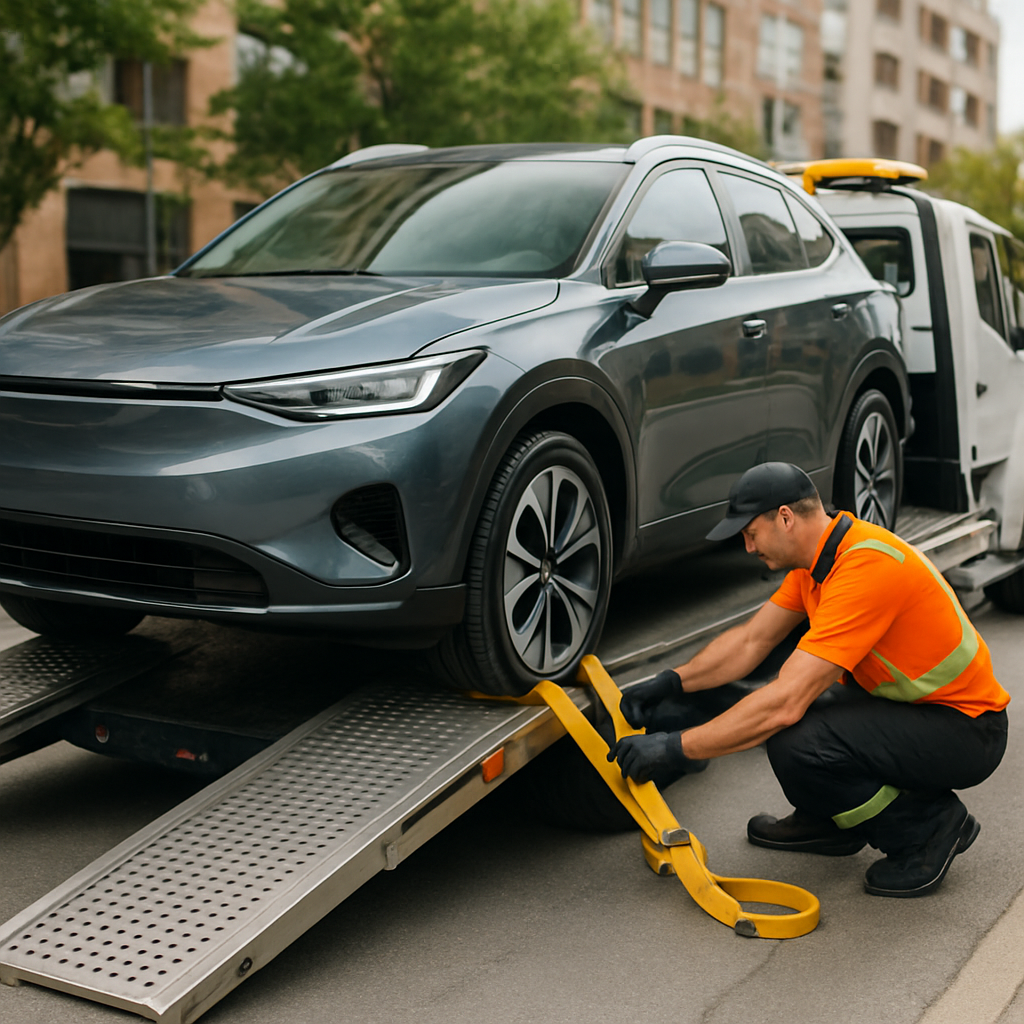
A towing mistake looks small from the roadside. A hook attached in the wrong place. A drivetrain left engaged. A cheap truck chosen because it was available “right now.”
Thank you for reading this post, don't forget to subscribe!Then the bill arrives.
What seemed like a quick emergency tow can turn into transmission failure, a ruined battery system, damaged suspension, or a car that never drives the same again. In the towing world, the most expensive damage is often caused by the simplest bad decision.
If you own an AWD vehicle, an electric car, a luxury sedan, or anything with low ground clearance, towing is not just about moving it. It is about protecting the systems underneath it from damage that can cost thousands. And that is where most people get caught off guard.
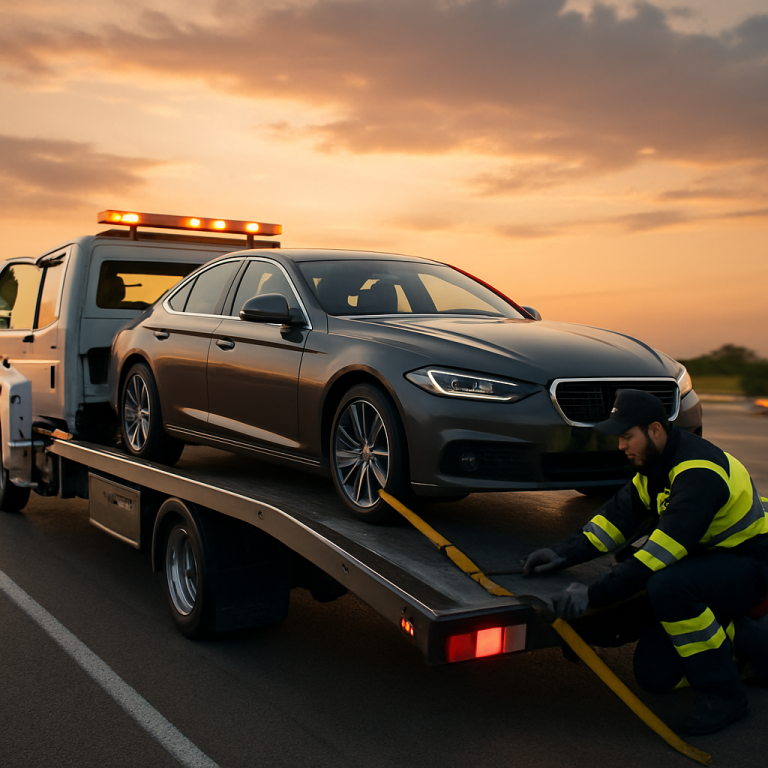
[Insert Image – Car being towed incorrectly]
Introduction
Most drivers assume towing is straightforward: hook up the car, lift it, and go. In reality, towing is one of the easiest ways to quietly destroy a vehicle if the wrong method is used.
The harsh truth is that car towing damage often happens before the driver even realizes anything went wrong. A transmission can be strained, an AWD system can be forced to fight itself, and an electric vehicle can suffer electrical or drive-unit issues from improper handling. By the time the vehicle is unloaded, the damage may already be locked in.
That is why towing safety is not a minor detail. It is the difference between a routine emergency towing job and a repair invoice that makes your stomach drop.
This article breaks down the biggest towing mistakes people make, why those mistakes happen, what they cost, and how to avoid them with professional-level judgment. If you have ever needed vehicle transport, or think you might one day, this is the insider knowledge that can save you from a very expensive lesson.
The Most Expensive Towing Mistakes
There are plenty of ways to tow a vehicle badly, but a few mistakes cause the worst damage again and again. These are the ones professionals watch for first.
Towing AWD vehicles incorrectly
All-wheel drive vehicles are one of the biggest problem categories in towing. Many drivers do not realize that AWD systems are built to keep all four wheels rotating in sync. If a tow operator lifts only two wheels and drags the others, the drivetrain may still be partially engaged.
That creates resistance where the vehicle is not supposed to have it. The transfer case, center differential, and axle components can overheat or wear far faster than normal. In severe cases, a short tow can trigger major drivetrain failure.
The most dangerous part is that the car may appear fine immediately after towing. Then the warning lights come on later, or the transmission begins making noises that were not there before.
Towing electric cars the wrong way
Electric vehicles are not just cars without gas tanks. They use unique drive systems, battery management systems, and in many cases sealed drivetrain components that can be extremely sensitive to improper towing.
Some EVs can be damaged if their drive wheels are rotated while the car is off or if the vehicle is towed with the wrong wheel configuration. Others are extremely sensitive to how they are loaded, chained, or winched. Flatbed towing is often required because it keeps the entire vehicle fully off the road and minimizes stress on the system.
When a tow operator assumes an EV can be handled like a conventional sedan, the result can be expensive and surprisingly hard to diagnose later.
Using the wrong equipment
Not all tow gear is equal. The wrong straps, bent hooks, poor wheel lifts, mismatched dollies, or a damaged winch line can all create damage while the car is being moved.
Improper tie-down points can crush suspension arms or damage frame components. A hook attached to a fragile underbody panel can tear it loose. Cheap or worn equipment also increases the chance of the vehicle shifting during transport, which can lead to more damage than the original breakdown.
Professional towing is not just about skill. It is about matching the right equipment to the right vehicle.
Dragging a car with the transmission engaged
One of the oldest and most damaging mistakes is towing a car without making sure the drivetrain is in the correct mode. If the transmission is engaged or the parking brake is not fully released, the vehicle can be dragged against its own resistance.
That kind of force can destroy braking components, overheat transmission internals, or cause wheel and tire damage almost immediately. Even if the car moves, it does not mean it is moving safely.
In emergency towing situations, operators should know exactly how to place the vehicle in neutral, how to disable parking brakes when required, and when not to tow at all.
Ignoring manufacturer rules
Manufacturers publish towing requirements for a reason. They know how the drivetrain, suspension, battery system, and parking mechanisms are built. Ignoring those rules is gambling with expensive hardware.
Some cars require flatbed towing only. Some need special wheel-lift procedures. Some should never be pulled backward for long distances. If the manual says one thing and the tow operator does another, the car is the one that pays for it.
This is one of the most common towing mistakes because people assume “a car is a car.” It is not. A compact sedan, a full-size SUV, a sports car, and an EV can all require completely different handling.
Why These Mistakes Happen
Most towing damage is not the result of bad intentions. It happens because people underestimate how technical towing really is.
Lack of knowledge
Many drivers do not know whether their vehicle is front-wheel drive, rear-wheel drive, AWD, or fully electric. They also do not know what towing method is safe for each system.
That lack of knowledge turns a stressful breakdown into a guessing game. And guessing is the most expensive way to tow.
Cheap services
Low-cost towing companies sometimes cut corners to keep the price attractive. That can mean older equipment, poorly trained operators, rushed loading, or ignoring vehicle-specific requirements.
Cheap towing is not always bad, but the cheapest option is often the one that skips the careful steps that protect your vehicle. In towing, the missing step is usually the expensive one.
DIY towing
Trying to tow a car yourself can seem practical until the car begins to sway, scrape, or roll in ways you did not expect. Without the right hitch setup, braking control, dollies, or tie-downs, a DIY tow can quickly become dangerous.
Even people who are handy around cars often underestimate how much forces change when a vehicle is moving behind another vehicle or being winched onto a trailer.
Wrong assumptions
One of the biggest myths is that if a car has four wheels, any tow method will work. Another common assumption is that if the tow is short, the risks do not matter.
Short distance does not always mean low risk. A bad tow over just a few blocks can still cause drivetrain strain, tire wear, suspension misalignment, or damage to the underside of low-profile vehicles.
What Happens When You Tow a Car Wrong
The consequences are not always immediate, but they are rarely minor. Wrong towing puts stress into systems that were never designed to absorb it.
Transmission damage
Automatic transmissions are sensitive to how wheels rotate during towing. If the wrong wheels are on the ground or the driveline is not properly isolated, internal parts can spin without enough lubrication.
That can lead to overheating, worn gears, or complete transmission failure. Replacing or rebuilding a transmission is one of the most expensive outcomes of towing mistakes.
AWD system failure
AWD systems rely on balanced rotation and specific power distribution. If one axle is moving and another is not, the transfer case and center differential may be forced to compensate.
That extra stress can create vibrations, binding, fluid breakdown, and mechanical wear. A failed AWD system is not a cheap repair. It can rival major engine work in cost.
Battery system issues in EVs
Electric vehicles bring a different type of risk. Towing mistakes can create faults in the drive system, trigger error codes, or in some cases cause battery-related warnings that require dealership-level diagnostics.
Because EVs often have regenerative braking and electronically controlled drive systems, improper towing can confuse the system or damage components that are not easy to access or replace.
Suspension damage
Suspension systems take a beating when a car is lifted from the wrong points or tied down poorly. Bent control arms, damaged bushings, broken air suspension components, and alignment issues can all follow a bad tow.
For luxury vehicles and low cars, this risk is even higher. The lower the car sits, the easier it is to scrape or compress the suspension incorrectly during loading.
Secondary damage
Sometimes the original towing mistake leads to smaller problems that add up. Tire sidewalls can be cut. Underbody shields can crack. Exhaust components can bend. Sensors can fail.
The car may still run, but the repair list grows quietly after the tow. That is why car towing damage is often underestimated at first.
TABLE – Mistake vs Damage
| Mistake | What happens | Estimated repair cost | Risk level |
|---|---|---|---|
| Towing AWD with two wheels on the ground | Drivetrain binds, transfer case and differential wear or fail | $1,500–$6,000+ | High |
| Dragging car with transmission engaged | Transmission overheats or internal components are damaged | $2,000–$8,000+ | High |
| Improper EV towing | Drive system faults, battery warnings, software or component issues | $500–$5,000+ | High |
| Wrong tie-down points | Suspension, underbody panels, or sensors get damaged | $300–$2,500+ | Medium to High |
| Using cheap or worn equipment | Vehicle shifts, scrapes, or slips during loading and transport | $200–$3,000+ | Medium to High |
| Towing low car without proper angle control | Front bumper, splitter, or exhaust scrapes on approach | $250–$4,000+ | Medium to High |
| Ignoring manufacturer towing instructions | Unapproved towing method damages mechanical or electrical systems | $1,000–$10,000+ | High |
Electric Cars – The Biggest Risk Area
Electric vehicles deserve special attention because they are often more sensitive to towing error than traditional gas cars. What looks simple from the outside can be very specific underneath.
Why EVs are sensitive
EVs use high-voltage battery systems, electric drive units, and electronic controls that do not behave like a conventional drivetrain. Some models allow limited towing in certain configurations. Others require flatbed towing only. Some can tolerate very short repositioning moves but not road towing.
If the vehicle is towed incorrectly, the wheels may spin components that should not be rotating. That can affect the drive unit or generate system errors that require specialized diagnostics.
Why flatbed towing is often required
Flatbed towing keeps all four wheels off the road and minimizes the chance of drivetrain or battery-related complications. It is the safest default when the vehicle is electric, low, damaged, or when the owner is unsure of the manufacturer’s towing instructions.
There is a reason professional operators reach for flatbeds so often. They remove guesswork.
Tesla-specific risks
Tesla vehicles are among the most discussed EVs in towing safety because many owners assume they can be treated like any other sedan. That can be a costly mistake.
Depending on model and situation, Tesla towing may require strict procedures around transport mode, wheel positioning, and securement. Incorrect handling can lead to warnings, brake issues, or drivetrain concerns. In some cases, improper tie-downs can also affect sensitive underbody components.
The important rule is simple: if the EV has a published towing procedure, follow it exactly. If you do not know the procedure, do not improvise.
AWD, Luxury & Low Cars
Some vehicles do not forgive rough handling. AWD systems, luxury suspensions, and low front ends all demand a more careful towing approach.
Why AWD vehicles need special handling
AWD vehicles send power to more than one axle, which makes them stable on the road but more complicated when they are not moving under their own power. If one axle is dragged while the other stays still, the system can be placed under strain immediately.
For many AWD vehicles, flatbed towing is the safest choice. If another method is used, the exact lift and wheel placement matter more than most drivers realize.
Why luxury cars are vulnerable
Luxury cars often have advanced suspensions, expensive body panels, low front splitters, and sensor-rich underbodies. That means a routine tow can become a delicate operation.
Air suspension can be damaged if the vehicle is not loaded correctly. Parking sensors, cameras, and underbody trays can also be harmed by poor angle control or sloppy tie-downs.
When the vehicle is expensive to begin with, the cost of a bad tow can feel almost absurd. But it is very real.
Why low cars need patience
Sports cars and lowered vehicles often scrape because standard towing angles are too steep. Without extended ramps, winch control, or a flatbed with proper clearance, the car can bottom out before it even reaches the deck.
This is where professional towing shows its value. It is not just lifting the vehicle. It is loading it without creating damage on the way up.
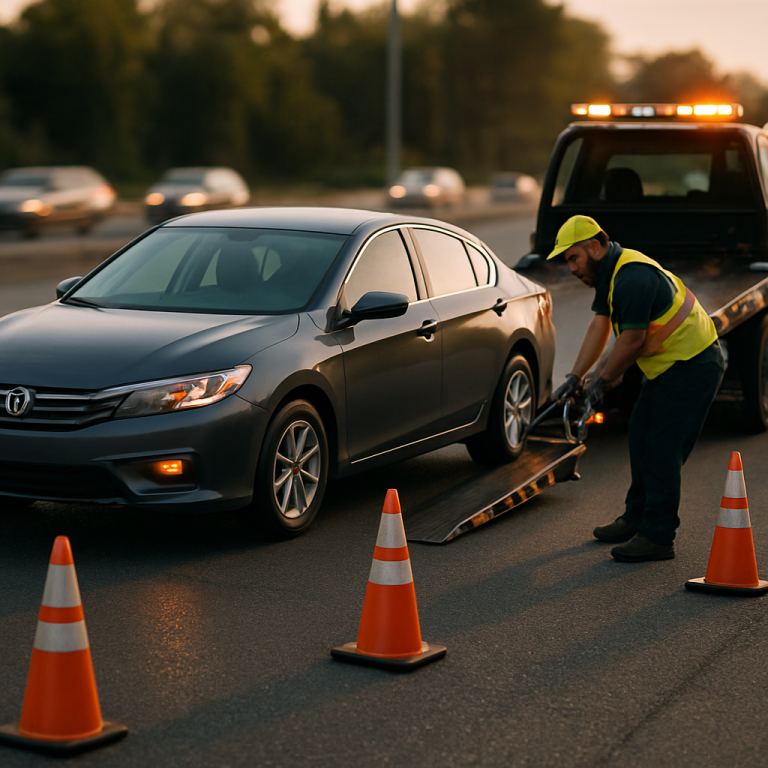
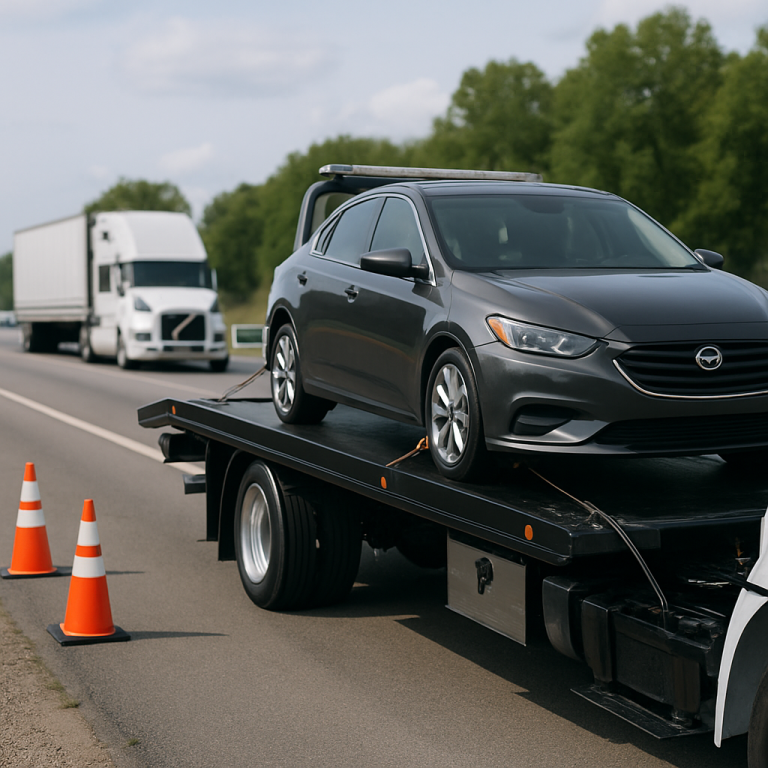
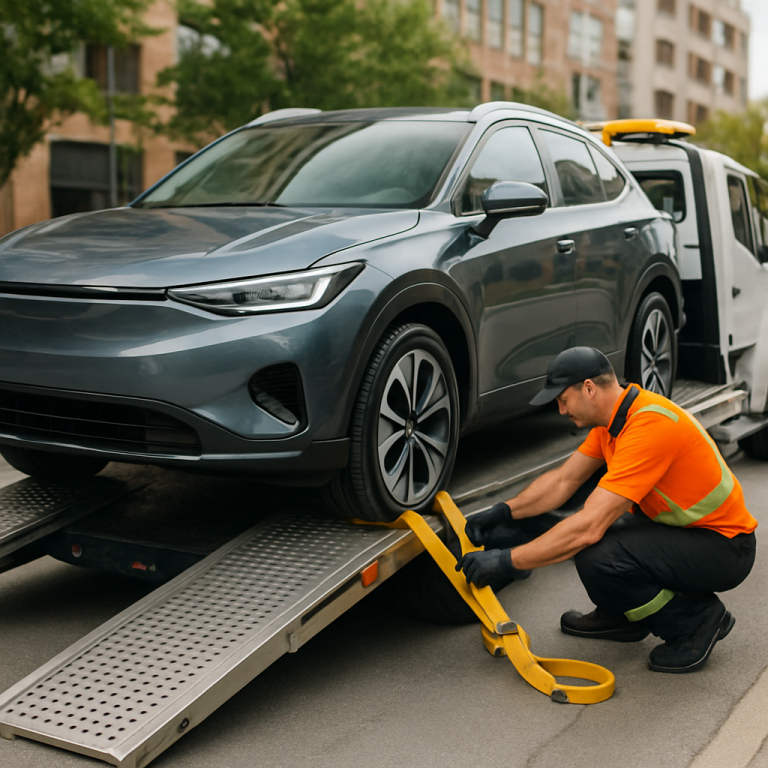
[Insert Image – Tow truck loading properly]
Safe Towing Checklist
If you remember only one section, make it this one. A careful checklist prevents most towing mistakes before they happen.
Before the tow
- Check the drivetrain type: FWD, RWD, AWD, 4WD, hybrid, or EV.
- Confirm the manufacturer towing instructions.
- Identify whether the vehicle is drivable, locked, damaged, or disabled.
- Check ground clearance and any front splitter, spoiler, or low-hanging parts.
- Ask whether the vehicle has air suspension, special brake systems, or transport mode.
During loading
- Use the correct equipment for the vehicle’s size and weight.
- Approach the vehicle at a safe angle to avoid scraping.
- Winch slowly and watch for tire, bumper, or underbody contact.
- Secure the vehicle at approved tie-down points only.
- Make sure the parking brake and drivetrain are set according to the vehicle manual.
During transport
- Double-check strap tension after the initial movement.
- Keep the vehicle stable and centered on the tow bed or trailer.
- Avoid sudden braking, aggressive turns, or rough road handling when possible.
- Inspect for shifting, leaking fluids, or new warning lights at delivery.
- Document visible damage before and after transport.
Quick decision rule
If you are unsure what the car needs, default to the safest method rather than the fastest one. In most cases, that means flatbed towing or a qualified vehicle transport service.
Professional vs Cheap Towing
At a glance, towing can look like a commodity. One truck, one destination, one price. But professional towing and low-cost towing are often very different services.
What professional towing looks like
A professional operator asks questions before loading the vehicle. They want to know the year, make, model, drivetrain, whether it is an EV, whether it starts, whether the steering locks, and whether the car has any special suspension or clearance issues.
They inspect equipment before use. They choose the right tow method instead of defaulting to the fastest one. They know when a flatbed is necessary, when a wheel lift is acceptable, and when the risk says stop.
That level of care is not extra. It is what prevents avoidable damage.
What cheap towing often looks like
Low-cost operators may focus on speed and volume. The truck arrives, the car gets loaded quickly, and there is little discussion about vehicle-specific requirements.
That is where problems begin. The wrong tow setup can save ten minutes and create a thousand-dollar repair later.
Comparison section
| Professional towing | Cheap towing |
|---|---|
| Asks about drivetrain and vehicle type | Assumes a standard procedure will work |
| Uses correct equipment for the car | Uses whatever is available |
| Slower, safer loading | Rushed loading and reduced caution |
| Better protection against car towing damage | Higher risk of hidden damage |
| Understands towing safety rules | May rely on assumptions or shortcuts |
The cheapest tow is rarely the cheapest outcome. Once a drivetrain, suspension, or battery issue is introduced, the savings disappear fast.
When to Use Vehicle Transport Instead
Sometimes towing is the right answer. Sometimes vehicle transport is the smarter one. The difference matters more than people think.
Long-distance moves
If a car needs to travel a long distance, vehicle transport is usually safer than roadside towing. The longer the journey, the more stress is placed on the vehicle and the more important secure loading becomes.
Transport services are designed for controlled movement, not just emergency relocation. That makes them better suited for trips where the car’s condition must be preserved.
Luxury and collectible cars
High-value vehicles deserve a higher level of care. Collector cars, exotic cars, and luxury models often need soft straps, specialized loading angles, and extra clearance management.
If the car is valuable enough that a scrape, sensor fault, or suspension issue would be unacceptable, vehicle transport is often the safer choice.
Non-running or damaged vehicles
A car that is already damaged can be harder to tow safely because the wheels, steering, brakes, or underbody may not behave normally. In those cases, transport may reduce the chance of causing a second problem while solving the first one.
When a vehicle is disabled, unstable, or heavily compromised, the goal is not just movement. It is controlled recovery.
Emergency Towing: What to Ask Before You Say Yes
When your car breaks down, the pressure is intense. That is exactly when mistakes happen. A few smart questions can protect your vehicle before the truck even arrives.
- What type of tow truck will be used?
- Do you handle AWD vehicles and electric cars?
- Will my car need flatbed towing?
- How will you secure the vehicle?
- Do you follow manufacturer towing instructions?
- What experience do you have with low-clearance vehicles?
- Can you confirm the vehicle will not be dragged or forced?
These questions do not make you difficult. They make you informed. The best towing companies expect them.
What Good Towing Looks Like in the Real World
The difference between a good tow and a bad one is often visible in the first few minutes.
A good operator arrives prepared. They inspect the car, check the ground conditions, plan the loading angle, and move carefully. The vehicle is centered, strapped correctly, and delivered without drama.
A bad operator improvises. They assume. They rush. They hope the car will “be fine.”
Hope is not a towing method.
[Insert Image – Damaged car from wrong towing]
Common Signs Your Car May Have Been Towed Wrong
If you suspect the vehicle was handled poorly, look for warning signs as soon as possible. Catching issues early can reduce further damage.
- New transmission slipping or delayed shifting
- Burning smell after towing
- Dashboard warning lights
- Unusual tire wear or sidewall marks
- Scrapes under the front bumper or underbody
- Steering wheel no longer centered
- Suspension sagging or uneven ride height
- Brake warning messages or odd brake feel
- EV drive system alerts or reduced-power warnings
If any of these appear after a tow, the vehicle should be inspected quickly. Some damage becomes worse if the car is driven before the issue is diagnosed.
FAQ
Can towing damage my car?
Yes. Towing can damage a car if the wrong method, equipment, or securement process is used. Transmission, drivetrain, suspension, and underbody damage are among the most common problems.
Is flatbed always safer?
Flatbed towing is usually the safest option because all four wheels are off the ground. It is especially recommended for AWD vehicles, electric cars, luxury cars, and low-clearance vehicles.
Can I tow my own car?
You can, but only if you have the proper equipment, knowledge, and legal setup. DIY towing without the right tools or procedure can create serious safety risks and expensive damage.
What is the safest towing method?
For many modern vehicles, flatbed towing is the safest method. The exact answer depends on the vehicle’s drivetrain, condition, and manufacturer towing rules.
Can electric cars be towed?
Yes, but they often require special handling. Many EVs should be transported on a flatbed or towed only in approved configurations. Always check the manufacturer’s instructions first.
Why are AWD vehicles risky to tow?
AWD systems are designed for all wheels to work together. If the wrong wheels are on the ground during towing, the drivetrain can bind and suffer expensive damage.
Do short-distance tows still matter?
Absolutely. Even a short tow can cause major damage if the vehicle is handled incorrectly. Distance does not eliminate risk when the setup is wrong.
What should I ask a towing company before they tow my vehicle?
Ask what tow method they will use, whether they handle your type of vehicle, how they secure it, and whether they follow manufacturer towing instructions. Those questions reveal a lot about the quality of service.
Is cheap towing worth it?
Only if the company is still experienced, equipped, and careful. The lowest price can be expensive if it leads to hidden car towing damage later.
When should I choose vehicle transport instead of towing?
Choose vehicle transport for long-distance moves, collectible cars, luxury vehicles, low cars, or any non-running vehicle that needs more controlled handling than a roadside tow can provide.
Closing Thoughts
The biggest towing mistakes are rarely dramatic at the moment they happen. They are quiet, fast, and easy to overlook. That is what makes them so costly.
Once you understand how drivetrain type, vehicle height, equipment choice, and manufacturer guidance all affect towing safety, it becomes much easier to avoid the kind of damage that turns an emergency into a repair nightmare.
Whether you are dealing with an AWD crossover, an electric sedan, a luxury car, or a low sports model, the safest approach is to treat towing as a technical job, not a simple pickup. A professional towing or transport service can protect your vehicle and prevent costly mistakes.
About the Author