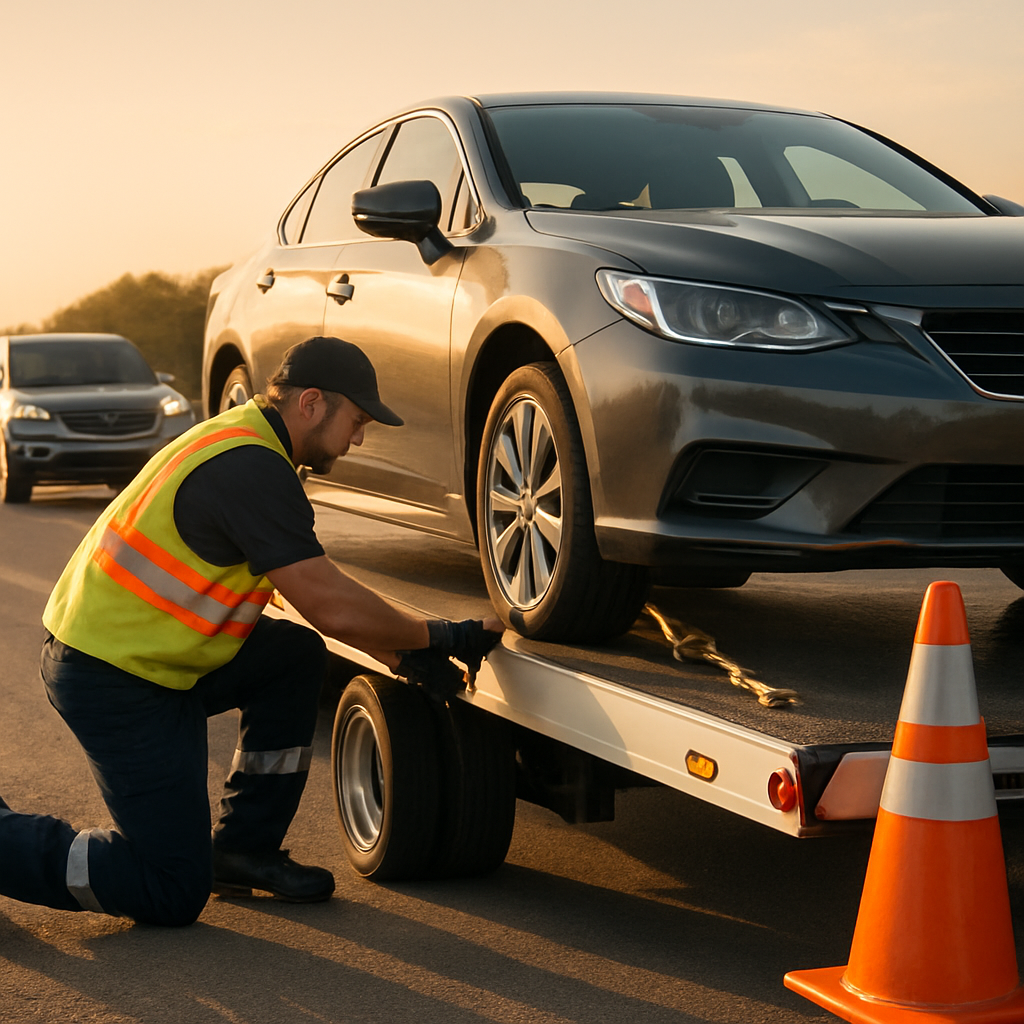
Car weight and towing limits matter more than many drivers realize. In the United States, the difference between a safe tow and a dangerous one often comes down to a few numbers on a door sticker, a manufacturer guide, or a tow truck invoice. Vehicle weight affects braking distance, fuel economy, suspension wear, tire load, and how much a car can safely tow behind it. At the same time, towing limits determine whether a sedan can pull a small trailer, whether an SUV can haul a camper, or whether a pickup truck is properly equipped for a heavy load.
Thank you for reading this post, don't forget to subscribe!This guide breaks down car weight and towing limits in a clear, practical way. It compares sedans, SUVs, trucks, and electric vehicles, shows how much they typically weigh, explains towing capacity, and answers a common question: can each type be towed, and if so, what is the best method? Whether you are buying a family car, planning a road trip with a trailer, or trying to decide how to move a disabled vehicle, understanding these numbers can help you avoid expensive mistakes and stay within safe limits.
[Insert Image – Tow truck]
Why Car Weight Matters More Than Most Drivers Think
Weight is one of the most important design factors in any vehicle. A lighter car usually accelerates faster, stops sooner, and uses less energy. A heavier vehicle often feels more planted on the road and may be built to carry more passengers, cargo, or towing load. But weight also changes how a vehicle behaves when it is being towed or when it is doing the towing.
In the real world, weight affects several key safety areas. A vehicle that is too heavy for its tires or suspension can overheat components, reduce braking performance, and increase the chance of sway while towing. A tow vehicle with insufficient payload or tow rating may struggle on hills, in crosswinds, or during emergency stops. For that reason, weight should never be treated as a rough estimate. It should be checked against the exact numbers provided by the manufacturer.
Key weight terms every driver should know
Before comparing vehicles, it helps to understand a few basic terms. These are the figures most often used in tow ratings, registration documents, and insurance or roadside recovery decisions.
- Curb weight: The vehicle’s weight with standard equipment and fluids, but without passengers or cargo.
- Gross Vehicle Weight Rating (GVWR): The maximum safe weight of the vehicle itself, including passengers and cargo.
- Gross Combined Weight Rating (GCWR): The maximum combined weight of the tow vehicle, passengers, cargo, trailer, and trailer cargo.
- Tongue weight: The downward force placed on the hitch by a trailer, usually about 10% to 15% of trailer weight.
- Payload: The amount of weight a vehicle can carry inside it, including people, luggage, and hitch hardware.
- Tow rating: The maximum trailer weight a vehicle can pull when properly equipped.
These numbers are related, but they are not interchangeable. A truck might have a very high tow rating but still run out of payload if the hitch weight, passengers, and bed cargo are too heavy. Likewise, a sedan may seem light enough to tow a small trailer, but the transmission, brakes, and cooling system may not be designed for continuous trailer loads.
Why towing limits are not one-size-fits-all
Two vehicles that look similar can have very different tow capacities. Trim level, engine size, drivetrain, axle ratio, wheelbase, transmission, cooling package, and hitch equipment can all change the rating. For example, a base-model pickup may tow much less than a properly equipped tow package version of the same truck. Electric vehicles also vary widely because battery size and motor configuration can affect weight and efficiency, even when the chassis is similar.
That is why the safest approach is to use the exact vehicle identification number, owner’s manual, and manufacturer towing chart. General charts are useful for comparison, but they should never replace the official rating for your specific vehicle.
[Insert Image – Car weight comparison]
Average Vehicle Weights in the United States
The table below gives a broad look at average weight ranges across common vehicle categories. These are curb-weight estimates, not exact model-by-model figures, but they are useful for understanding how sedans, SUVs, trucks, and electric vehicles compare in everyday use.
| Vehicle Type | Typical Curb Weight | Typical GVWR | Common Examples | General Notes |
|---|---|---|---|---|
| Compact sedan | 2,800 to 3,100 lbs | 3,700 to 4,200 lbs | Honda Civic, Nissan Sentra, Toyota Corolla | Lightweight and efficient, usually limited towing ability |
| Midsize sedan | 3,200 to 3,700 lbs | 4,200 to 4,800 lbs | Toyota Camry, Honda Accord, Hyundai Sonata | Comfortable daily drivers, modest or no tow ratings |
| Compact SUV / crossover | 3,300 to 3,900 lbs | 4,400 to 5,000 lbs | Toyota RAV4, Honda CR-V, Mazda CX-5 | Popular family size, moderate towing potential |
| Mid-size SUV | 4,000 to 5,000 lbs | 5,200 to 6,500 lbs | Toyota Highlander, Ford Explorer, Kia Telluride | Often equipped for light-to-medium towing |
| Full-size SUV | 5,400 to 6,500 lbs | 6,800 to 8,000 lbs | Chevrolet Tahoe, Ford Expedition, GMC Yukon | High towing potential, but heavy curb weight |
| Light-duty pickup truck | 4,300 to 5,800 lbs | 6,400 to 7,500 lbs | Ford F-150, Ram 1500, Chevrolet Silverado 1500 | One of the most common tow platforms in America |
| Heavy-duty pickup truck | 6,500 to 8,500 lbs | 9,000 to 14,000+ lbs | Ford F-250, Ram 2500, Chevrolet Silverado 2500 HD | Built for large trailers and commercial loads |
| Electric sedan | 3,800 to 4,700 lbs | 4,800 to 5,800 lbs | Tesla Model 3, Hyundai Ioniq 6, BMW i4 | Battery weight adds mass, but towability depends on manufacturer guidance |
| Electric SUV / truck | 5,000 to 8,500 lbs | 6,500 to 10,000+ lbs | Tesla Model X, Rivian R1S, Ford F-150 Lightning | Often heavy, with towing ability that varies widely |
The table shows a simple pattern: sedans are usually the lightest, trucks are usually the heaviest, and electric vehicles often weigh more than comparable gasoline models because of the battery pack. That extra weight can improve traction and stability, but it also raises concerns about tire load, braking, and recovery towing.
What these weight ranges mean on the road
Vehicle weight is not just a statistic. It affects how a car behaves during sudden stops, lane changes, downhill descents, and emergency maneuvers. A lighter vehicle generally puts less strain on tires and brakes, but it may also be more sensitive to wind and trailer sway. A heavier vehicle may feel more stable, but it can require longer stopping distances and more careful trailer matching.
For towing purposes, weight also affects the tow vehicle itself. If the tow vehicle is too light relative to the trailer, control can become difficult. If the car being towed is too heavy for the recovery equipment, the operator may need a flatbed or a higher-capacity trailer. That is why weight tables are more than reference material; they are a foundation for safe towing decisions.
Towing Capacity vs Vehicle Type
Many drivers confuse a vehicle’s own weight with how much it can tow. They are related, but not the same. A car that weighs 4,000 pounds does not automatically have a 4,000-pound tow rating. In fact, many passenger cars have no official towing rating at all, while full-size trucks can tow well over 10,000 pounds when properly equipped.
The table below compares typical towing capacity by vehicle type and also answers whether each type can be towed after a breakdown or accident. In this context, can it be towed? refers to being moved by a tow truck or recovery vehicle, not towing a trailer behind it.
| Vehicle Type | Typical Tow Capacity When Acting as Tow Vehicle | Can It Be Towed as Disabled Vehicle? | Best Towing Method | Important Notes |
|---|---|---|---|---|
| Compact sedan | 0 to 1,500 lbs, if rated at all | Yes | Flatbed; dolly for some front-wheel-drive cars | Many compact sedans are not designed for trailer towing |
| Midsize sedan | 1,000 to 3,500 lbs | Yes | Flatbed; dolly in specific cases | Check transmission and drivetrain rules carefully |
| Compact SUV / crossover | 1,500 to 3,500 lbs | Yes | Flatbed or trailer | Some models can tow small campers or utility trailers |
| Mid-size SUV | 3,500 to 6,000 lbs | Yes | Trailer or flatbed | AWD models often prefer flatbed transport when disabled |
| Full-size SUV | 5,000 to 8,500 lbs | Yes | Trailer or flatbed | Strong tow ratings, but heavier weight requires careful hitch setup |
| Light-duty pickup truck | 5,000 to 13,500 lbs | Yes | Flatbed or heavy-duty trailer | Exact rating depends heavily on trim and tow package |
| Heavy-duty pickup truck | 10,000 to 20,000+ lbs | Yes | Heavy-duty trailer or flatbed | Often used for commercial and equipment hauling |
| Electric sedan | Usually 0 to 2,000 lbs, depending on model | Yes, but usually flatbed only | Flatbed | Many EV makers restrict wheel-on-ground towing to prevent motor damage |
| Electric SUV / truck | 2,000 to 11,000+ lbs, depending on model | Yes, but typically flatbed or manufacturer-approved method only | Flatbed or approved trailer | Always verify towing mode and drivetrain instructions |
How tow ratings are determined
Tow ratings are based on more than engine horsepower. Manufacturers consider cooling capacity, transmission durability, braking system, axle strength, frame rigidity, suspension tuning, wheelbase length, and weight distribution. A large engine can help, but it does not guarantee a high tow rating if the rest of the vehicle is not engineered for it.
This is why tow packages matter. An optional tow package may include a larger radiator, transmission cooler, stronger hitch hardware, wiring for trailer brakes, and revised axle gearing. Those upgrades can significantly raise safe towing performance compared with a base configuration.
Why heavier does not always mean better for towing
It is tempting to assume that the heaviest vehicle should always be the best tow vehicle, but that is not always true. A heavier vehicle may have better stability, yet it may also consume more fuel, be harder to maneuver in tight spaces, and put more strain on brakes and tires. The ideal tow vehicle is one that matches the trailer size, has enough payload for passengers and tongue weight, and is equipped with the right hitch and braking system.
For example, a midsize SUV may be more than enough for a small travel trailer, while a heavy-duty truck would be unnecessary and expensive for the same load. Matching the vehicle to the job is more efficient and often safer than simply choosing the largest option available.
Can Sedans Be Towed or Tow a Trailer?
Sedans are among the most common vehicles on American roads, and they often raise two different questions. First, can a sedan be towed when it breaks down? Second, can a sedan tow something else behind it? The answer to both depends on the specific model, drivetrain, and equipment.
Most sedans can be transported on a flatbed or, in certain front-wheel-drive cases, with a tow dolly. Very few sedans are good candidates for towing a trailer, and many have no official trailer rating at all. That does not mean they cannot ever pull a load, but it does mean the margin for error is much smaller than with an SUV or truck.
Honda Civic and Toyota Camry as examples
The Honda Civic and Toyota Camry are excellent examples of mainstream sedans that prioritize efficiency and comfort over towing. Their curb weights are usually in the 2,800 to 3,600-pound range, depending on trim and powertrain. Neither vehicle is known as a tow-focused platform, although some markets and configurations may allow very light trailer use when the manufacturer specifically approves it.
For disabled-vehicle towing, both the Civic and Camry are commonly moved by flatbed. A dolly may be possible for some front-wheel-drive versions, but the final decision should always depend on the owner’s manual and whether the drive wheels can safely remain on the road. If the car has all-wheel drive, hybrid components, or special transmission requirements, a flatbed is usually the safest choice.
Best towing method for sedans
The best towing method for sedans is usually the flatbed because it keeps all four wheels off the ground and minimizes the risk of transmission or drivetrain damage. That is especially important for modern automatic transmissions, hybrid systems, and electric drivetrains. A dolly can work in some cases, but it is less universal and requires more attention to wheel position and parking brake settings.
- Flatbed: Safest and most versatile for most sedans.
- Dolly: Sometimes acceptable for front-wheel-drive sedans if the drive axle is lifted.
- Trailer: Possible for transport, but usually less practical for a standard sedan.
If a sedan is being used to tow a small trailer, the driver should stay well below the maximum rating, keep cargo light, and check whether trailer brakes are required by state law. A modest trailer can feel much heavier once wind, grades, and stop-and-go traffic are added to the mix.
Can SUVs Handle Towing and Recovery?
SUVs are a popular middle ground between sedans and trucks. They tend to sit higher, offer more cargo space, and often include stronger chassis components. Many are designed with some towing in mind, especially mid-size and full-size models. That makes them useful both as tow vehicles and as vehicles that can be safely recovered with professional towing equipment.
Compact SUVs are usually rated for light towing, while larger SUVs may pull small boats, campers, or utility trailers with confidence. Still, size alone is not enough. Drivetrain configuration and tow package options can change the real-world capability dramatically.
Why SUV towing varies so much
Compact crossovers like the Toyota RAV4 or Honda CR-V are efficient and family-friendly, but their tow ratings are usually modest compared with a truck. Mid-size SUVs such as the Toyota Highlander or Ford Explorer can handle more, and full-size SUVs such as the Ford Expedition or Chevrolet Tahoe can approach truck-like towing numbers. The gap exists because the frame, suspension, cooling system, and brakes are built for different duties.
AWD and 4WD SUVs deserve extra caution when disabled. If the vehicle must be towed with any wheels on the ground, the drivetrain layout and transfer case instructions become critical. Some systems can be damaged quickly if the wrong wheels roll during towing. For this reason, many operators choose a flatbed for AWD and 4WD SUVs even when a dolly might seem convenient.
Best towing method for SUVs
For most SUVs, the best towing method is either a flatbed or a trailer. A flatbed is ideal for disabled vehicles because it removes wheel-contact concerns and provides excellent stability. A trailer works well when the SUV is being transported longer distances or when additional equipment is needed to secure the load.
- Compact SUV: Flatbed preferred, trailer acceptable, dolly limited to specific FWD setups.
- Mid-size SUV: Flatbed or trailer, especially for AWD models.
- Full-size SUV: Flatbed or heavy-duty trailer with proper tie-downs.
When an SUV is the tow vehicle, tongue weight is often the limiting factor. Even if the tow rating looks high enough, the available payload can run out quickly once passengers, luggage, and hitch hardware are added. Many SUV owners discover that payload, not tow rating, is the number that stops them from safely hauling a larger trailer.
Trucks and the Upper End of Towing Capacity
Pickup trucks dominate the towing conversation in the United States because they are built around payload, frame strength, and trailer hauling. A light-duty truck can handle common recreational loads, while a heavy-duty truck can manage equipment trailers, livestock trailers, large campers, and construction gear. Among consumer vehicles, trucks are the most versatile towing platforms when properly configured.
The Ford F-150 is a strong example. Depending on engine, cab style, drivetrain, axle ratio, and towing package, it can carry a very broad range of tow ratings. Some trims are designed for everyday use, while others are engineered for serious work. This makes the F-150 one of the most searched vehicles when people compare towing limits in the United States.
Ford F-150 as a towing benchmark
The Ford F-150 typically weighs somewhere around 4,000 to 5,700 pounds, again depending on configuration. Its tow rating can vary widely, with some versions suitable for modest loads and others rated for more than 13,000 pounds. What matters most is not the badge on the tailgate, but the exact factory setup. A truck with a tow package, integrated trailer brake controller, and appropriate axle gearing may tow far more safely than a similarly shaped truck without those features.
Because trucks are often used near their limits, they deserve special attention to payload. A truck may have enough tow rating for a trailer, but once the hitch weight, fuel, passengers, tools, and bed cargo are counted, it may be over its GVWR or rear axle rating. That is why experienced towers think in terms of the complete load, not just the trailer weight.
Best towing method for trucks
For disabled trucks, the best towing method is usually a flatbed for shorter and medium-duty recovery, or a heavy-duty trailer when the truck is large or modified. A dolly is rarely the first choice because trucks are heavier, longer, and more likely to require full support. If the truck is a four-wheel-drive model, the transfer case and driveline instructions must be followed carefully to avoid mechanical damage.
- Light-duty truck: Flatbed or heavy-duty trailer, depending on size and location.
- Heavy-duty truck: Heavy-duty trailer or commercial recovery wrecker.
- Modified truck: Follow manufacturer and towing operator guidance; flatbed is often safest.
For towing a trailer, trucks are generally the best mainstream option because they have strong frames, robust suspensions, and more generous hitch ratings. Even so, every truck has its own ceiling. A properly equipped F-150 may tow a large camper, but a base trim may not be suitable for the same job. That is why tow charts should be read with trim-level precision.
Electric Vehicles and Towing Limits
Electric vehicles have changed the towing conversation in two major ways. First, they often weigh more than comparable gasoline cars because of their battery packs. Second, they can have very different towing and recovery rules because their drivetrains do not behave like traditional engines and transmissions.
Tesla Model 3 is a useful example. It is a relatively compact electric sedan, but its battery pack gives it a curb weight well above many gas-powered compact cars. In many markets, it is not rated to tow a trailer, and even when a towing accessory exists, the allowable load is limited and highly specific to the configuration. For disabled transport, the safest approach is usually flatbed towing.
Why EVs often require special towing care
Unlike some gasoline cars, electric vehicles can generate power when the wheels rotate. If the wrong wheels are on the ground during towing, the motors may spin in a way the manufacturer did not intend, and that can create heat or damage. Some EVs also have parking systems and battery management features that need a special towing mode before the vehicle is moved. Because of that, recovery procedures are often more strict than for a conventional sedan.
The extra weight of an EV also matters. A heavier curb weight means greater load on ramps, tie-downs, and wheel-lift equipment. A tow operator who handles EVs should know the manufacturer’s lift points and transport rules. Owners should not assume that any tow truck can handle any EV the same way it would handle a gas-powered car.
Best towing method for EVs
For most electric vehicles, the best towing method is a flatbed. It is the safest universal choice because it keeps the wheels off the road and avoids drivetrain issues. A trailer can also be used, but it must be sized properly and loaded carefully. A dolly is rarely the first recommendation for EVs unless the owner’s manual explicitly allows it and the wheel position is correct.
- Flatbed: Usually the safest and most recommended method.
- Trailer: Acceptable for transport when properly sized and secured.
- Dolly: Use only when manufacturer guidance explicitly allows it.
Tesla Model 3, for example, is often treated as a flatbed-only vehicle in practice because of drivetrain and underbody concerns. Other EVs may have dedicated tow modes, but those modes still do not eliminate the need for careful wheel placement and securement.
Detailed Vehicle Weight Comparison for Popular Models
When shoppers compare specific cars, the numbers can be more useful than category averages. The table below compares several well-known models and shows how weight and towing reality line up in the real world.
| Model | Vehicle Type | Approx. Curb Weight | Typical Tow Rating | Can It Be Towed as Disabled Vehicle? | Best Method |
|---|---|---|---|---|---|
| Honda Civic | Compact sedan | 2,875 to 3,100 lbs | Usually not rated, or very limited in specific markets | Yes | Flatbed; dolly for some FWD versions |
| Toyota Camry | Midsize sedan | 3,310 to 3,650 lbs | Low or not commonly rated in the US | Yes | Flatbed preferred |
| Tesla Model 3 | Electric sedan | 3,800 to 4,050 lbs | Limited or configuration-specific | Yes | Flatbed only in most cases |
| Ford F-150 | Light-duty pickup | 4,000 to 5,700 lbs | About 8,000 to 13,500+ lbs depending on trim | Yes | Flatbed or heavy-duty trailer |
| Toyota RAV4 | Compact SUV | 3,400 to 3,800 lbs | About 1,500 to 3,500 lbs | Yes | Flatbed or trailer |
| Ford Explorer | Mid-size SUV | 4,500 to 4,900 lbs | About 5,000 to 5,600 lbs | Yes | Flatbed or trailer |
| Chevrolet Tahoe | Full-size SUV | 5,400 to 5,800 lbs | About 7,900 to 8,400 lbs | Yes | Flatbed or trailer |
| Rivian R1S | Electric SUV | 6,900 to 7,200 lbs | Up to around 7,700 lbs depending on setup | Yes | Flatbed recommended |
This table shows that tow rating and curb weight do not move in perfect lockstep. The Tesla Model 3 is lighter than many SUVs, yet it still usually needs flatbed recovery. The Ford F-150 is a workhorse with a wide tow range. The Honda Civic and Toyota Camry are easy to move, but they are not built as tow-first vehicles. These differences are exactly why a category-based guide is useful, but a model-specific manual is still essential.
What the table tells buyers and drivers
If you are shopping for a car and know you will occasionally need to tow, weight should be part of the decision before you sign papers. A driver who wants to haul a boat may need an SUV or truck rather than a sedan. A driver who mainly needs a commuter car might prefer a lighter sedan and rely on a flatbed if roadside recovery is ever needed.
For used-car buyers, the table also highlights another point: older or base-trim vehicles may not include the same towing hardware as newer or higher-trim versions. A vehicle name alone does not guarantee capability. The actual equipment matters just as much as the badge.
How to Match Towing Method to Vehicle Type
Choosing the correct towing method can prevent expensive mechanical damage. The three most common methods in professional vehicle transport are flatbed towing, tow dolly transport, and trailer hauling. Each method has strengths and limitations, and the best choice depends on the vehicle’s drivetrain, size, and weight.
Flatbed towing
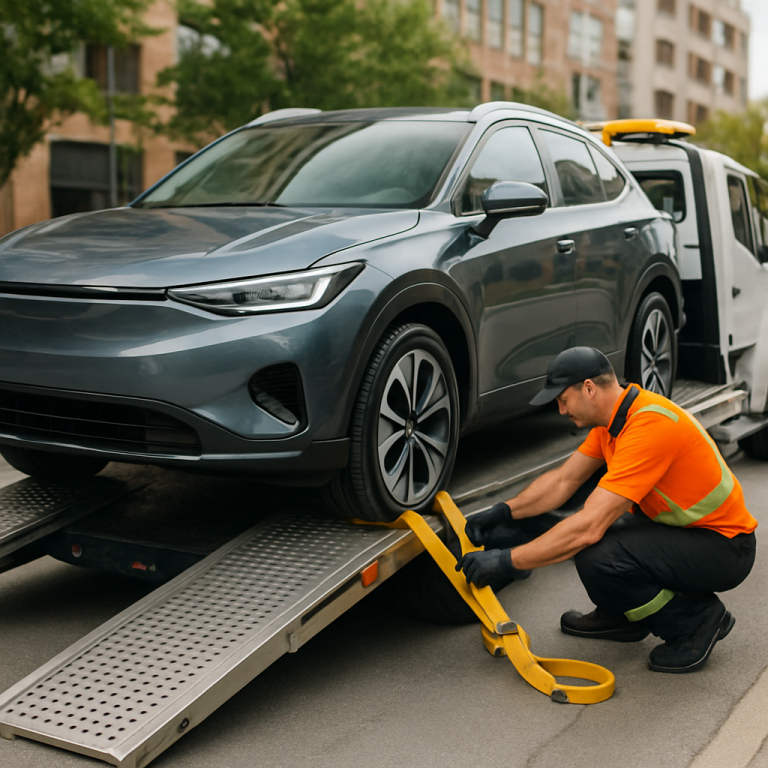
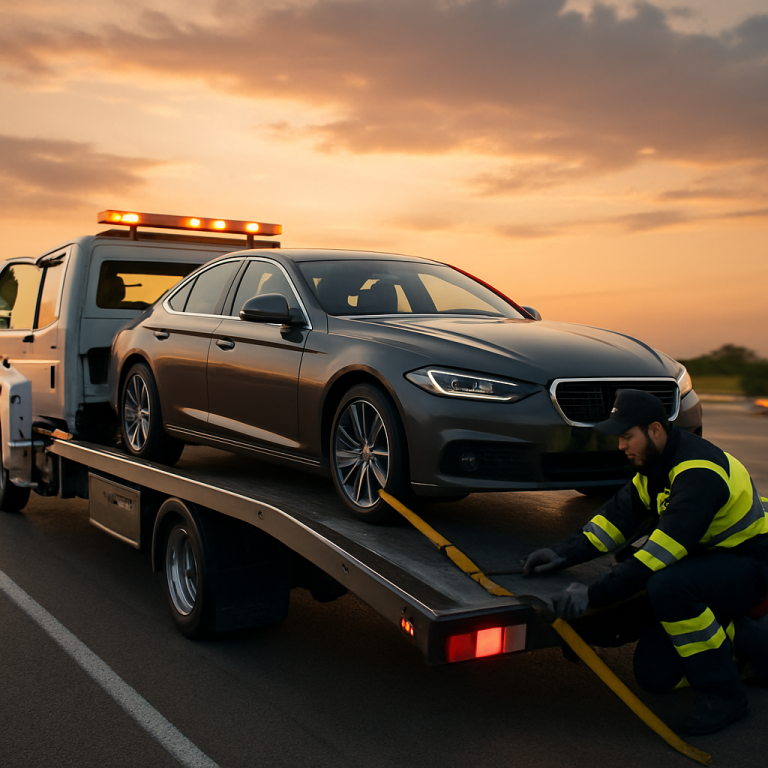
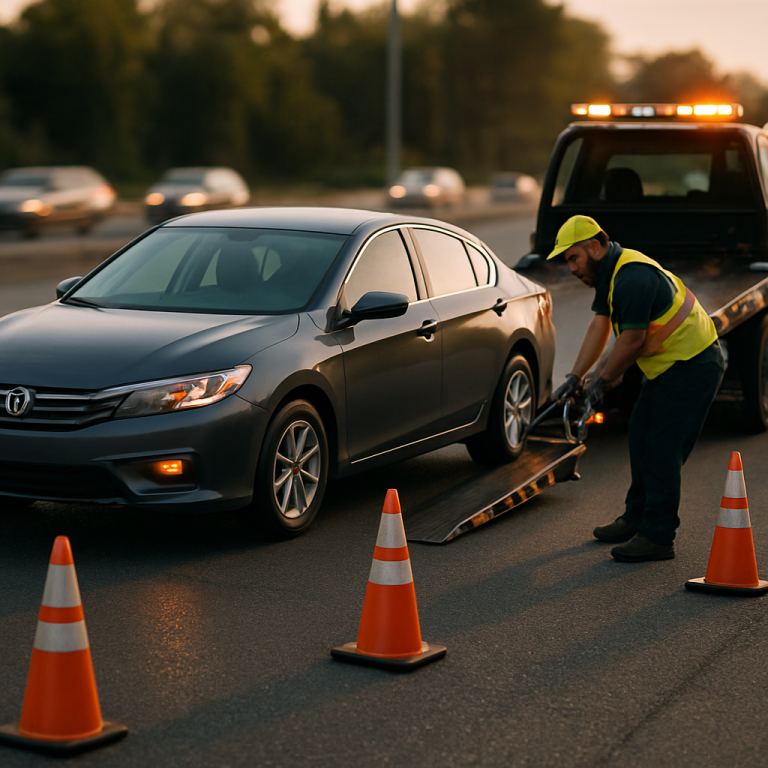
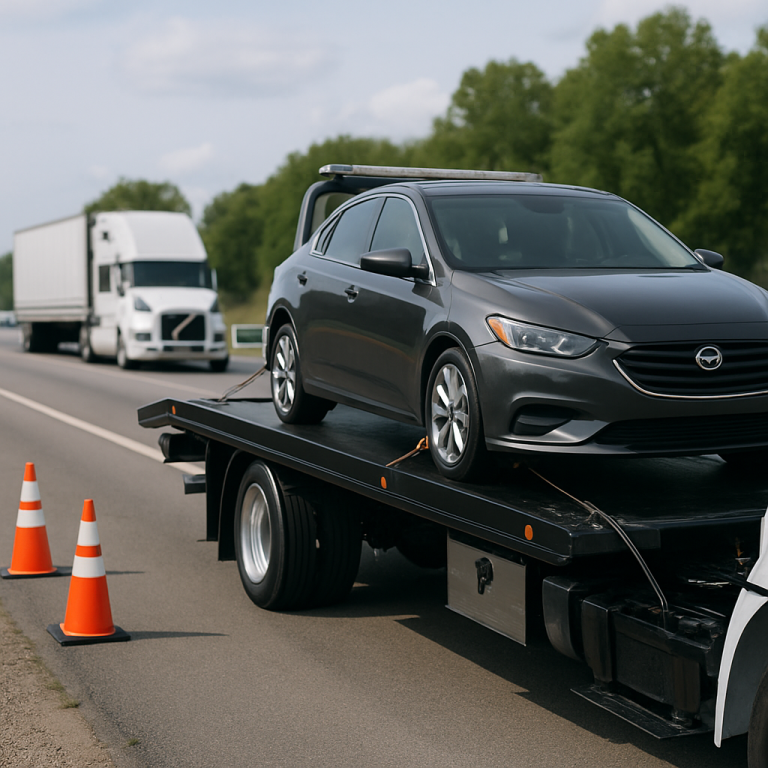
Flatbed towing is the safest and most universal method. The vehicle is loaded onto a platform so all wheels are off the ground. This reduces wear, protects the drivetrain, and works well for sedans, SUVs, trucks, and EVs. It is especially valuable for all-wheel-drive vehicles and electric cars with sensitive driveline systems.
Tow dolly
A tow dolly lifts either the front or rear wheels while the other axle rolls on the road. It can be useful for some front-wheel-drive sedans and small crossovers, but it is not ideal for all-wheel-drive vehicles, many modern transmissions, or EVs. A dolly also requires careful strapping and more setup time than a flatbed.
Trailer towing
A trailer is another excellent option for transport, particularly when moving heavier vehicles or when a flatbed is not available. It can be used for sedans, SUVs, and trucks, provided the trailer is rated for the load and the tie-downs are secure. For recovery operations, the trailer must also be matched to the towing truck’s capabilities, including brake controller compatibility and hitch class.
Quick method guide by vehicle category
- Sedans: Flatbed first, dolly sometimes, trailer if needed.
- SUVs: Flatbed or trailer, especially for AWD and larger models.
- Trucks: Flatbed or heavy-duty trailer, depending on weight.
- Electric vehicles: Flatbed is usually the safest default.
One important detail is that recovery towing and trailer towing are not the same job. A tow truck moving a disabled car across town has different priorities than a pickup truck pulling a camper for a vacation. In both cases, the load must stay within rating, but the equipment and method should match the purpose.
[Insert Image – Flatbed towing]
Practical Towing Limits Every Driver Should Check
When people ask, How much can my car tow?, the answer should always begin with the owner’s manual. Then it should move to the door jamb label, tow package details, and trailer brake requirements. The following checkpoints are the most important before any trip:
- Vehicle curb weight: Know how much the car weighs before adding cargo or hitch weight.
- GVWR: Do not exceed the vehicle’s own maximum safe weight.
- Payload: Count passengers, pets, luggage, and trailer tongue weight.
- Tow rating: Confirm the maximum trailer weight for your exact trim.
- GCWR: Make sure the combined weight of truck and trailer stays within limits.
- Brake requirements: Many trailers need brakes once they reach a certain weight, often around 1,500 to 3,000 pounds depending on state rules.
- Hitch class: Match the hitch to the load and the vehicle’s rating.
These checks are especially important in the United States, where towing rules can differ from state to state. A setup that is legal in one state may need a brake controller, breakaway system, or safety chain arrangement in another. Local law should always be verified before long-distance towing.
How much safety margin should you leave?
A common rule of thumb is to stay well below the maximum rating rather than aiming to reach it exactly. Real-world conditions such as steep grades, headwinds, hot weather, altitude, and stop-and-go traffic can reduce performance. Staying under the limit gives the vehicle more breathing room and usually results in a calmer, safer towing experience.
For many drivers, that means choosing a trailer that is noticeably smaller than the maximum stated tow rating. Even if a vehicle can theoretically pull 7,500 pounds, a 5,500-pound trailer may be a more comfortable and practical choice once passengers and cargo are included. The goal is not simply to move the trailer; it is to move it without overtaxing the vehicle or the driver.
Common Mistakes When Comparing Weight and Tow Ratings
People often make the same few mistakes when reading towing charts. Avoiding them can save money and prevent roadside emergencies.
- Confusing curb weight with tow capacity: A car’s own weight is not the same as what it can pull.
- Ignoring payload: Passengers and cargo eat into towing margin quickly.
- Assuming all trims are equal: Engine choice and factory equipment change the rating.
- Using the wrong towing method: Some drivetrains need a flatbed, not a dolly.
- Overlooking trailer brakes: Many loads require braking assistance to stop safely.
- Relying on guesswork: Always check the manufacturer data for the exact vehicle.
Another mistake is assuming that an electric vehicle can be towed like a gasoline car of similar size. In many cases, EVs have unique restrictions that make flatbed transport the simplest and safest answer. The towing operator’s experience matters too, but the manufacturer’s instructions matter most.
FAQ About Car Weight and Towing Limits in the United States
How do I find my car’s curb weight?
You can usually find curb weight in the owner’s manual, on the manufacturer’s website, or through a reliable specification database. Remember that curb weight may vary by trim, drivetrain, and optional equipment.
Is curb weight the same as GVWR?
No. Curb weight is how much the vehicle weighs empty, with standard fluids. GVWR is the maximum allowed weight of the loaded vehicle, including passengers and cargo. GVWR is always higher than curb weight.
Can a sedan tow a camper?
Usually only a very small camper, and only if the manufacturer officially rates the car for towing. Most sedans are better suited to light utility trailers than to full-size campers. Even then, tongue weight and braking should be checked carefully.
Can an SUV always tow more than a car?
Not always, but often yes. SUVs usually have stronger suspensions and more towing-friendly design choices than sedans. However, compact crossovers may still have modest ratings, while a properly equipped truck can tow far more than most SUVs.
Why are electric vehicles heavier than gas cars?
Battery packs are heavy, and they add significant weight to the vehicle. That extra mass can improve low-center-of-gravity stability, but it also affects tire wear, stopping distance, and how the vehicle should be transported if it breaks down.
Is flatbed towing always necessary?
No, but it is often the safest universal choice. Flatbed towing is especially recommended for AWD vehicles, EVs, damaged cars, and vehicles with drivetrain concerns. A dolly or trailer may be fine when the manual says so and the setup is correct.
Does towing capacity include passengers and cargo?
Not directly, but passengers and cargo reduce the payload available for tongue weight and hitch equipment. That means the more people and gear you carry, the less trailer weight you can safely handle.
What is the safest towing method for a Tesla Model 3?
In most cases, flatbed towing is the safest and most practical choice. Tesla drivetrains and underbody components require careful handling, and the manufacturer’s instructions should be followed before moving the car.
How much tongue weight is safe?
Most trailers perform best with tongue weight around 10% to 15% of total trailer weight, but the exact value depends on the trailer and hitch setup. Too little tongue weight can cause sway, while too much can overload the rear of the tow vehicle.
Choosing the Right Vehicle for Towing in the United States
If towing is part of your lifestyle, the best vehicle is the one that fits your actual load, not the one with the biggest numbers on paper. For many drivers, a midsize SUV is enough for a small boat or lightweight camper. For heavier trailers, a full-size pickup or heavy-duty truck becomes a better match. For city and commuter driving, a sedan may be the smarter daily choice, with occasional flatbed transport if needed.
Think about the whole picture: how often you tow, how far you travel, whether the trailer has brakes, how many passengers ride with you, and whether your vehicle is front-wheel drive, rear-wheel drive, AWD, or electric. Those details can change the answer more than engine size alone. The safest towing setup is always the one that respects the vehicle’s official ratings and the realities of the road.
For drivers comparing the Honda Civic, Toyota Camry, Tesla Model 3, and Ford F-150, the difference is clear. The Civic and Camry are efficient, everyday sedans that are easy to recover with a flatbed and only lightly suited for towing. The Model 3 brings EV-specific towing caution and usually flatbed-only transport. The F-150, by contrast, is designed to do real towing work, but even it must be matched to the right trailer and payload. When you understand those distinctions, towing becomes less about guesswork and more about choosing the safest, smartest setup for the job at hand.
About the Author