AI-generated illustration
When a car won’t start, gets hit, or needs to move across the country, most people reach for the same answer: “call a tow truck.” Sometimes that is exactly right. Other times, roadside assistance can fix the problem in fifteen minutes, or a car shipping company can move the vehicle hundreds of miles for less risk than a long tow. This guide walks through real-world situations drivers in Los Angeles, the San Fernando Valley, and across the U.S. run into, explains the main towing methods, covers what affects the price, and helps you decide between towing and vehicle transport.
Quick Answer: Tow, Roadside Assistance, or Transport?
- Roadside assistance is usually enough for a dead battery, flat tire, lockout, or running out of fuel, as long as the car is otherwise safe to drive.
- Towing is the right tool when the car cannot be driven safely and needs to go a short or moderate distance, such as to a repair shop, your home, or a storage yard.
- Vehicle transport (car shipping) usually makes more sense for long distances, planned moves, buying or selling a car out of town, and valuable, classic, or low-clearance vehicles.
- Junk-car buyers are worth considering when the repair would cost more than the car is worth. Many buyers arrange pickup themselves.
Real-Life Scenarios: What Should You Do?
1. Your car breaks down on a city street
Get the car as far out of traffic as you safely can, turn on your hazard lights, and figure out what happened. Warning lights, a burning smell, steam from the hood, or grinding noises are all signs to stop driving. A tow to a nearby shop is usually the safest move. Flatbed towing is the safest all-around choice when you are not sure of the drivetrain or what’s wrong.
2. Highway or freeway emergency
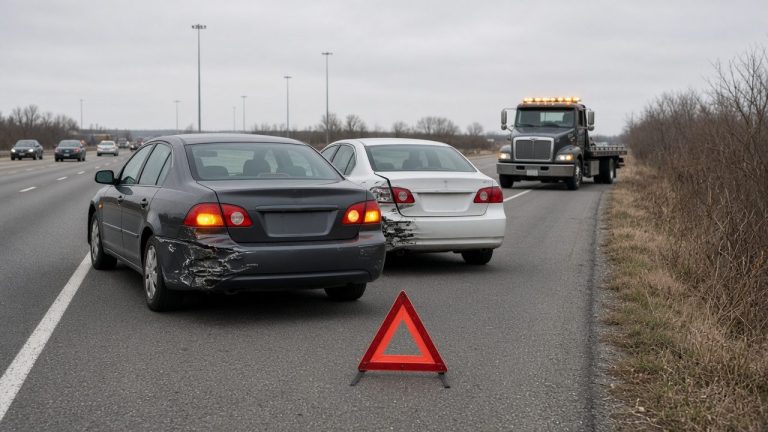
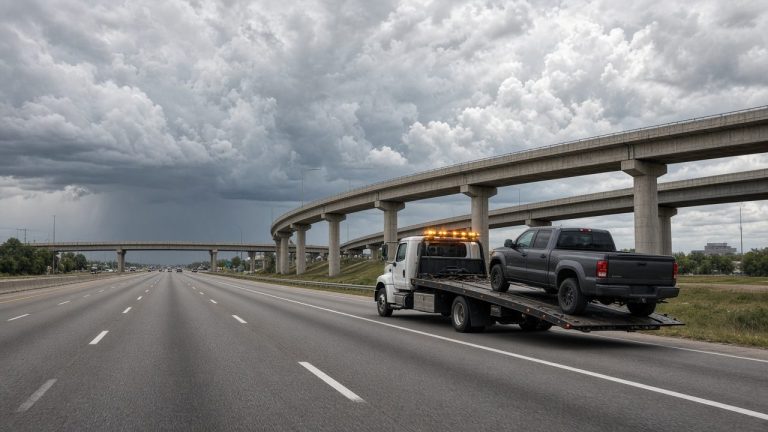
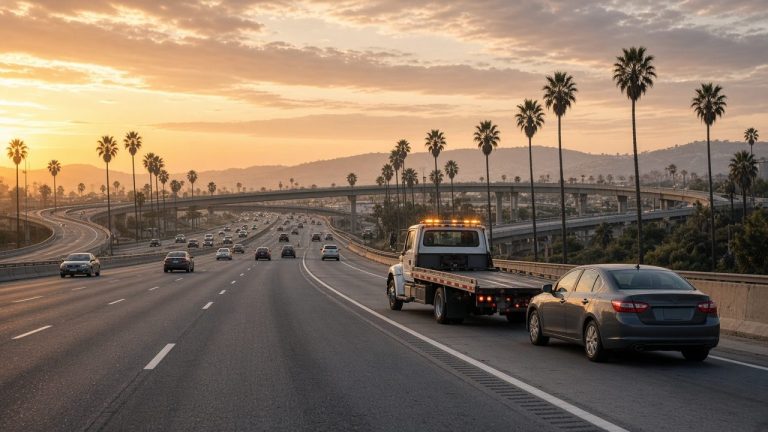
On a busy freeway like the 101, the 405, or the 5, your safety comes before the car. If you can, exit or move to the right shoulder. If you can’t get to a safe spot, stay in the vehicle with your seatbelt on and call 911. In Los Angeles County, the Metro Freeway Service Patrol offers free help on many freeways during weekday commute hours, and it may be able to move your car to a safer spot. Check Metro’s website for current routes and hours. For a tow, a flatbed is often preferred because it reduces the time spent hooking up on a dangerous shoulder and protects the drivetrain.
3. Minor accident
Even a low-speed bump can damage a wheel, tire, suspension part, or sensor in ways you can’t see. If the car pulls to one side, makes new noises, leaks fluid, or shows warning lights, don’t drive it. A flatbed or wheel-lift tow (if the drive wheels are undamaged) gets it to a shop for inspection. Take photos of the scene and the damage before the car is moved, and tell your insurance company where it’s being towed.
4. Major accident
After a serious crash, the vehicle may have frame or structural damage, locked wheels, or leaking fluids. This calls for flatbed towing and sometimes specialty recovery equipment such as winches. Police or the CHP may direct which tow company handles the scene. Ask where the car is going and get the company’s name and contact details before you leave.
5. Car won’t start at home
A car that won’t start in your driveway is not an emergency, so you have time to troubleshoot. A dead battery is the most common cause, and roadside assistance or a mobile mechanic may solve it without a tow. If it truly needs a shop, schedule a flatbed tow at a convenient time and mention any tight driveway angles or low parking garage ceilings when you book. Many LA apartment garages have low clearance that not every truck can enter.
6. Long-distance move or purchase
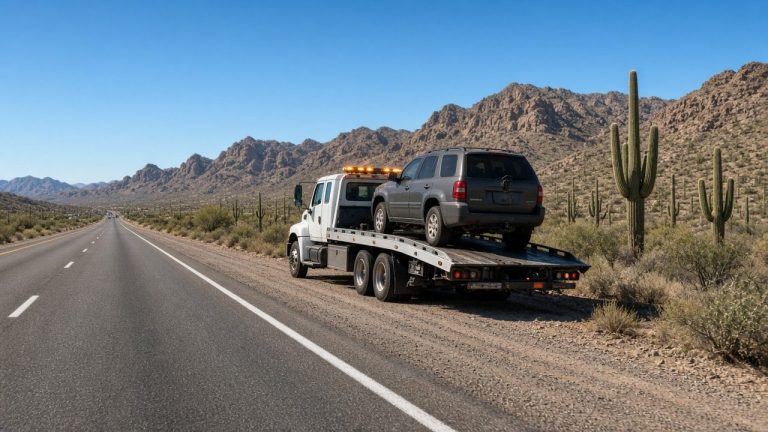
Moving from Los Angeles to another state, buying a car from a seller far away, or sending a car to a family member is a job for vehicle transport, not towing. Car carriers are built for long highway distances, and the cost per mile is usually far lower than a long-distance tow.
7. A car that isn’t worth fixing
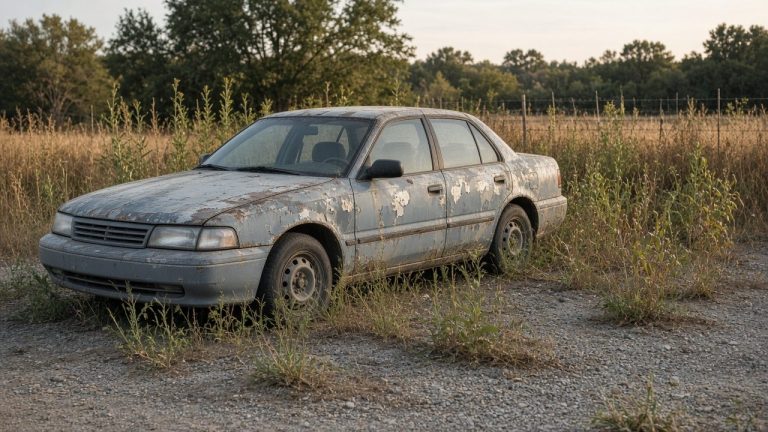
If a repair estimate is higher than the car’s value, or the car has sat unused for months, a junk-car or cash-for-cars buyer may make more sense than paying for a tow plus repairs. Many buyers include pickup in their offer. Have the title ready, since buyers generally require proof of ownership.
Situation Guide: Best Choice at a Glance
| Situation | Usually the best option | Why |
|---|---|---|
| Dead battery, flat tire, or lockout | Roadside assistance | Often fixed on the spot without a tow |
| Overheating or warning lights in the city | Flatbed tow to a shop | Driving further can turn a small repair into engine damage |
| Freeway breakdown | Call 911 if unsafe; flatbed tow | Gets you off a dangerous shoulder quickly |
| Minor fender bender with possible hidden damage | Flatbed or wheel-lift tow | Wheel, suspension, and sensor damage is common after impact |
| Major crash | Flatbed towing and recovery | The vehicle is likely unsafe to roll or drive |
| AWD or 4WD vehicle with a mechanical problem | Flatbed tow | Keeps all wheels off the ground to protect the drivetrain |
| Electric vehicle that won’t move | Flatbed tow | Most EV makers recommend it to protect motors and battery systems |
| Moving a car several hundred miles or more | Open car transport | Lower cost and less wear than a long tow or drive |
| Luxury, classic, or exotic car relocation | Enclosed car transport | Protects paint, interior, and low ground clearance |
| Old, non-running car not worth repairing | Junk-car buyer with pickup | Avoids paying for a tow and repairs on a car worth less than the fix |
Towing Methods: Which One Fits?
Flatbed towing
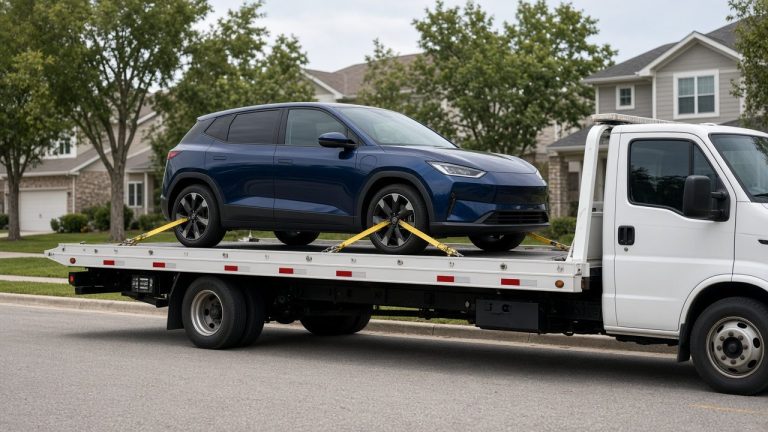
The entire vehicle sits on a flat platform, so no wheels touch the road. This is the safest choice for most vehicles and is strongly preferred for AWD and 4WD vehicles, electric cars, luxury and low-clearance cars, and anything damaged in an accident. It can cost a little more than other methods, and very low cars may need ramps or extra care to avoid scraping.
Wheel-lift towing
A metal yoke lifts the front or rear wheels while the other two roll on the road. It’s quick and works well in tight spaces, parking lots, and short local tows. It is best suited to two-wheel-drive vehicles when the drive wheels are the ones lifted. It is not a good choice for most AWD vehicles or EVs, and it isn’t ideal for long distances.
Tow dolly
A small two-wheel trailer lifts the front wheels, mainly used for front-wheel-drive cars over short distances, often in DIY moves. It is affordable but only safe when the manufacturer allows it, the steering is unlocked or secured as instructed, and the towing vehicle is rated for the load.
Car trailer
A full trailer carries all four wheels, similar to a flatbed, pulled by a properly rated truck. It’s common for moving project cars or non-running vehicles short distances. The tow vehicle, hitch, and trailer must all be rated for the total weight.
For a deeper look at how vehicle weight and drivetrain affect which method is safe, see our guide to vehicle weight, towing capacity, and towing methods.
Vehicle Types and What They Usually Need
- Front-wheel-drive cars: Often the most flexible. Flatbed, wheel-lift with the front wheels raised, or a dolly may work. Check the manual.
- Rear-wheel-drive cars and trucks: Lift the rear wheels or use a flatbed. Towing with the drive wheels rolling can damage the transmission unless the driveshaft is disconnected or the manual allows it.
- AWD and 4WD vehicles: Flatbed in most cases. Rolling any wheels can strain the center differential, transfer case, or AWD coupling.
- Electric vehicles: Flatbed is usually recommended. Many EVs have motors connected directly to the wheels, and turning them can generate electricity or cause damage. Follow the owner’s manual for transport or tow mode.
- Luxury and low-clearance cars: Flatbed with careful, low-angle loading to protect bumpers, splitters, and underbody panels.
- Heavy trucks and large SUVs: May need a heavier-duty tow truck. Tell the company the exact make and model when you book.
For more on these vehicles, read The Hardest Vehicles to Tow and Why They Need Special Care.
Hidden Risks of the Wrong Choice
- Transmission damage: Many automatic transmissions are lubricated only when the engine runs. Rolling the drive wheels with the engine off can overheat internal parts.
- AWD system damage: Towing with two wheels on the ground can force the front and rear axles to turn at different speeds, which strains expensive drivetrain parts.
- EV motor and battery issues: Spinning the wheels of some EVs can damage motors or electronics, and a damaged battery pack needs specialist handling.
- Suspension and alignment damage: Hooking to the wrong point or loading at a steep angle can bend parts.
- Body damage: Low bumpers and spoilers can scrape on steep ramps or uneven driveways.
We cover these in detail in The Costly Towing Mistakes That Destroy Cars.
Car Transport Explained: Open vs. Enclosed
Car transport companies move vehicles on multi-car carriers or single-car trucks over long distances. Many work through brokers who match your shipment with an available carrier. Pickup dates are often given as a window rather than an exact time, so plan ahead if you have a deadline.
Open transport
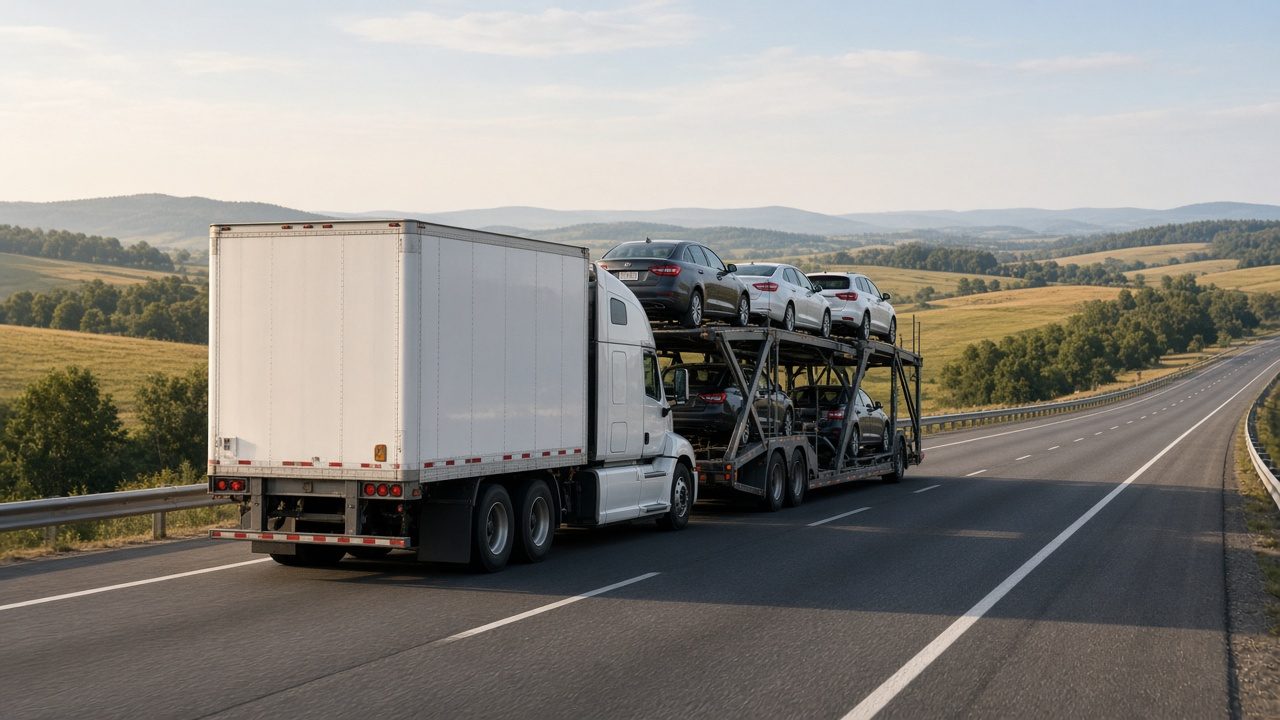
Your car rides on an open carrier, like the ones you see delivering new cars to dealerships. It is the most common and usually the least expensive option, and it’s fine for most everyday vehicles. The car is exposed to weather and road dust along the way.
Enclosed transport
Your car travels inside a covered trailer, protected from weather and debris. It costs more and may have fewer available dates, but it is popular for luxury, classic, exotic, and freshly restored vehicles.
| Feature | Open transport | Enclosed transport |
|---|---|---|
| Price | Lower | Higher |
| Protection | Standard; exposed to weather | Maximum; covered trailer |
| Availability | High | Lower |
| Best for | Most daily drivers | Luxury, classic, exotic, or low cars |
Can a non-running car be shipped?
Usually, yes, but tell the transport company up front. Inoperable vehicles need a winch or special loading, which can add to the price, and not every carrier can take them.
What Does It Cost? Typical Estimates
Prices vary widely by company, distance, vehicle size, time of day, and how hard the job is. The ranges below are typical estimates only, not quotes, and prices in the Los Angeles area may be higher or lower. Always get a quote from the provider before agreeing to service.
| Service | Typical situation | Typical estimated range |
|---|---|---|
| Roadside assistance (jump start, tire change, lockout) | Local call-out | Roughly $50 to $150 |
| Standard local tow | About 5 to 10 miles | Roughly $75 to $200 |
| Flatbed tow | Local to moderate distance | Roughly $100 to $250 or more |
| Open car transport | Several hundred miles or more | Roughly $500 to $1,500 or more |
| Enclosed car transport | Long distance or specialty vehicle | Roughly $900 to $2,500 or more |
What raises the price
- Distance and per-mile charges beyond the base hook-up fee
- Nights, weekends, and holidays
- Vehicle size and weight
- Winching a car out of a ditch, a tight space, or a parking garage
- Accident recovery and cleanup
- Storage fees if the car stays at a tow yard
- For transport: distance, route popularity, season, enclosed vs. open, and whether the car runs
Why the cheapest option can cost more
A low quote that uses the wrong equipment can lead to transmission, AWD, or body damage that costs far more than the tow. Compare what’s included, not just the headline price.
Questions to Ask Before You Book
- What is the total price, including hook-up, mileage, and any after-hours or winching fees?
- What towing method will you use, and is it right for my vehicle’s drivetrain?
- Do you have experience with my type of vehicle (EV, AWD, lowered, heavy truck)?
- What is the estimated arrival time?
- Are you licensed and insured, and can you share proof?
- Where exactly will the car be taken, and are there storage fees?
- For transport: Are you a carrier or a broker? Is the pickup date a window? How is damage handled?
Mistakes to Avoid
- Driving a car that’s overheating or showing serious warning lights “just a little further”
- Letting anyone tow an AWD vehicle or EV with wheels on the ground without checking the manual
- Agreeing to service without a clear total price
- Leaving valuables in the car or forgetting to remove a toll transponder before transport
- Skipping photos of the car’s condition before it’s loaded
- DIY towing with a strap or an underrated vehicle; see How to Tow a Car Safely Without Causing Damage
Frequently Asked Questions
How do I know if I need towing or vehicle transport?
If the car can’t be driven and needs to go a short distance, call for a tow. If you are planning ahead to move a car a long distance, especially between cities or states, vehicle transport is usually safer and more cost-effective.
Is flatbed towing always safer?
For most vehicles, flatbed is the safest method because no wheels touch the road. For a simple short tow of a front-wheel-drive car, a wheel-lift tow may be perfectly fine.
Can electric cars be towed?
Yes, but most manufacturers recommend a flatbed and specific steps such as transport or tow mode. Check your owner’s manual and tell the towing company it’s an EV when you call.
Do I need a tow after a minor accident?
Not always. If the car drives normally, has no warning lights, no leaks, and the wheels and lights are undamaged, you may be able to drive it. When in doubt, tow it to avoid hidden damage getting worse.
When is roadside assistance enough?
For dead batteries, flat tires, lockouts, and fuel delivery. If the car still can’t be made safe to drive on the spot, towing is the next step.
Can I ship a car that doesn’t run?
Often, yes. Let the transport company know in advance, since inoperable vehicles need extra equipment and usually cost more.
What’s the cheapest option?
For simple problems, roadside assistance. For short tows, a standard local tow. For long distances, open car transport is usually much cheaper than a long-distance tow. For a car that’s not worth fixing, selling to a junk-car buyer can turn a cost into cash.
Why does towing cost more at night?
Many companies charge more after hours, on weekends, and on holidays because of staffing and demand.
Get Help in Los Angeles and the San Fernando Valley
TowCars doesn’t tow cars ourselves. We connect drivers with independent local towing, junk-car buying, and car shipping companies. If you need help, send us a request and we’ll share it with providers who serve your area so they can contact you with options.
About the Author