AI-generated illustration
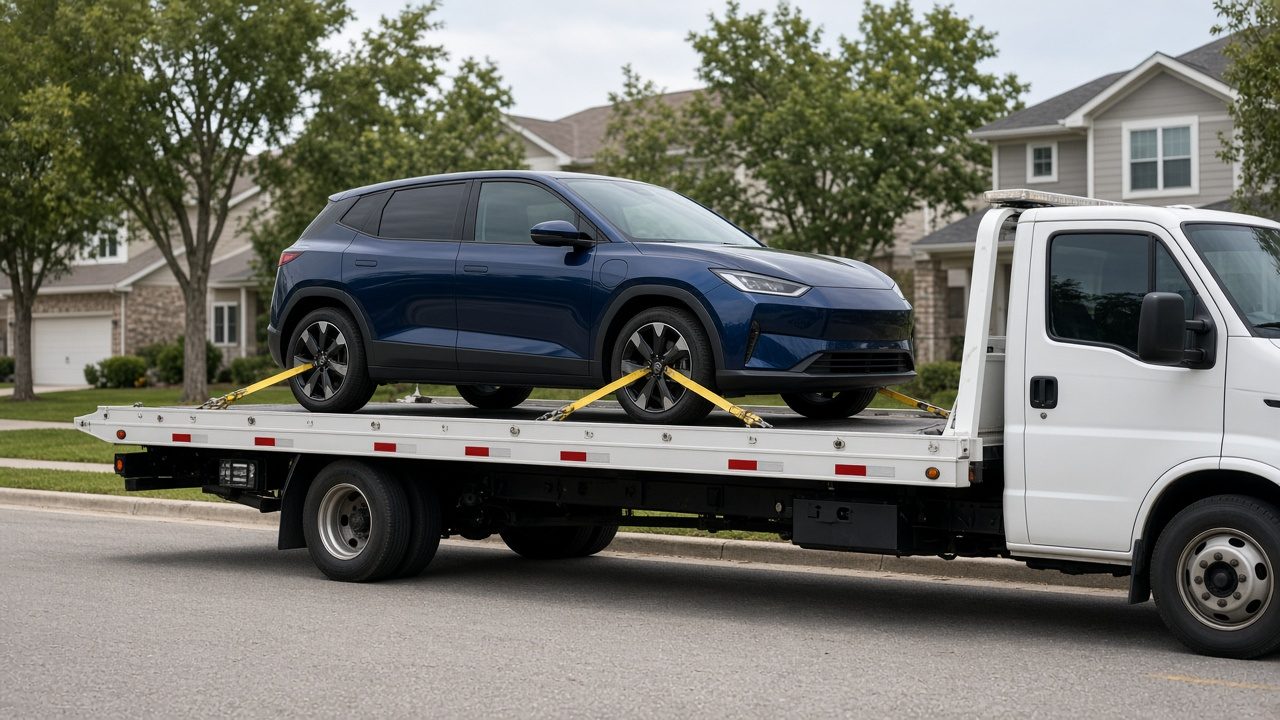
The short answer: most electric vehicles should be towed on a flatbed, or with a wheel lift plus dollies so that all four wheels are off the ground. Never tow one with drive wheels on the pavement unless the owner’s manual specifically allows it. Many hybrids have strict rules, too. A Toyota Prius owner’s manual, for example, prohibits sling-type tow trucks and towing from the rear with the front wheels on the ground. Always check the towing section of your manual before the truck arrives, and tell the tow company you have an EV or hybrid when you call.
Disclaimer: TowCars.com is a nationwide towing information and referral service. We don’t tow, dispatch, or store vehicles, and we don’t guarantee any towing company. If you send us a request, we pass it to independent providers who set their own prices and terms. See our disclosure.
Why EVs and Hybrids Need Special Towing
In an electric car, the drive motors are connected to the wheels. Tesla’s Model Y manual explains that the motors generate power when the wheels spin. It warns that transporting the car with its tires able to spin can cause significant damage and overheating, and in rare cases fire. Hybrids add a gas engine and transmission that can be damaged by being pulled the wrong way. That’s why many automakers ask for all wheels to be off the ground.
EVs are also heavy for their size because of their batteries, so the tow truck needs to be rated for the weight. See our guide to vehicle weight and towing methods.
What Automakers Say (Examples)
Instructions vary by make, model, and year, so treat these as examples and read your own manual.
Tesla Model Y
- Always transport with all four tires off the ground, and make sure the tires can’t spin.
- A flatbed truck is the recommended method.
- Without a flatbed, use wheel lifts and dollies so that all four wheels are off the ground, for a maximum of 35 miles (55 km), and within the dollies’ speed rating.
- “Tow Mode” is only for winching the car onto a flatbed or moving it out of a parking space. The car may roll slowly, under 5 mph, for less than 30 feet.
- Pull the car only with a properly installed tow eye, never by the chassis or suspension.
- Tesla says damage caused by improper transport is not covered by the warranty.
Ford Mustang Mach-E
- Ford recommends a wheel lift with dollies or flatbed equipment, and says not to tow with a slingbelt.
- All wheels must be off the ground. With a wheel lift from the front, the rear wheels go on a dolly, and from the rear, the front wheels go on a dolly.
Hyundai IONIQ 5
- Hyundai’s emergency response guide says to tow with a flatbed or wheel dollies, and never with the front or rear wheels on the ground.
Toyota Prius (Hybrid)
- A Toyota Prius owner’s manual says not to tow with a sling-type truck, from either the front or the rear.
- It warns never to tow the car from the rear with the front wheels on the ground, and never from the rear with all four wheels on the ground, which may seriously damage the transmission.
- If certain systems have failed or the 12-volt battery is dead, the front wheels may be locked. In that case, transport the car with both front wheels or all four wheels lifted.
- That Prius is not designed to be dinghy-towed (all four wheels down) behind a motor home.
Flatbed vs. Wheel Lift with Dollies
Flatbed (usually preferred)
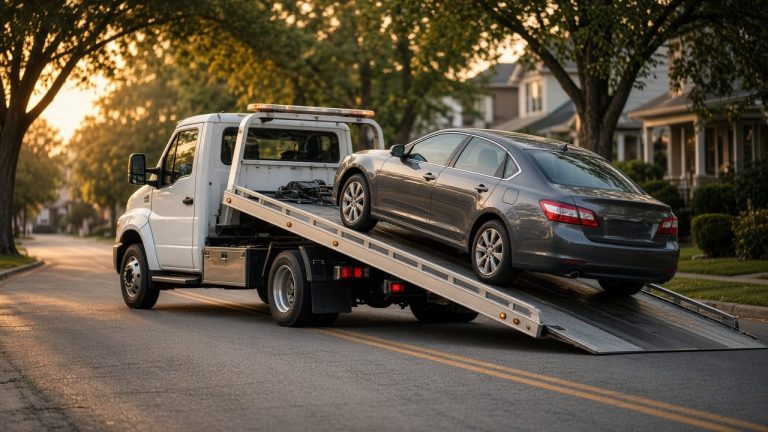
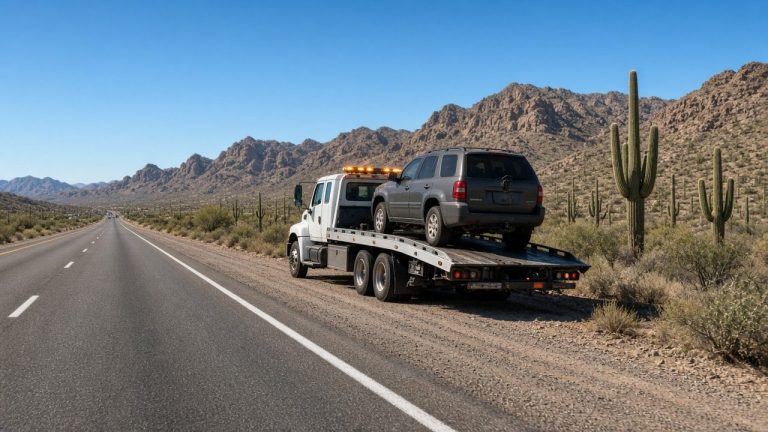
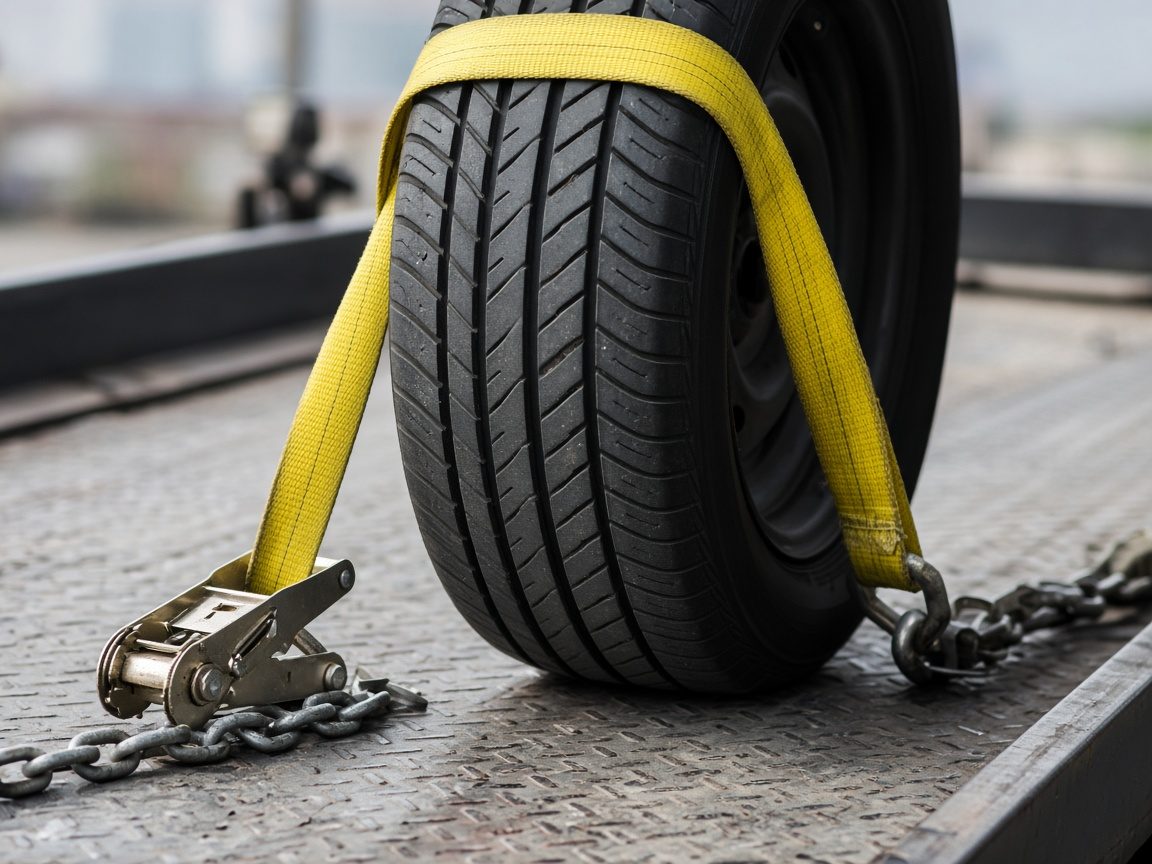
With a flatbed, the whole car rides on the deck with no wheels turning. Tesla calls this the recommended method, and it’s the simplest way to follow most EV instructions. The car is usually winched on, so the operator may need you to put it in tow or neutral mode, and some cars need 12-volt power for that.
Wheel lift with dollies
A wheel lift raises one axle while dollies carry the other. Ford and Hyundai list this as acceptable for the models above. Tesla allows it for limited distances. If a company offers only a wheel lift without dollies for an EV, stop and ask questions.
For more on how equipment affects risk, see the hardest vehicles to tow and costly towing mistakes.
After a Crash: High-Voltage Safety
Tesla’s manual warns that high-voltage components can be compromised in a collision. Assume they’re energized until emergency responders confirm otherwise. If your EV has been in a crash:
- Get yourself and passengers to safety and call 911 if needed.
- Tell responders and the tow operator that it’s an electric vehicle.
- Don’t touch damaged components or exposed cables.
Some cities require training for EV tows. In Los Angeles, for example, the Police Commission’s 2026 Official Police Garage rates include an EV surcharge. It applies only when there is reason to suspect the high-voltage battery is compromised, the required safety and containment measures were used, and the tow operator has documented training. Rules change; verify with your local authority.
What to Tell the Tow Company
- The exact year, make, and model, and that it’s an EV or hybrid
- Whether it’s AWD, which applies to many EVs
- Whether the car has 12-volt power and can enter tow or neutral mode
- Whether it’s been in a crash or water
- The towing method your manual requires (flatbed, or all wheels off the ground)
- Where the tow eye is, if your manual shows it
Ask for a price that includes any dollies or EV handling. Costs vary, as our tow truck cost guide explains. Check your automaker’s roadside program, too. Tesla, for example, notes it doesn’t reimburse services that weren’t dispatched through Tesla Roadside Assistance.
Before you agree to a tow, read our guide on choosing a tow company and avoiding scams. If your EV was towed away by police or a property owner, our impound lot guide explains how to get it back.
Can I Tow My EV Myself?
For most EVs, flat-towing (all four wheels down behind another vehicle) isn’t allowed, and DIY towing risks damage that may not be covered by the warranty. If you need to move a car that doesn’t run, use proper equipment and follow the manual. See how to tow a car safely. For long moves, read towing vs. car transport.
Frequently Asked Questions
Can an electric car be towed with two wheels on the ground?
Usually not. Tesla, Ford (Mach-E), and Hyundai (IONIQ 5) all say all wheels should be off the ground, using a flatbed or a wheel lift with dollies. Check your own manual.
Is a flatbed required for a hybrid?
Not always, but many hybrids have limits. A Toyota Prius owner’s manual allows a wheel lift with the front wheels raised, or a flatbed, but bans sling trucks and towing from the rear with the front wheels on the ground.
What is Tesla Tow Mode?
It lets the car roll freely for winching onto a flatbed or moving it out of a parking space, at under 5 mph for under 30 feet. It isn’t for towing on the road.
Will improper towing void my EV warranty?
It can. Tesla says damage caused by improper transport isn’t covered by the warranty. Other makers may have similar terms.
Need an EV-Ready Tow?
TowCars.com doesn’t tow vehicles. Send us a request with your vehicle details, and we’ll pass it to independent providers in your area who can quote a flatbed or dolly tow.
Sources
- Tesla Model Y Owner’s Manual – Instructions for Transporters
- Ford Mustang Mach-E Owner’s Manual – Towing
- Hyundai – IONIQ 5 Emergency Response Quick Reference Guide (PDF)
- Toyota Prius Owner’s Manual OM47685U (PDF)
- Los Angeles Board of Police Commissioners – OPG Rates and EV Surcharge Rules (PDF)
About the Author