AI-generated illustration
The short answer: the safest tow is one that you, your insurer, your roadside assistance plan, or the police called. If a tow truck shows up that nobody called, you can say no. Before your car is hooked up, get the driver’s name, company, and license information and a written price. Choose where the car goes yourself, and never sign a form with blanks in the payment section. These steps come from consumer warnings by the National Insurance Crime Bureau (NICB), the Texas Department of Insurance, the Maryland Insurance Administration, and the City of Chicago.
Disclaimer: TowCars.com is a nationwide towing information and referral service. We don’t tow, dispatch, or store vehicles, and we don’t guarantee any towing company. If you send us a request, we pass it to independent providers who set their own prices and terms. See our disclosure.
What Is Predatory Towing?
The NICB defines predatory, rogue, or bandit towing as towing companies using deceptive or coercive practices to take advantage of drivers in stressful situations. It says it saw an 89% nationwide increase in predatory towing claims from the beginning of 2022 to the end of 2024, from big cities, small towns, suburbs, and rural areas alike. Drivers have reported crash-scene tow bills of thousands of dollars, in some cases more than $16,000.
The Texas Department of Insurance (TDI) describes a common version:
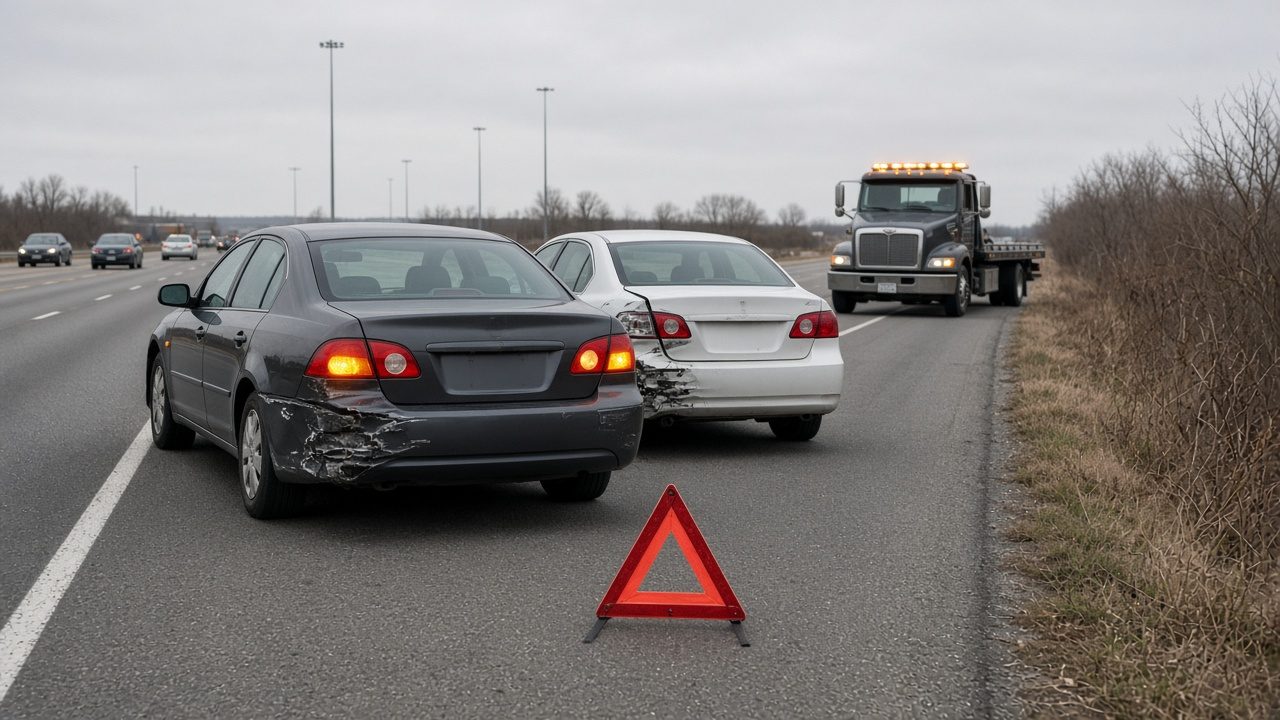
- A tow truck shows up after a crash, even though neither you nor the police called it.
- The driver recommends a specific repair shop.
- You later get a bill for thousands of dollars in storage and other fees, because the tow driver and shop were working together.
Warning Signs of a Towing Scam
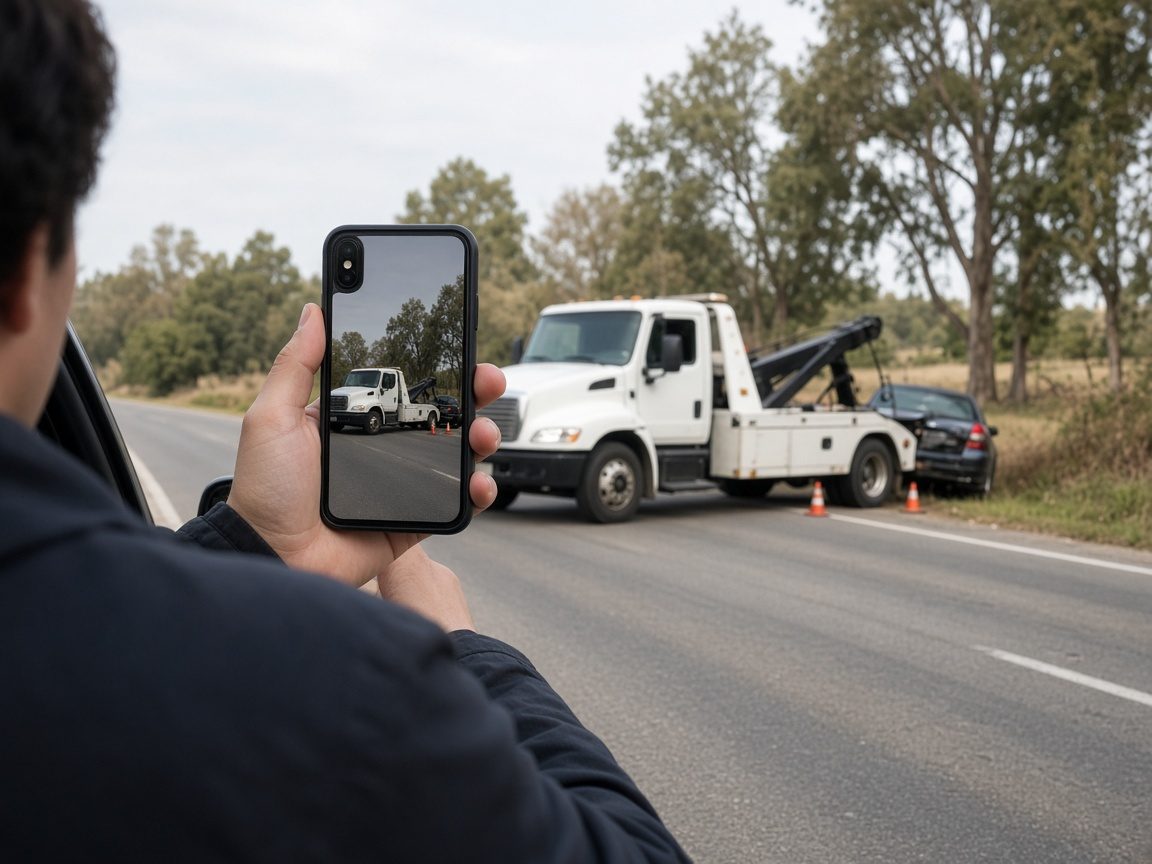
- Nobody called this truck. The NICB says legitimate companies wait to be called, while predatory towers may listen to police scanners and rush to crashes. Chicago warns that rogue drivers may falsely claim your insurer, roadside service, or the police sent them.
- Pressure to decide fast. Drivers may hurry you into signing before you can think or make a call.
- A push toward a particular shop. TDI calls this out as a red flag.
- No clear price. They may give vague answers about storage or “miscellaneous” fees. The NICB says these vague fees often swell predatory bills.
- Blank forms. Payment lines may be left empty for “later.”
- No proof of license. The driver can’t or won’t show licensing that matches the truck.
- Won’t say where the car is going, or won’t let you get your belongings. The Maryland Insurance Administration lists both as warning signs.
How to Choose a Legitimate Tow Company
Start with who you already pay
Check your auto insurance and any roadside membership first. Maryland’s insurance regulator suggests requesting a tow through your insurer, a roadside assistance program, or a provider you know. Your policy may also help pay. TDI says collision and comprehensive coverage pays reasonable towing and storage fees after a crash. Our tow truck cost guide explains coverage in more detail.
Questions to ask before the car is hooked up
- What is your company name, and what’s your name?
- Can you show your towing license or permit? In Chicago, for example, the city tells drivers to ask for the Illinois Commerce Commission relocator license and make sure it matches the information printed on the truck.
- What is the total price, including mileage, storage, and any extras? Can I have that in writing?
- Where exactly are you taking my car, and what are that location’s hours?
- What payment methods do you take?
- What equipment will you use? Does my vehicle need a flatbed? See towing methods by vehicle weight and our EV and hybrid towing guide.
Choose the destination yourself
TDI says that if your car can’t be driven, you should tell the driver to take it to a storage lot or shop you choose, and not let the driver talk you into going somewhere else. If your car is safe to drive, TDI says to drive it home.
What to Do at the Scene
- Get safe first. If you’re in danger or anyone is hurt, call 911.
- Confirm the truck. Make sure it’s the one you or the police called.
- Take photos. Chicago advises photographing the tow truck including its license plate. Photos of your car’s condition before it’s moved also help.
- Read before you sign. Chicago says not to sign a pre-tow form with blank spaces in the payment section, and to make the operator fill in every line and give a total. Photograph the form after you sign it.
- Get a receipt. TDI says to get a receipt showing the towing fee and make sure you know where the car is going.
- Call for help if harassed. Chicago tells drivers to call 911 if a tow truck driver is harassing them.
Some cities have extra protections. In Houston, the city’s Motorist Bill of Rights says tow operators may not solicit at scenes, and its TOW AND GO program moves stalled cars off covered freeways for free. See our Houston towing guide.
If You Think You’ve Been Scammed
- Call your insurer right away and tell it what happened, especially if you have collision or comprehensive coverage.
- Report it. In Texas, TDI says to report towing scams to TDLR, which regulates tow companies and storage lots, and to your local police. In Chicago, call 311 or use the city’s online complaint system. Nationwide, the NICB accepts fraud reports through its website.
- Ask about a hearing. Many states let you challenge a non-consent tow. Texas, for example, allows a tow hearing at a justice court if you request it within 14 days, not counting weekends and national holidays. See our impound lot guide.
- Keep everything: photos, the signed forms, receipts, and names.
Rules change; verify with your local authority.
Avoid Costly Damage, Too
A legitimate tow can still damage a car if the wrong method is used. Low cars, AWD vehicles, and EVs often need a flatbed. Read the costly towing mistakes that destroy cars and the hardest vehicles to tow.
Frequently Asked Questions
Do I have to accept a tow truck that shows up after a crash?
No. If you didn’t call the tow and the police didn’t order it, you can say no and choose your own service, as the Maryland Insurance Administration advises. Follow police instructions at the scene, though, especially if the car is blocking traffic.
How can I tell whether a tow truck was really sent by police or my insurer?
Ask the officer at the scene, or call your insurer or roadside provider to confirm who they sent. Chicago warns that rogue drivers sometimes lie about this.
What should I never sign?
Don’t sign anything with blank price or payment fields. Ask for every line to be filled in with a total, and photograph the form.
Where can I report a predatory tow?
Report it to your state’s towing regulator if there is one (in Texas, TDLR), your local police, and your insurer. You can also report it to the NICB.
Want Help Finding a Tow?
TowCars.com doesn’t tow vehicles or vouch for any company. If you’d like quotes from independent providers in your area, send us a request. Before you agree to anything, compare prices and check licensing yourself.
Sources
- National Insurance Crime Bureau – Predatory Towing
- Texas Department of Insurance – Don’t Fall Victim to a Towing Scam
- Maryland Insurance Administration – Consumer Advisory: Predatory Towing
- City of Chicago – Consumer Tips for Avoiding Rogue Towing
- Texas Department of Licensing and Regulation – Towing Consumer Information
- City of Houston – Motorist Rights and Guidelines (PDF)
About the Author