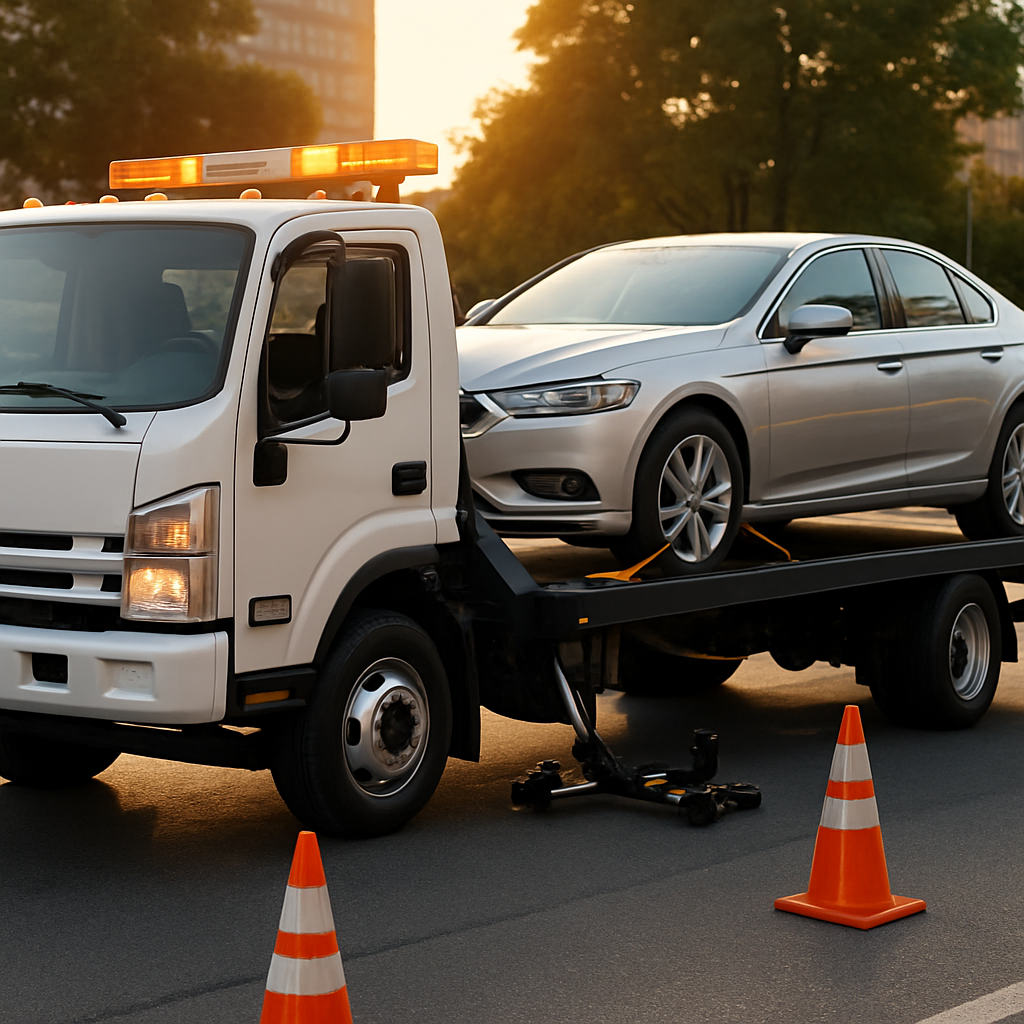
When a car breaks down, gets damaged in a collision, or needs to be moved across town, towing becomes more than a convenience — it becomes a safety decision. The right towing method protects the vehicle, the driver, and everyone else on the road. But not every car can be handled the same way, and choosing the wrong setup can lead to costly damage.
Thank you for reading this post, don't forget to subscribe![Insert Image Here – Tow truck]
Understanding Car Weight and Towing Basics
Before any vehicle is moved, one of the most important details to know is its weight. A car’s size, drivetrain, and battery system all affect how it should be transported. Smaller cars are easier to move, while heavier vehicles and electric models may require extra care because of their suspension, braking systems, or ground clearance.
For example, a Honda Civic usually weighs around 2,900 pounds, which makes it much easier to tow than a pickup truck. A Toyota Camry often falls in the 3,300 to 3,500 pound range, while an Tesla Model 3 can weigh around 3,800 to 4,000 pounds depending on the trim. A full-size truck like a Ford F-150 may weigh well over 4,500 pounds, and some versions are significantly heavier once loaded.
Why weight matters
Weight affects the towing equipment needed, how the vehicle is secured, and whether the towing vehicle can safely handle the load. It also determines if the car can roll freely, should be lifted completely off the ground, or needs a flatbed for transport.
Can Every Vehicle Be Towed?
In most cases, yes — but not with the same method. Different vehicles need different towing approaches depending on drivetrain, clearance, and condition after a breakdown or accident.
Flatbed towing
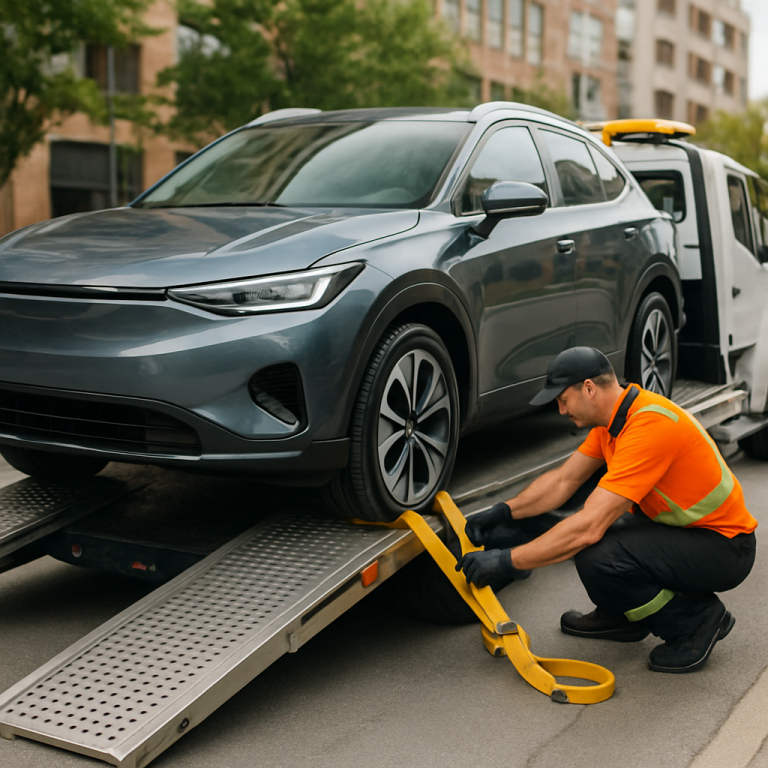
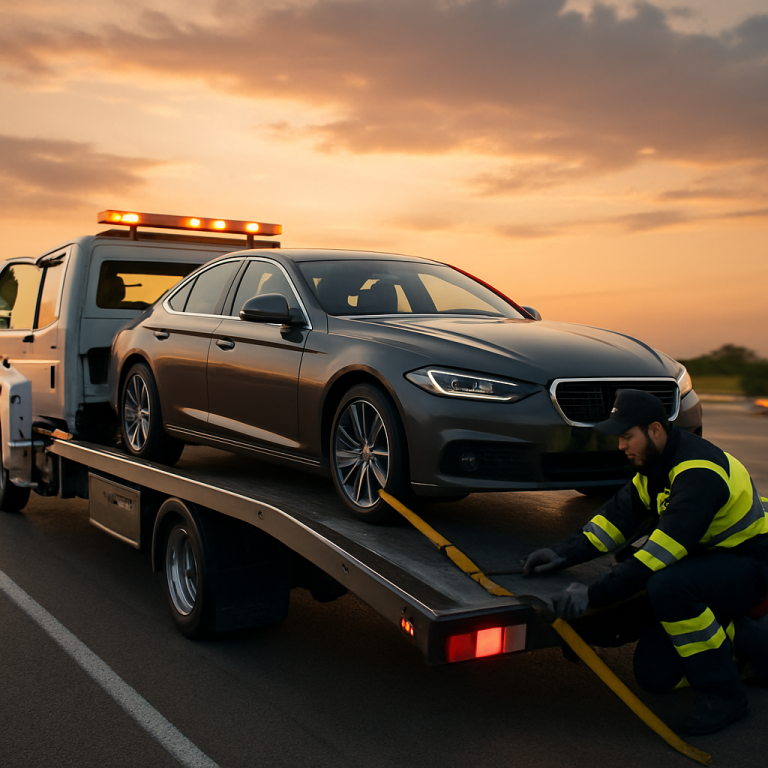
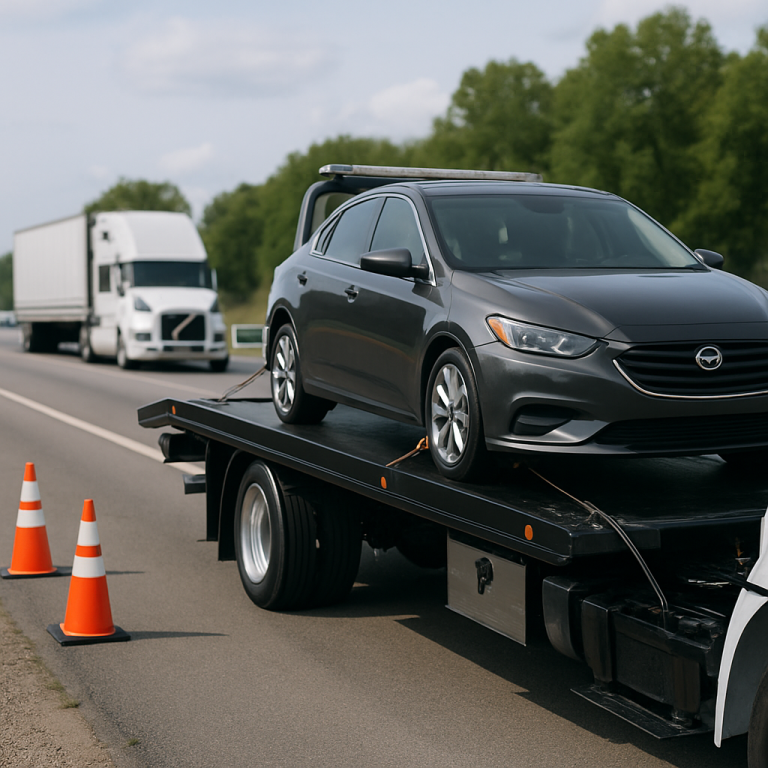
A flatbed truck carries the entire vehicle on a platform, keeping all four wheels off the road. This is often the safest choice for all-wheel-drive cars, electric vehicles, luxury models, and damaged vehicles. It minimizes wear and avoids problems with drivetrains that should not roll on the ground.
Tow dolly
A tow dolly lifts only the front wheels while the rear wheels stay on the road. It can work well for some front-wheel-drive cars, but it is not ideal for every vehicle. If the car has specific transmission or drivetrain restrictions, a dolly may cause damage.
Trailer towing
A trailer offers a more secure way to move a vehicle, but it takes more space and skill to operate. It is often used for longer transport jobs or when a car needs to be fully protected during transit. Heavier vehicles may require this option, depending on the towing truck’s capacity.
[Insert Image Here – Car being towed]
Towing Capacity Explained
Towing capacity is the maximum weight a towing vehicle can safely pull. It is not just about engine power; it also depends on brakes, frame strength, suspension, cooling systems, and the hitch or towing setup.
Simple rule of thumb
- Check the towing vehicle’s rated capacity before connecting anything.
- Factor in the weight of the car plus the towing equipment.
- Make sure the hitch, straps, and tires are rated for the load.
- Leave a safety margin rather than operating at the limit.
Real-world examples
A small SUV with a proper tow rating may handle a compact sedan on a dolly, but it may not be enough for a full-size pickup. A heavy-duty tow truck is better suited for larger vehicles, accident recovery, or long-distance vehicle transport. Matching the right truck to the right load reduces the chance of swaying, braking issues, and mechanical strain.
Safety Tips Before Towing
Preparation makes towing safer and smoother. A quick checklist can prevent damage and reduce stress during an already difficult moment.
Before the tow begins
- Confirm the vehicle’s weight and drivetrain type.
- Inspect tires, brakes, and wheel condition.
- Remove loose items from inside the car.
- Use proper straps, hooks, and wheel nets.
- Check that lights and signals on the tow vehicle work properly.
- Verify parking brake settings and transmission instructions.
During the tow
Drive smoothly, avoid sudden turns, and keep a greater following distance than usual. If the car is on a dolly or trailer, make sure it is balanced correctly and secured before moving onto the road.
Emergency Situations
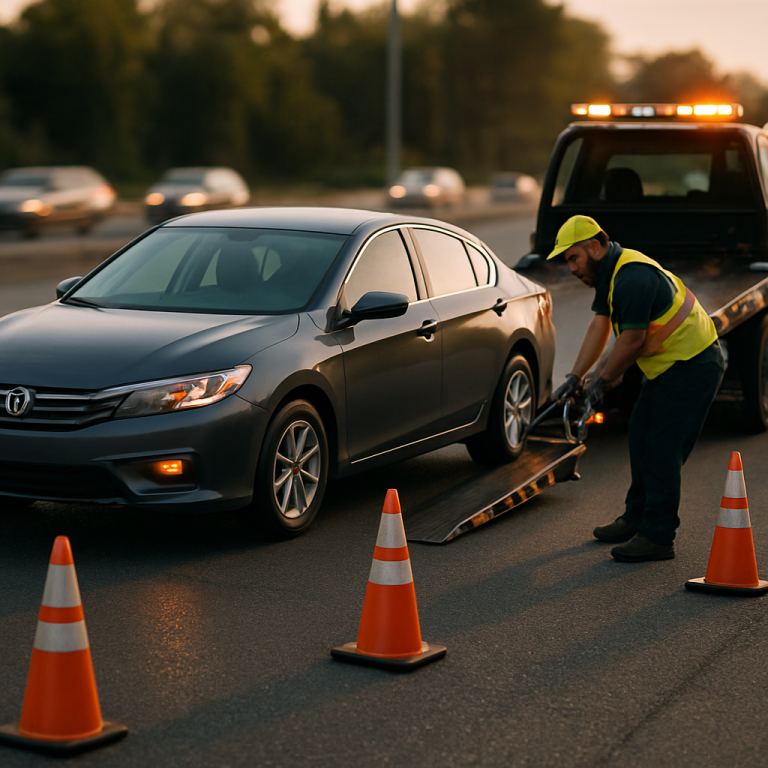
Towing is often needed in stressful situations, and each one calls for a slightly different response. A breakdown on the highway may require quick roadside assistance, while an accident may call for careful recovery to avoid further damage. For long-distance towing, the priority is stable transport and full protection over many miles.
If a car overheats, loses a wheel, or suffers suspension damage, driving it even a short distance may make the problem worse. In those cases, towing is not just convenient — it is the safest option. For long trips, enclosed transport or a flatbed can help protect valuable or low-clearance vehicles from road debris and weather.
[Insert Image Here – Roadside assistance]
Flatbed vs Tow Dolly – Comparison
Both options have their place, but one is usually better than the other depending on the vehicle.
Flatbed advantages
- All wheels are off the ground.
- Best for AWD, EVs, and damaged vehicles.
- Less wear on the drivetrain.
- Safer for long-distance vehicle transport.
Flatbed drawbacks
- Can cost more than a dolly.
- Requires more space to load and unload.
Tow dolly advantages
- Often more affordable.
- Useful for some front-wheel-drive cars.
- Compact and easier to store than a trailer.
Tow dolly drawbacks
- Not suitable for every drivetrain.
- Rear wheels remain on the road.
- Can be risky if used incorrectly.
FAQ Section
Can electric cars be towed?
Yes, but usually not like a traditional gas-powered car. Many electric vehicles should be transported on a flatbed to protect the motor system and avoid damage to the drivetrain. Always follow the manufacturer’s towing instructions.
What happens if towing is done wrong?
Incorrect towing can damage the transmission, tires, suspension, or battery system. It can also make the vehicle unstable and create a road hazard for other drivers. In serious cases, improper towing may lead to expensive repairs that could have been avoided.
How do I know which towing method is best?
Start with the vehicle’s manual, then consider whether it is front-wheel drive, rear-wheel drive, all-wheel drive, or electric. From there, match the vehicle to the safest transport option. When in doubt, a flatbed is often the most dependable choice because it minimizes risk and works for most vehicles.
Safe towing is really about respecting the vehicle’s design and choosing the right equipment for the job. Whether it is a compact sedan, a heavy pickup, or an electric car that needs careful handling, the best transport decision is the one that keeps the car protected from pickup to drop-off.
About the Author