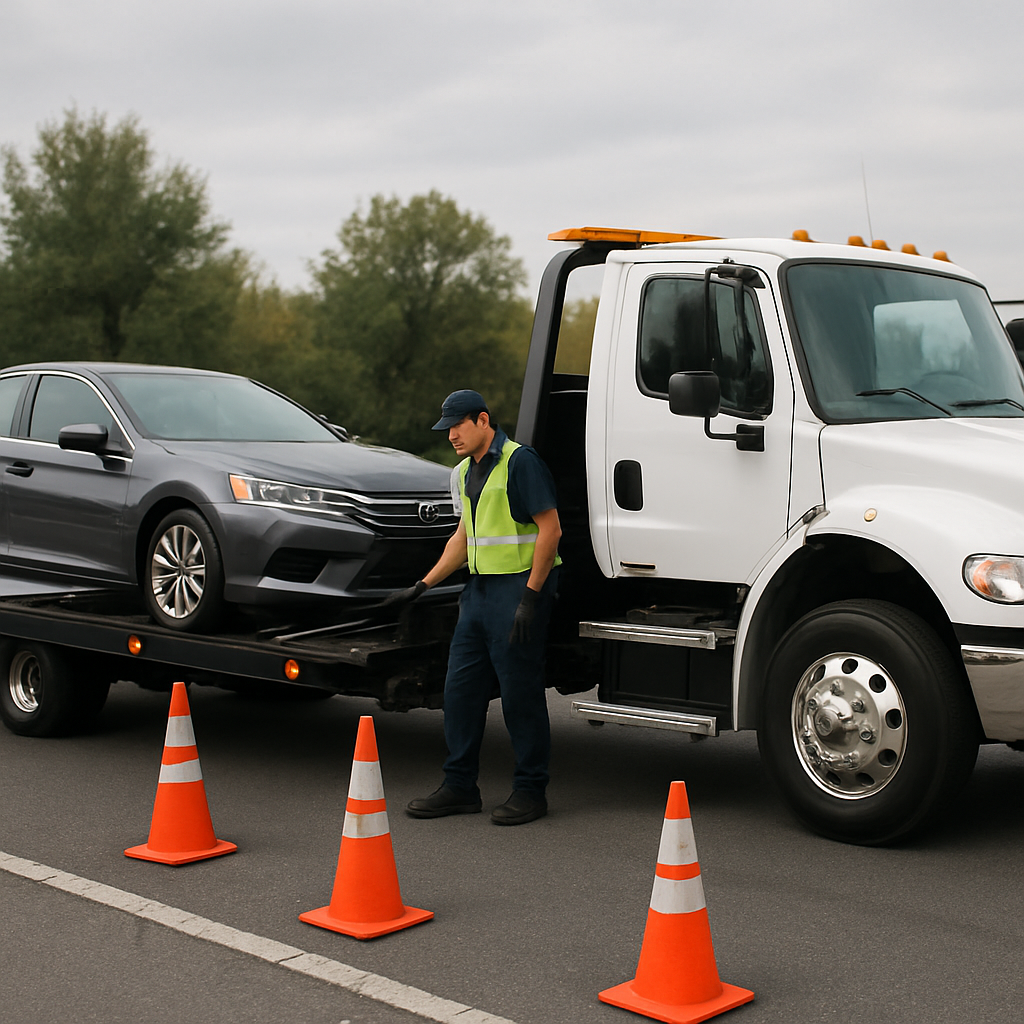
If you have ever searched for a towing service near me after a breakdown, accident, or dead battery, you already know how stressful vehicle trouble can be. The good news is that understanding car weight, towing capacity, and modern vehicle transport options can make the process much easier. Whether you need quick roadside assistance or professional vehicle transport across states, knowing what your car can handle helps you stay safe and avoid costly mistakes.
Thank you for reading this post, don't forget to subscribe![Insert Image Here – Tow truck]
Car Weights Explained
Not all vehicles weigh the same, and weight matters more than many drivers realize. A lighter car is usually easier to tow, while heavier vehicles may need more powerful equipment and stricter handling rules.
Common vehicle weight ranges
- Sedans: usually 2,800 to 3,600 pounds
- SUVs: often 3,500 to 6,000 pounds
- Trucks: can range from 4,000 to 7,500+ pounds
- Electric cars: often heavier than similar gas models because of battery packs
For example, a Tesla Model 3 weighs around 3,800 pounds, a Ford F-150 can weigh well over 4,500 pounds depending on trim, a Toyota Camry is usually around 3,300 pounds, and a Honda Civic typically falls near 2,900 pounds. These numbers affect what kind of tow truck or trailer is needed.
Which Cars Can Be Towed?
Many vehicles can be towed safely, but the method depends on the drivetrain, condition, and manufacturer recommendations. Front-wheel-drive cars may be handled differently than rear-wheel-drive or all-wheel-drive models.
Vehicles that can usually be towed safely
- Cars with manufacturer-approved towing instructions
- Front-wheel-drive vehicles using a tow dolly or flatbed
- Standard sedans and compact cars with proper equipment
Vehicles that need special handling
- All-wheel-drive and four-wheel-drive vehicles
- Low-clearance sports cars
- Damaged vehicles after collisions
- Luxury and electric vehicles with sensitive drivetrains
Electric cars towing rules are especially important. Many EVs should not be towed with their wheels on the ground unless the manufacturer specifically allows it. In many cases, a flatbed is the safest choice to protect the motors and battery systems.
Types of Towing Methods
Different towing methods are used depending on distance, vehicle type, and safety needs. Choosing the right one can prevent damage and reduce risk.
Flatbed towing
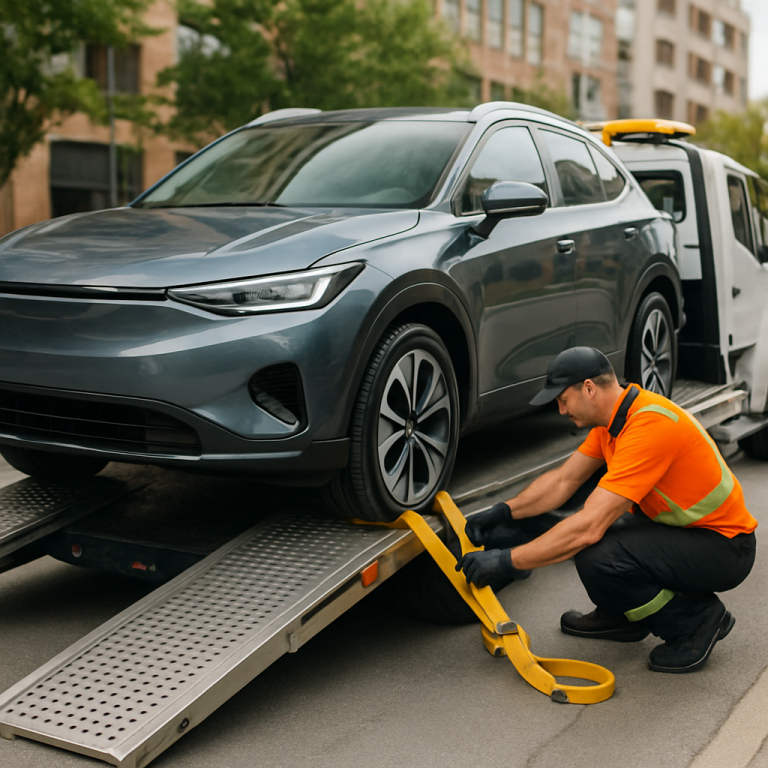
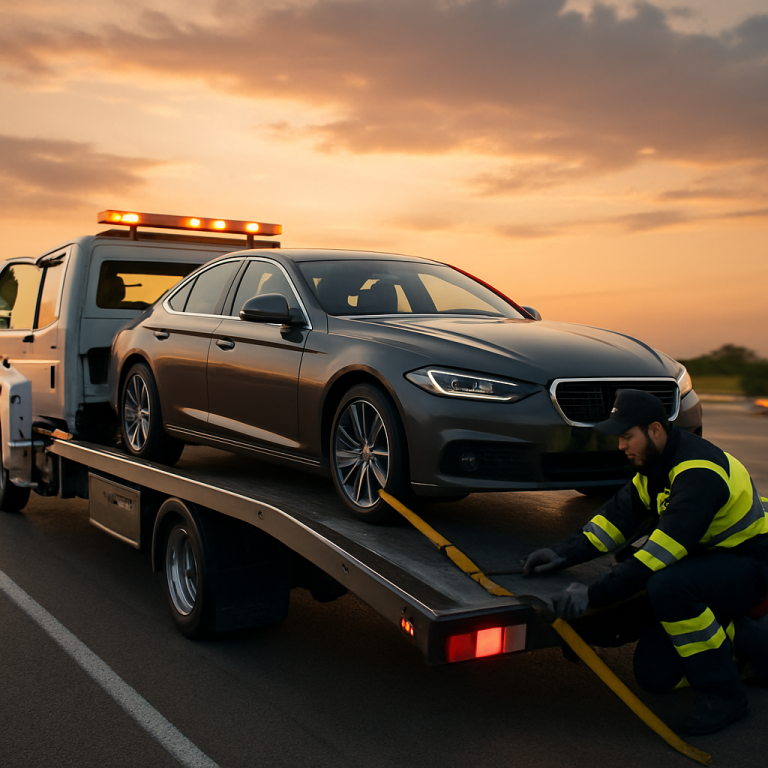
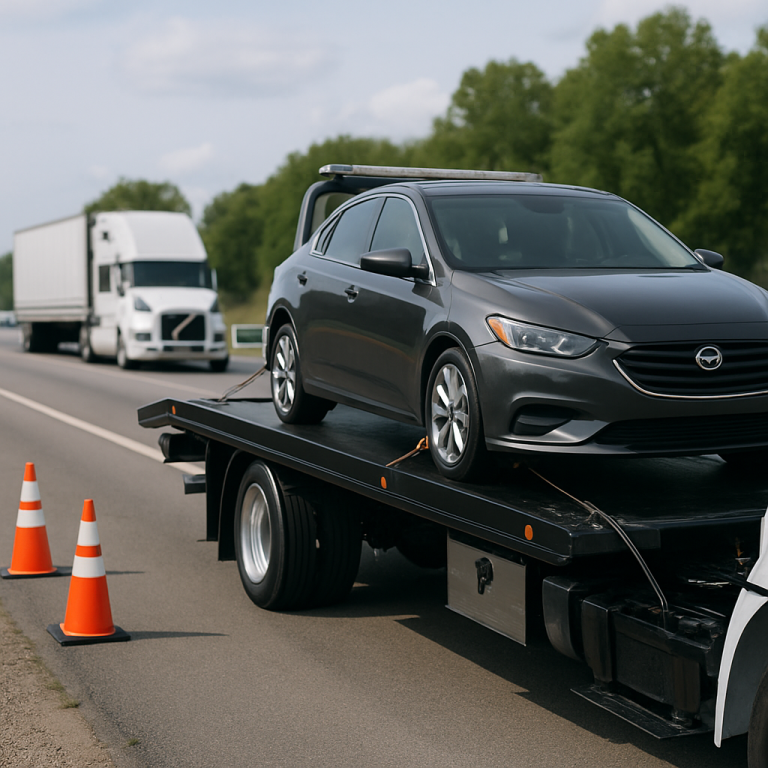
Flatbed towing lifts the entire vehicle off the road and secures it on a platform. This is often the best option for luxury cars, electric vehicles, all-wheel-drive models, and damaged cars.
Tow dolly
A tow dolly lifts only the front wheels of the vehicle. It may work for some front-wheel-drive cars, but it is not suitable for every vehicle and should be used with care.
Trailer towing
Trailer towing places the whole vehicle on a trailer. It is useful for long-distance moves and for cars that cannot safely roll on their own wheels.
[Insert Image Here – Car on flatbed]
Towing Capacity Explained
Towing capacity is the maximum weight a tow vehicle can safely pull. It depends on the engine, frame, brakes, suspension, and towing package. Exceeding that limit can lead to brake failure, transmission damage, or loss of control.
- Check the owner’s manual: It lists the safe towing limits.
- Include cargo weight: The trailer and everything inside count too.
- Match vehicle to load: A smaller SUV may not be enough for a heavy truck.
- Use the right hitch: Wrong hardware can create dangerous sway.
For example, a half-ton pickup may have enough towing capacity for a midsize car, but not for a larger SUV on a heavy trailer. That is why professional towing companies carefully match the vehicle and equipment before moving anything.
Safety Tips Before Towing
Before any tow, a quick checklist can save time and prevent damage.
- Turn off alarms and secure loose items
- Check tire pressure if the vehicle will roll
- Confirm the parking brake is released when needed
- Inspect straps, chains, and hooks
- Make sure the transmission is in the correct mode
- Follow local traffic laws and hazard light rules
Emergency Towing Situations
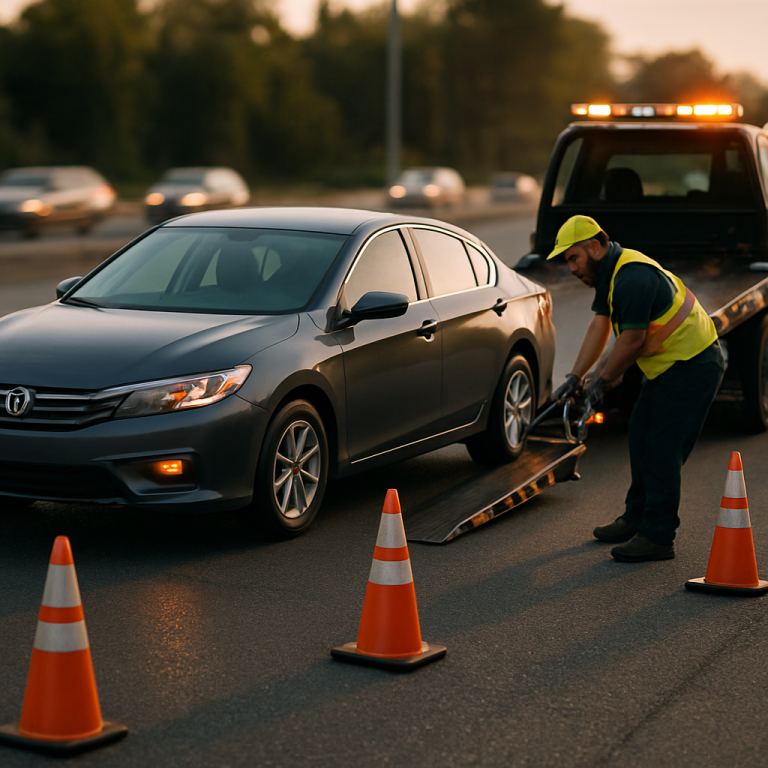
Emergency towing is often needed after accidents, engine failure, overheating, blown tires, or flooded roads. In these moments, fast help matters, but so does using the right method.
Roadside assistance may be enough for a dead battery or flat tire. But if the car will not move, leaks fluid, or has suspension damage, a tow truck is usually the safer choice.
[Insert Image Here – Roadside scene]
Vehicle Transport & Car Shipping
Towing and vehicle transport are related, but they are not the same. Towing usually means moving a vehicle short distances, often for emergencies or local repairs. Car shipping and long-distance vehicle transport are used when a car needs to travel across a city, state, or the country.
Professional car shipping companies are ideal when someone is relocating, buying a car online, sending a classic car to a show, or moving a vehicle that should not be driven long distances. Instead of trying to tow hundreds of miles, a transport carrier can move the car more efficiently and with less wear.
The benefits of using professional transport services include:
- Less mileage on your vehicle
- Lower risk of road damage
- Safer handling for specialty vehicles
- Convenience for long-distance moves
- Peace of mind from trained drivers and insured service
If you are choosing between towing and shipping, think about distance, vehicle condition, and overall cost. A short local move may be perfect for towing, but a cross-country move is usually better handled by a transport company.
Interesting Facts About Cars and Towing
Some facts about towing and vehicle weight surprise even experienced drivers. Electric vehicles often weigh more than gas-powered cars of similar size because of their batteries. Pickup trucks can vary by thousands of pounds depending on bed length, trim, and engine size. And low-clearance sports cars are often harder to tow safely because the front bumper can scrape on standard equipment.
Heavier cars are not always harder to move, but they do demand more precise planning. That is why professional towing teams use the right tools instead of guessing.
FAQ
Can you tow an electric car?
Yes, but many electric cars require a flatbed or another manufacturer-approved method. Towing an EV the wrong way can damage the drivetrain.
What happens if you tow wrong?
Incorrect towing can cause transmission damage, wheel alignment issues, tire wear, or even total vehicle failure. It can also create a road hazard.
How much does towing cost?
Costs vary by location, distance, vehicle size, and time of day. Emergency towing, long-distance towing, and specialty transport usually cost more than standard local service.
Choosing the Right Service
When your car breaks down, the best choice is not always the fastest one. A reliable towing company will match the right equipment to your vehicle, explain the process clearly, and help you decide whether towing, roadside help, or full vehicle transport is the safest option. If you ever need reliable vehicle transport or towing services, choosing a professional company can save you time, money, and stress.
About the Author