A car problem rarely happens at a good time. One minute you are commuting, running errands, or heading out on a trip, and the next minute you are stuck on a shoulder, in a parking lot, or in front of your own home trying to figure out what to do next. In that moment, the right towing or vehicle transport choice can save time, reduce stress, and prevent expensive damage.
Thank you for reading this post, don't forget to subscribe!This guide is built to help you make the right decision in real life. Whether you need emergency towing after a breakdown, roadside assistance for a no-start situation, flatbed towing after an accident, or car transport for a long-distance move, you will learn what to do, what to avoid, and how to choose the safest and most cost-effective option.
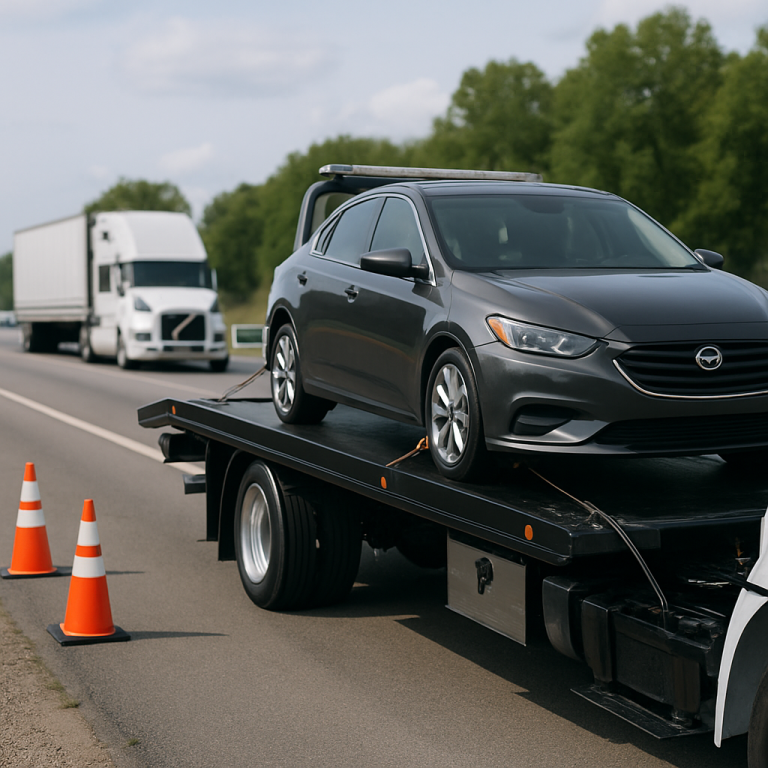
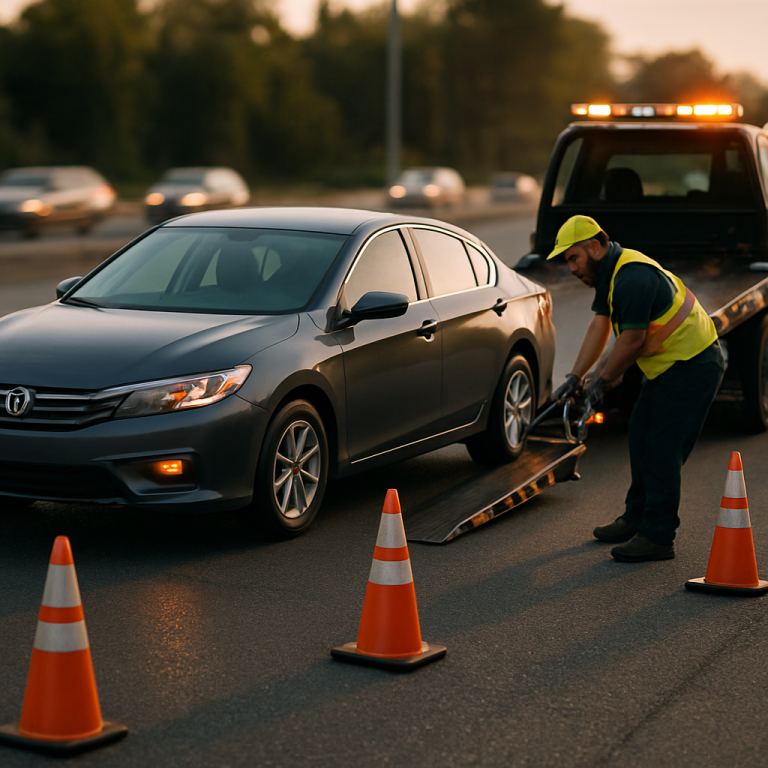
[Insert Image – Car broken down on roadside]
Ok Introduction
Car trouble can feel overwhelming because it creates immediate pressure: your safety may be at risk, traffic may be moving around you, and your vehicle may be in a condition where every wrong move makes the problem worse. The best decisions are usually the simplest ones: stay calm, secure the scene, identify the type of damage, and match the service to the situation.
That is why knowing the difference between towing, roadside assistance, and vehicle transport matters. Not every disabled vehicle needs the same service. A car that will not start in a driveway may only need a jump start or battery replacement. A vehicle involved in a collision may need flatbed towing. A classic car heading from one state to another may need enclosed vehicle transport. Choosing correctly protects your vehicle, your wallet, and your schedule.
Real-Life Situations: What Should You Do?
In the real world, the right response depends on where the problem happens, how badly the vehicle is damaged, and whether it can move safely at all. Use the scenarios below as a decision guide.
Scenario 1: Car breaks down in the city
City breakdowns are stressful because traffic, tight lanes, parking rules, and pedestrians can make a simple failure turn into a hazard. If your car dies in an intersection, on a busy street, or in a parking lane, your first job is to make the scene as safe as possible.
What to do immediately:
- Turn on hazard lights right away.
- Move the car to the nearest safe shoulder, curb, or parking area if it still rolls.
- Keep passengers inside the vehicle if leaving it would be more dangerous.
- Call roadside assistance or a towing service near me if the car cannot restart quickly.
- If you are blocking traffic, stay visible and avoid standing behind the vehicle.
Whether towing is needed: If the vehicle will not restart after a simple battery or fuel check, towing is usually the safest choice. City breakdowns often need quick removal to avoid tickets, congestion, or further damage.
What type of towing is best: Flatbed towing is usually the best all-around option because it lifts the entire vehicle off the road. If space is tight and the car is a standard two-wheel-drive model, a wheel-lift may also work, but flatbed towing is still the safer pick in most urban situations.
Scenario 2: Car won’t start at home
A no-start problem at home feels less urgent than a roadside breakdown, but it still needs a smart approach. Many drivers call a tow truck too quickly, even when roadside assistance could solve the issue without towing.
What to do immediately:
- Check whether the battery is dead, the key fob battery is weak, or the gear shifter is in park.
- Listen for clicks, cranking, or complete silence when you turn the key or press start.
- Look for obvious warning lights, fluid leaks, or a strong fuel smell.
- If the issue appears electrical, request roadside assistance before arranging towing.
- If the car is stuck in gear, has a locked wheel, or shows major mechanical failure, do not force it.
Whether towing is needed: Not always. A dead battery, bad terminal connection, or flat key fob battery may be solved with jump start service. Towing becomes necessary when the engine, starter, transmission, or electrical system cannot be restored quickly.
What type of towing is best: If towing is required, flatbed towing is safest, especially for newer vehicles with advanced electronics, low ground clearance, or all-wheel drive. For a basic sedan with no drivetrain concerns, a standard tow may still be acceptable, but the operator should confirm the vehicle’s requirements first.
Scenario 3: After a minor accident
Minor accidents are deceptive because the car may look driveable even when the suspension, alignment, wheel assembly, cooling system, or sensors have been damaged. A bumper that appears cosmetic can hide bigger structural issues.
What to do immediately:
- Check for injuries and call emergency services if anyone is hurt.
- Move the vehicle only if it is safe and the car still rolls normally.
- Take photos of the scene, vehicle positions, license plates, and visible damage.
- Do not assume the car is safe just because the engine still starts.
- Call your insurance provider before authorizing repairs or transport when possible.
Whether towing is needed: Often yes, especially if the steering feels off, the wheel is bent, a tire is damaged, or warning lights appear after impact. Even a small collision can make a vehicle unsafe at highway speeds.
What type of towing is best: Flatbed towing is typically the best option after a minor accident because it reduces the chance of extra damage during loading and unloading. If the car is only lightly damaged and can be rolled safely, a wheel-lift may be used, but that should be the exception rather than the rule.
Scenario 4: After a major accident
Major collisions require the highest caution. A vehicle with frame damage, deployed airbags, fluid leaks, wheel damage, or broken glass should not be driven under any circumstances. Even if the engine starts, hidden damage can make the car dangerous to move.
What to do immediately:
- Call 911 if there are injuries, fire risk, blocked lanes, or hazardous spills.
- Stay clear of leaking fluids, smoke, and unstable debris.
- Do not try to drive a heavily damaged vehicle away from the scene.
- Wait for police, emergency responders, and insurance guidance if required.
- Ask the towing company where the car will be stored or delivered.
Whether towing is needed: Yes, in nearly every major accident. The car may need to be treated as non-drivable and moved directly to a body shop, impound lot, or secured storage facility.
What type of towing is best: Flatbed towing is the preferred method for severely damaged vehicles because it keeps the car stable and avoids dragging compromised wheels, suspension components, or underbody parts. In some cases, a tow operator may use recovery equipment before the vehicle can even be loaded.
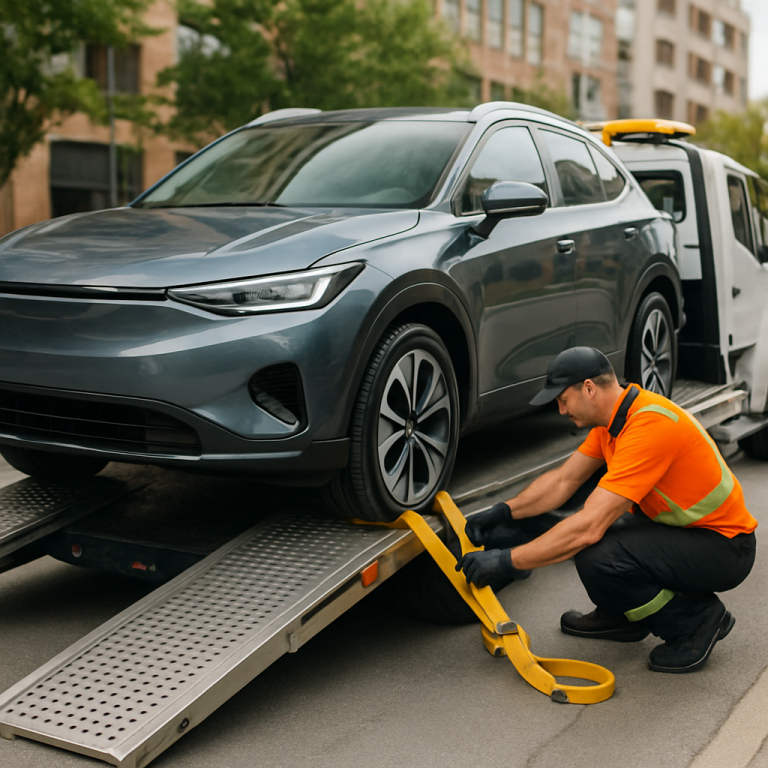
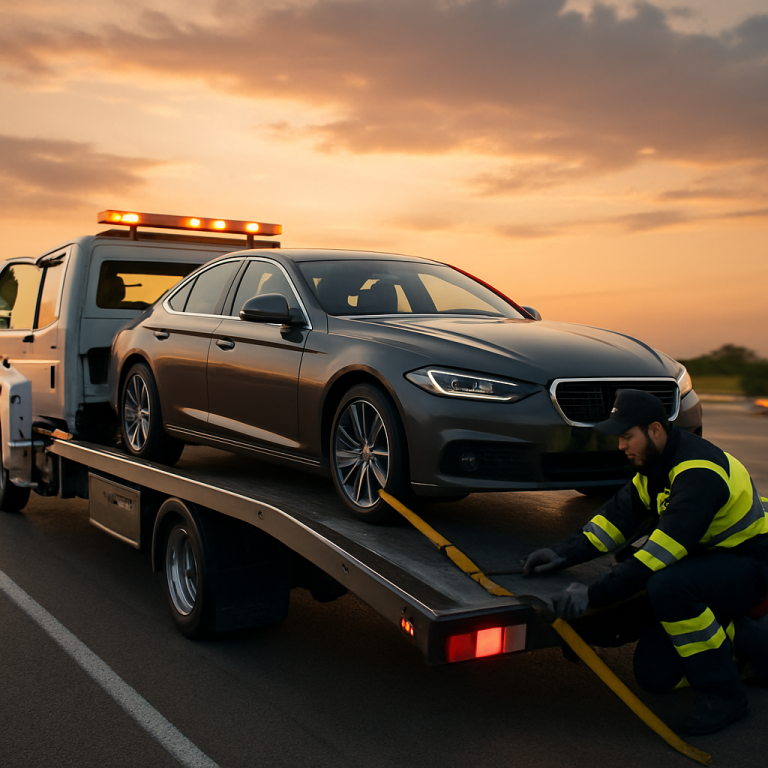
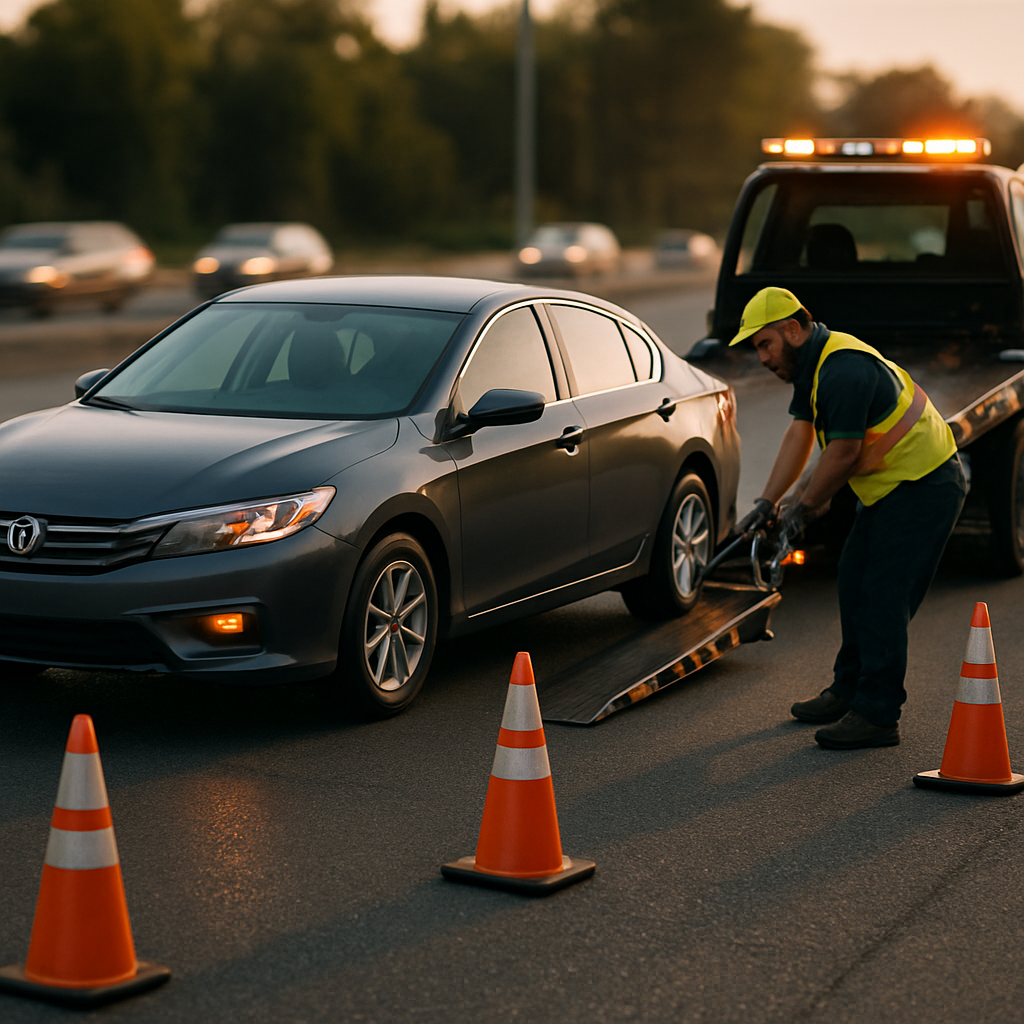
[Insert Image – Tow truck loading vehicle]
Scenario 5: Long-distance vehicle issue
Long-distance problems are not always about a breakdown. Sometimes the car is operational, but the trip itself is too far, too risky, or too expensive to drive. Other times the car fails far from home and you need a solution that gets it back without adding more miles or wear.
What to do immediately:
- Decide whether the car needs emergency towing now or vehicle transport later.
- Ask whether the vehicle is safe to drive for hundreds of miles.
- Check for overheating, transmission issues, tire wear, and fluid leaks.
- Compare the cost of fuel, lodging, time, and wear against transport pricing.
- If the vehicle is not roadworthy, do not risk a long drive to save money.
Whether towing is needed: If the vehicle is disabled, towing is needed first to get it to a shop, home, or shipping terminal. If the vehicle is functional but needs relocation across states, vehicle transport is usually the smarter option.
What type of towing is best: For short recovery trips, flatbed towing is best. For a cross-country move, professional car transport is usually better than towing behind another vehicle or trying to drive the car long distance.
How to Decide: Tow or Transport?
People often use the words towing and vehicle transport as if they mean the same thing, but they solve different problems. Towing is mainly for short-distance recovery and disabled vehicles. Vehicle transport is designed for longer moves, planned relocation, and protection of the vehicle over distance.
Choose towing when:
- The vehicle is disabled and cannot be driven safely.
- You need to move the car from the roadside to a repair shop.
- The destination is local or relatively close.
- The car has a flat tire, transmission failure, brake issue, or accident damage.
Choose vehicle transport when:
- The vehicle needs to move a long distance across a city, state, or region.
- You are relocating and do not want to drive multiple vehicles.
- The car is a collector, luxury, exotic, or low-clearance model.
- You want to reduce mileage, wear, and weather exposure.
Cost vs safety vs distance: Towing may look cheaper at first, but it is not always the best value. For short local moves, towing is efficient and affordable. For long moves, car transport often becomes the smarter financial decision when you factor in fuel, overnight stays, time off work, added mileage, and the risk of breakdown during the trip.
Simple rule: If the car needs immediate recovery, call for towing. If the car needs planned relocation over a meaningful distance, compare vehicle transport options.
Towing Methods – Which One Should You Choose?
The towing method matters as much as the tow itself. The wrong method can damage the transmission, drivetrain, tires, suspension, or undercarriage. The right method depends on the vehicle type, the condition of the car, and how far it must be moved.
Flatbed towing
Flatbed towing places the entire vehicle on a truck bed so none of the wheels touch the road. This is usually the safest and most versatile method.
Best for: Accident-damaged vehicles, luxury cars, low-clearance cars, all-wheel-drive vehicles, electric vehicles, and cars with transmission problems.
Risks: The main risk is usually not the method itself, but poor loading technique. A steep loading angle can scrape the front bumper or splitter on low vehicles, so a trained operator matters.
Cost differences: Flatbed towing can cost a little more than a basic wheel-lift in some local markets, but the added safety often makes it worth the price. If damage prevention matters, flatbed towing is usually the best investment.
Tow dolly
A tow dolly lifts the front wheels of a vehicle while the rear wheels remain on the ground. It is used in specific situations, but it is not a universal solution.
Best for: Some front-wheel-drive vehicles on short trips when the manufacturer allows it.
Risks: Tow dollies can be risky for AWD vehicles, rear-wheel-drive vehicles, and cars with transmission or drivetrain restrictions. Poor securing can also create handling problems.
Cost differences: Tow dollies may be less expensive than flatbed towing, but the savings can disappear fast if the wrong vehicle is placed on one.
Trailer towing
A trailer allows the full vehicle to be loaded behind another vehicle or a towing rig. It can be useful in certain recovery or relocation situations, but it requires the right equipment and enough towing capacity.
Best for: Long-haul moves when a trailer is specifically rated for the vehicle and the operator has the correct setup.
Risks: Trailer sway, loading errors, improper weight balance, and capacity overload are common problems. Incorrect hitching can create major safety issues on the road.
Cost differences: Trailer towing can be efficient when owned or rented correctly, but for most drivers it is not the best DIY solution. Professional towing is usually safer.
Wheel-lift towing
Wheel-lift towing raises either the front or rear wheels with a metal yoke and leaves the other pair on the road. It is common for local recovery, parking enforcement, and short-distance towing.
Best for: Standard two-wheel-drive vehicles that need short-distance transport.
Risks: Wheel-lift towing can stress the drivetrain if used on the wrong vehicle. It is generally not ideal for AWD systems, some EVs, or low-clearance vehicles unless special precautions are taken.
Cost differences: Wheel-lift towing is often more affordable than flatbed towing, especially for short local service calls. Still, the lowest price is not always the safest choice.
Quick method checklist
- Best all-around choice: Flatbed towing
- Best for short local recovery: Wheel-lift towing
- Best for very specific front-drive situations: Tow dolly
- Best for planned long moves: Vehicle transport on a carrier
TABLE – Best Choice Based on Situation
| Situation | Recommended service | Why | Risk level |
|---|---|---|---|
| Car overheated on a city street | Flatbed towing or roadside assistance first | Prevents engine damage and clears traffic quickly | Medium |
| Dead battery at home | Roadside assistance | Often solved without a tow | Low |
| Minor fender bender | Flatbed towing if alignment, tire, or sensor damage is suspected | Hidden damage is common after impact | Medium |
| Major crash | Flatbed towing and recovery | Vehicle is likely unsafe to drive | High |
| AWD SUV with a transmission issue | Flatbed towing | Protects drivetrain components | High |
| Moving a car 900 miles | Vehicle transport | Better than driving or towing long distance | Low |
| Luxury or exotic car relocation | Enclosed vehicle transport | Protects paint, interior, and ground clearance | Low |
Vehicle Types and What They Need
Different vehicles have different towing rules. The safest service for one car may be the wrong choice for another. Before you call a provider, identify the vehicle type and confirm what the manufacturer recommends.
Regular cars
Most standard sedans and compact cars are relatively simple to tow, but even these vehicles can be damaged if the wrong method is used. If the car is front-wheel-drive and the transmission is healthy, a wheel-lift may be acceptable for short distances. Flatbed towing is still the safer universal option.
Best towing method: Flatbed towing for maximum protection; wheel-lift for short local recovery when appropriate.
What to avoid: Dragging the vehicle with the wrong end on the road, using a tow dolly without confirming drivetrain compatibility, or letting an inexperienced operator guess.
SUVs
SUVs are heavier and taller, which can make loading more difficult. Many SUVs also have AWD or 4WD systems that need special handling. Because of the weight and drivetrain considerations, flatbed towing is often the preferred choice.
Best towing method: Flatbed towing.
What to avoid: Improper lift placement, overloaded towing rigs, and any method that conflicts with the drivetrain layout.
Trucks
Pickup trucks can be heavy, rear-biased, and sometimes modified with lift kits or oversized tires. That means tow operators need to consider weight ratings, clearance, and axle layout before loading.
Best towing method: Flatbed towing for safest transport; wheel-lift only when the truck and distance make it appropriate.
What to avoid: Overlooking towing weight limits, especially on larger trucks or 4×4 models.
Electric vehicles
Electric vehicles are one of the most important categories to get right. Many EVs have manufacturer-specific towing requirements because of regenerative braking systems, drive motors, and battery placement. Some EVs should never be pulled with all four wheels on the ground.
Best towing method: Flatbed towing almost always.
What to avoid: Towing an EV without checking the manual, assuming a normal wheel-lift is fine, or letting the battery run fully flat without considering transport logistics.
Luxury cars
Luxury vehicles often have low-profile tires, delicate bodywork, expensive sensors, and custom finishes. A small loading mistake can cause a very expensive repair.
Best towing method: Flatbed towing or enclosed vehicle transport if the move is planned.
What to avoid: Cheap operators who use quick hook-and-drag methods without proper care.
AWD vehicles
All-wheel-drive systems are highly sensitive to incorrect towing methods. If one set of wheels turns while the others stay stationary, the drivetrain can suffer internal damage.
Best towing method: Flatbed towing is the safest default.
What to avoid: Tow dollies and wheel-lift methods unless the manufacturer explicitly approves them for the exact vehicle and distance.
Hidden Risks People Don’t Know
Many vehicle owners focus only on getting the car moved, but the wrong towing decision can create damage that is much worse than the original breakdown. The hidden risks are often mechanical, and they are easy to miss until the repair bill arrives.
Transmission damage
Some transmissions are not designed to be rolled long distances with the drive wheels on the ground. If the wrong wheels spin during towing, fluid flow and internal lubrication can be affected. That can lead to expensive transmission damage that is entirely avoidable.
EV battery risks
Electric vehicles have unique systems that can be harmed by improper towing or storage. A wrong tow method can strain the drive motors, create system warnings, or interfere with battery management. EVs should be handled by providers who know the manufacturer’s procedures.
AWD system damage
All-wheel-drive systems distribute power across all wheels. If only some wheels rotate during a tow, the system can experience binding or internal stress. Many drivers do not realize this until the vehicle starts making noises after the tow.
Suspension damage
Vehicles with worn suspension, lowered springs, or accident damage can scrape, sag, or shift when loaded incorrectly. A poor angle during loading may bend components or damage the undercarriage.
Incorrect towing angles
Angle matters more than many people realize. A steep loading angle can crack front bumpers, damage splitters, or scrape low exhaust components. This is especially important for sports cars, EVs, and luxury sedans.
Cost Guide (Very Important)
Towing cost is one of the first questions most people ask, but the cheapest quote is not always the best choice. Pricing depends on distance, time of day, vehicle type, equipment needed, and how difficult the recovery will be.
Local towing cost: For a short city or suburban tow, prices are often based on a base fee plus mileage. If the car is easy to load, the total may stay moderate. After-hours or holiday service usually costs more.
Long-distance transport cost: Vehicle transport is priced differently. Car transport rates are usually based on route, total distance, season, vehicle size, and whether you choose open or enclosed service. Cross-country transport will cost more than local towing, but it may still be cheaper than driving the car yourself when fuel, lodging, and time are included.
What affects pricing:
- Distance from pickup to drop-off
- Vehicle weight and size
- Type of towing method required
- Time of day, weekend, or holiday demand
- Condition of the vehicle and how hard it is to load
- Urban congestion, storage fees, and special recovery equipment
Why cheap towing can be risky: Extremely low prices sometimes mean rushed service, hidden fees, limited equipment, or operators who are not careful with drivetrain and bodywork. In towing and vehicle transport, the lowest quote can become the highest total if the vehicle is damaged or if the company adds fees after arrival.
TABLE – Estimated Costs
| Service type | Distance | Estimated price range |
|---|---|---|
| Roadside assistance jump start | Local call-out | $50 to $150 |
| Standard local tow | 5 to 10 miles | $75 to $200 |
| Flatbed towing | Local to moderate distance | $100 to $250+ |
| Wheel-lift towing | Short local recovery | $75 to $180 |
| Vehicle transport | Several hundred miles | $500 to $1,500+ |
| Enclosed car transport | Long-distance or specialty move | $900 to $2,500+ |
Mistakes to Avoid (Critical Section)
Most towing problems are avoidable. The biggest mistakes happen when people panic, choose the first available option, or assume all vehicles can be moved the same way.
- Choosing the wrong towing method: A tow dolly or wheel-lift may be fine for one car and dangerous for another.
- Not checking the vehicle type: AWD, EV, low-clearance, and luxury vehicles often need special handling.
- Ignoring manufacturer rules: The owner’s manual may specify exactly how the car can be towed.
- Trying DIY towing: A personal tow setup can fail if the hitch, straps, brakes, or weight ratings are wrong.
- Assuming it is safe because the car still starts: A vehicle can run and still be unsafe to drive after a crash or mechanical failure.
- Choosing based on price alone: The least expensive option can cause the most expensive damage.
The smartest approach is to treat towing as a technical service, not just a ride for your car. Ask questions, confirm the equipment, and make sure the provider understands your vehicle before it is loaded.
Vehicle Transport Deep Explanation
Vehicle transport is the better choice when the goal is not emergency recovery but safe relocation. Instead of reacting to a breakdown, you are planning a move, often over a significant distance. This is where car transport becomes more efficient than towing.
Open transport
Open transport is the most common form of vehicle transport in the United States. The car is carried on an open trailer with several other vehicles. It is widely used because it is efficient, available, and usually less expensive than enclosed service.
When to use it: Everyday cars, standard SUVs, common commuter vehicles, and planned moves where the vehicle does not need extra environmental protection.
Benefits:
- Lower cost
- Wide availability
- Good for long-distance moves
- Efficient for dealers, relocations, and online car purchases
Trade-offs: The vehicle is exposed to weather, road dust, and normal highway debris. For many cars, that is acceptable. For rare, luxury, or freshly restored vehicles, it may not be ideal.
Enclosed transport
Enclosed transport protects the vehicle inside a covered trailer. This is the premium option and is often recommended for high-value, delicate, or collectible vehicles.
When to use it: Classic cars, exotic cars, luxury vehicles, custom builds, and vehicles with a very high replacement or restoration cost.
Benefits:
- Protection from weather and debris
- Lower exposure during transport
- Better for premium finishes and rare vehicles
- More peace of mind for valuable cars
Trade-offs: Enclosed transport costs more and may have fewer available carriers. It is usually worth it when the car itself justifies the added protection.
Open vs enclosed transport comparison
| Feature | Open transport | Enclosed transport |
|---|---|---|
| Price | Lower | Higher |
| Protection | Standard | Maximum |
| Best for | Most everyday vehicles | Luxury, classic, exotic, or delicate cars |
| Availability | High | Lower |
Professional vehicle transport is especially valuable when you want to preserve mileage, protect paint and trim, or move a vehicle you do not want to put through a long drive. For many owners, that makes vehicle transport the smarter choice even before a breakdown happens.
FAQ Section
How do I know if I need towing or vehicle transport?
If the vehicle is disabled, unsafe, or needed only for a short recovery, towing is usually the right choice. If the vehicle is being moved long distance as part of a planned relocation, vehicle transport is usually better.
Can I tow my car myself?
Sometimes, but only if the hitch, weight ratings, braking, lighting, and drivetrain rules all match the exact vehicle. DIY towing is often riskier than it looks, especially for AWD vehicles, EVs, and damaged cars.
Is flatbed always safer?
In most cases, yes. Flatbed towing is the safest universal method because all four wheels are off the road. It is especially helpful for accident damage, low-clearance cars, and vehicles with drivetrain concerns.
Can electric cars be towed?
Yes, but they usually need flatbed towing and manufacturer-specific handling. Many EVs should not be towed with wheels on the ground, so the operator needs to know the model before moving it.
What is the cheapest option?
The cheapest option is often a simple local tow or roadside assistance service if the vehicle problem is minor. For long-distance moves, open vehicle transport is usually more affordable than enclosed transport.
When should I call emergency towing instead of roadside assistance?
Call emergency towing when the vehicle is unsafe to remain where it is, cannot be quickly repaired on site, or has collision damage, wheel damage, or mechanical failure that makes driving impossible.
Do I need towing after a minor accident?
Often yes, especially if the steering feels off, the tire is damaged, the wheel is bent, or any warning light appears. Minor body damage can hide major mechanical problems.
How do I avoid towing damage?
Choose the correct tow method, confirm the vehicle type, ask about loading procedures, and use a provider that understands your drivetrain. When in doubt, flatbed towing is usually the safest answer.
How much does towing cost in the U.S.?
Local towing often starts around the lower end of the price range and increases with distance, vehicle size, after-hours service, and special recovery needs. Long-distance vehicle transport is priced separately and can range widely depending on route and carrier type.
What should I ask before I book a towing service?
Ask what towing method they use, whether they have experience with your vehicle type, what the total price includes, whether there are after-hours fees, and where the car will be delivered.
When a car stops working, the safest response is rarely the fastest guess. A little planning about towing service, roadside assistance, and vehicle transport can prevent bigger repairs, longer delays, and frustrating surprises. When dealing with towing or vehicle transport, choosing the right method and a professional service can save you from costly damage and unnecessary stress.
About the Author